
The complete guide
Choosing a Cat Cube Tunnel Set, a Practical Buyer's Guide
The problem with a bored indoor cat
Indoor cats live longer. That is well established, and most owners who have lost a cat to a road or a dog never go back. The trade-off is boredom, and bored cats find their own entertainment. That might be sprinting the hallway at 3am, picking fights with the other cat, or deciding the arm of the sofa needs redesigning.
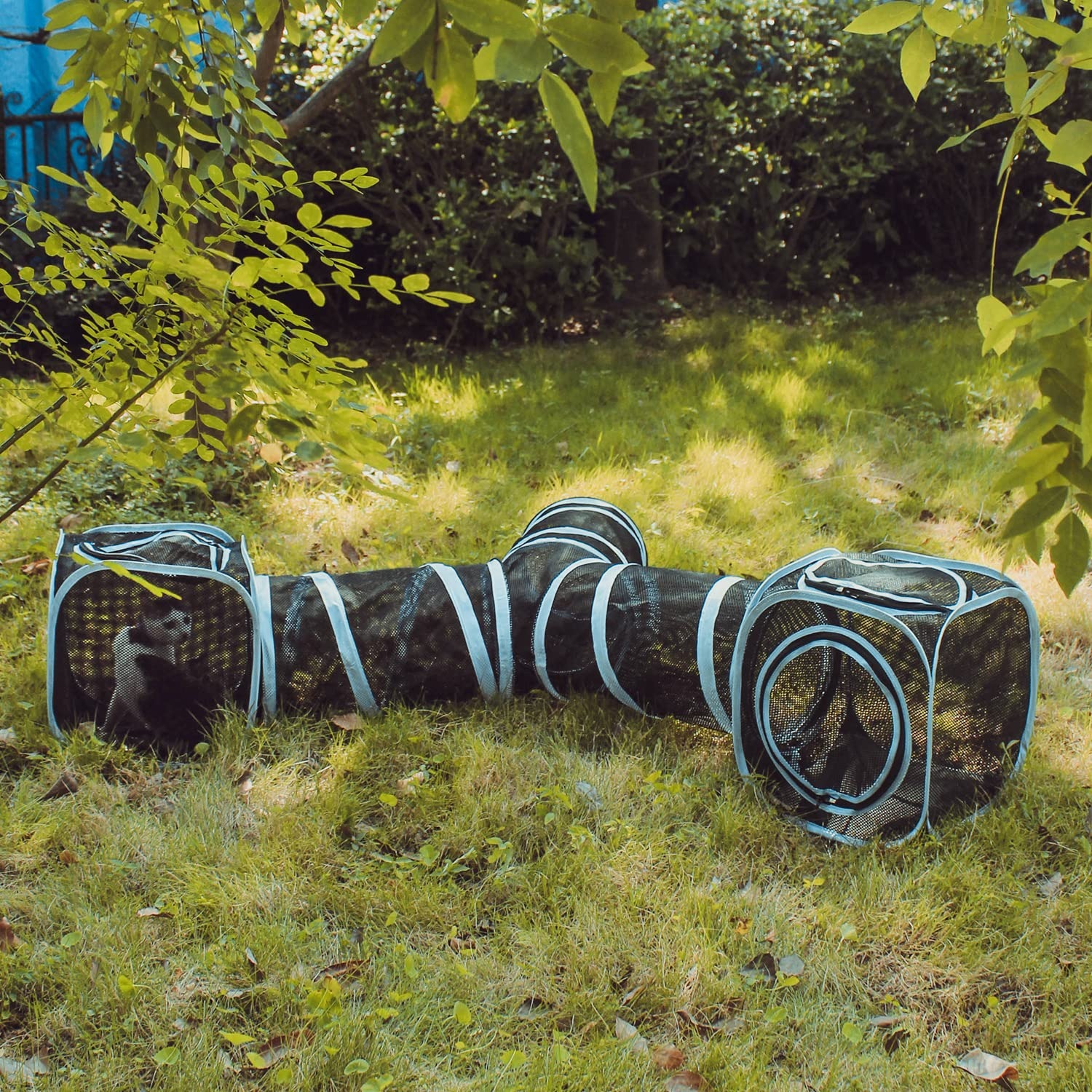
What indoor cats are missing is not just space. It is variety. A cat in the wild spends its day moving through tight cover, popping out, watching, hiding again. Your hallway does not offer that. A cat cube tunnel set does, in a compact footprint, and you can set it up in the back garden where the smells and the birdsong do half the work for you.
How a cube and tunnel set actually works
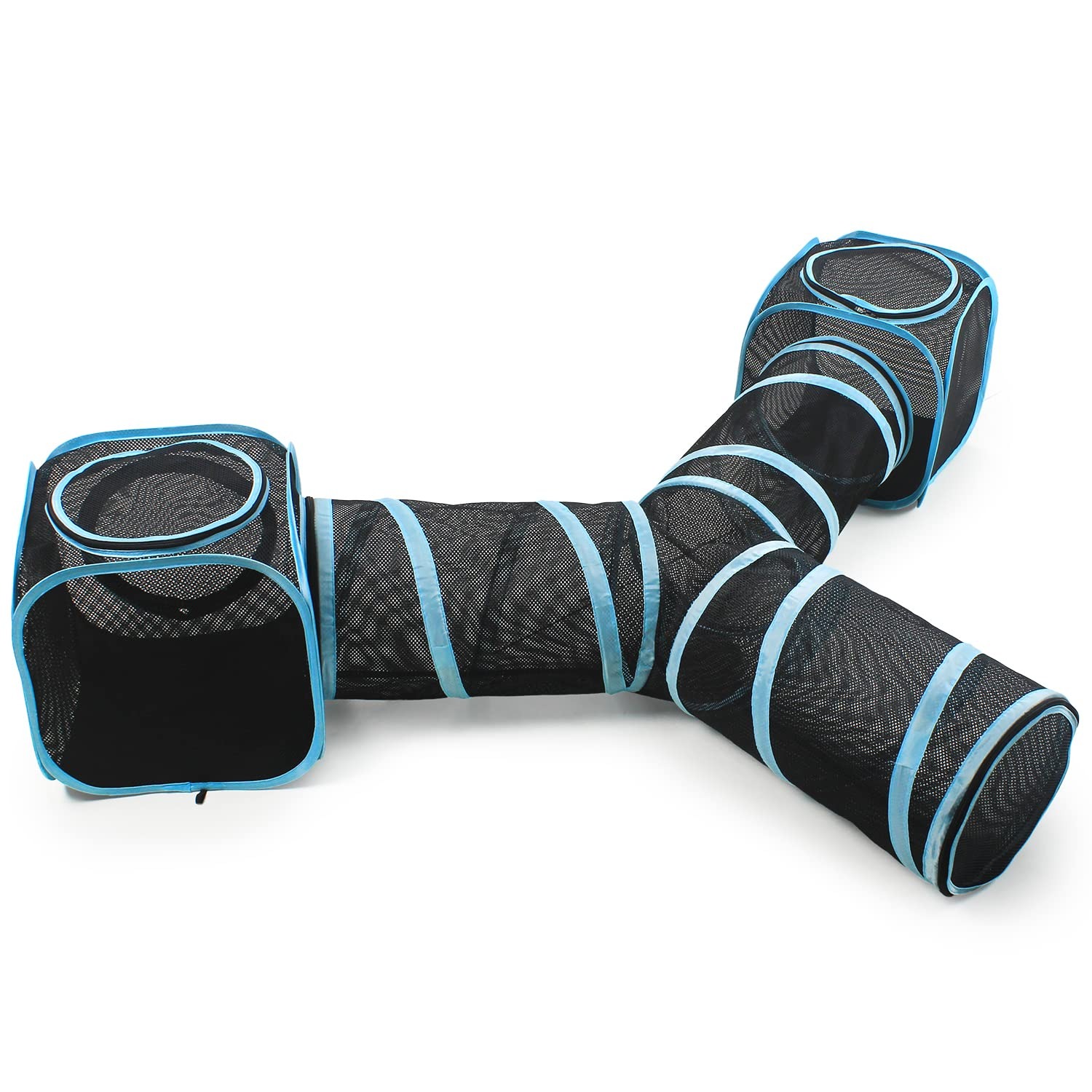
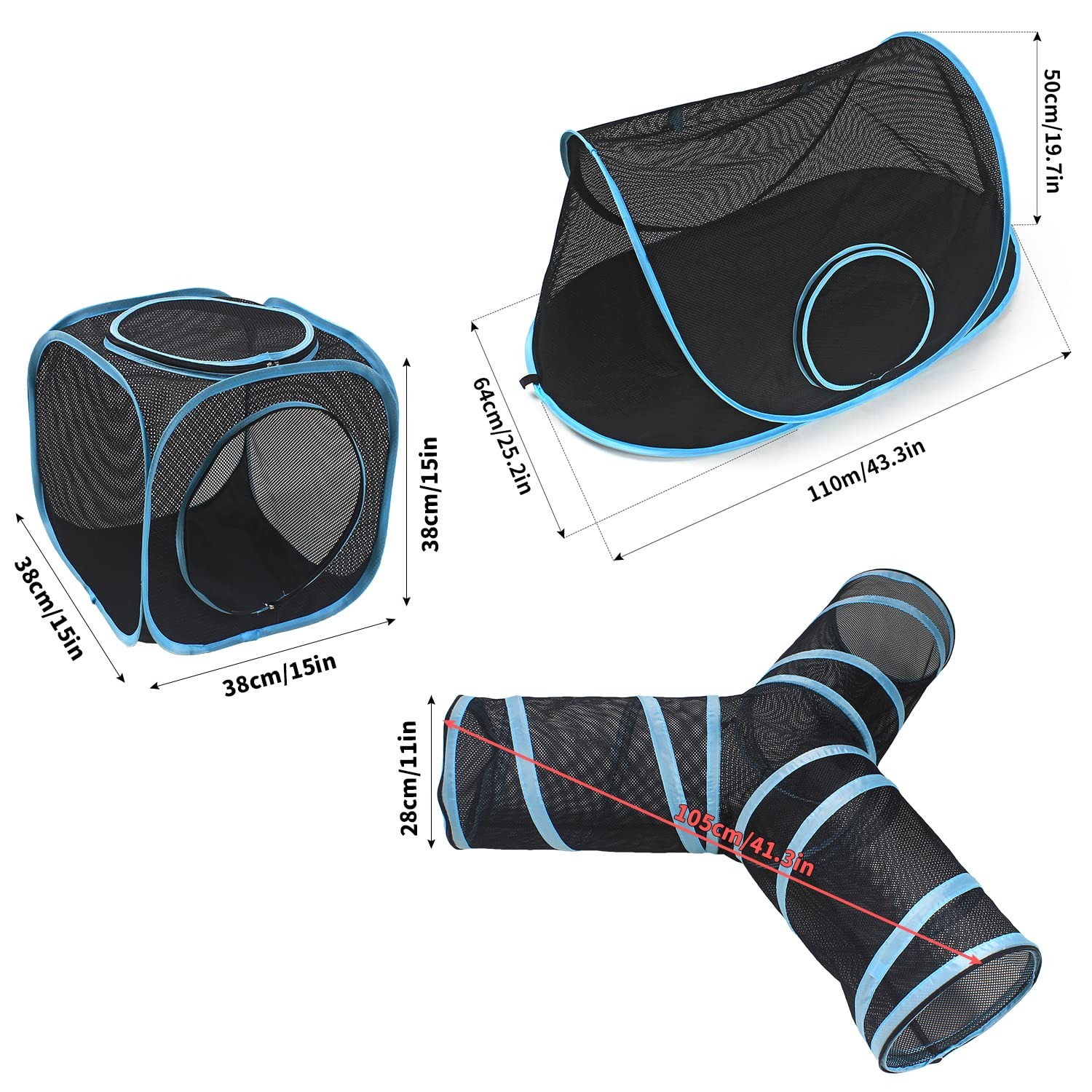
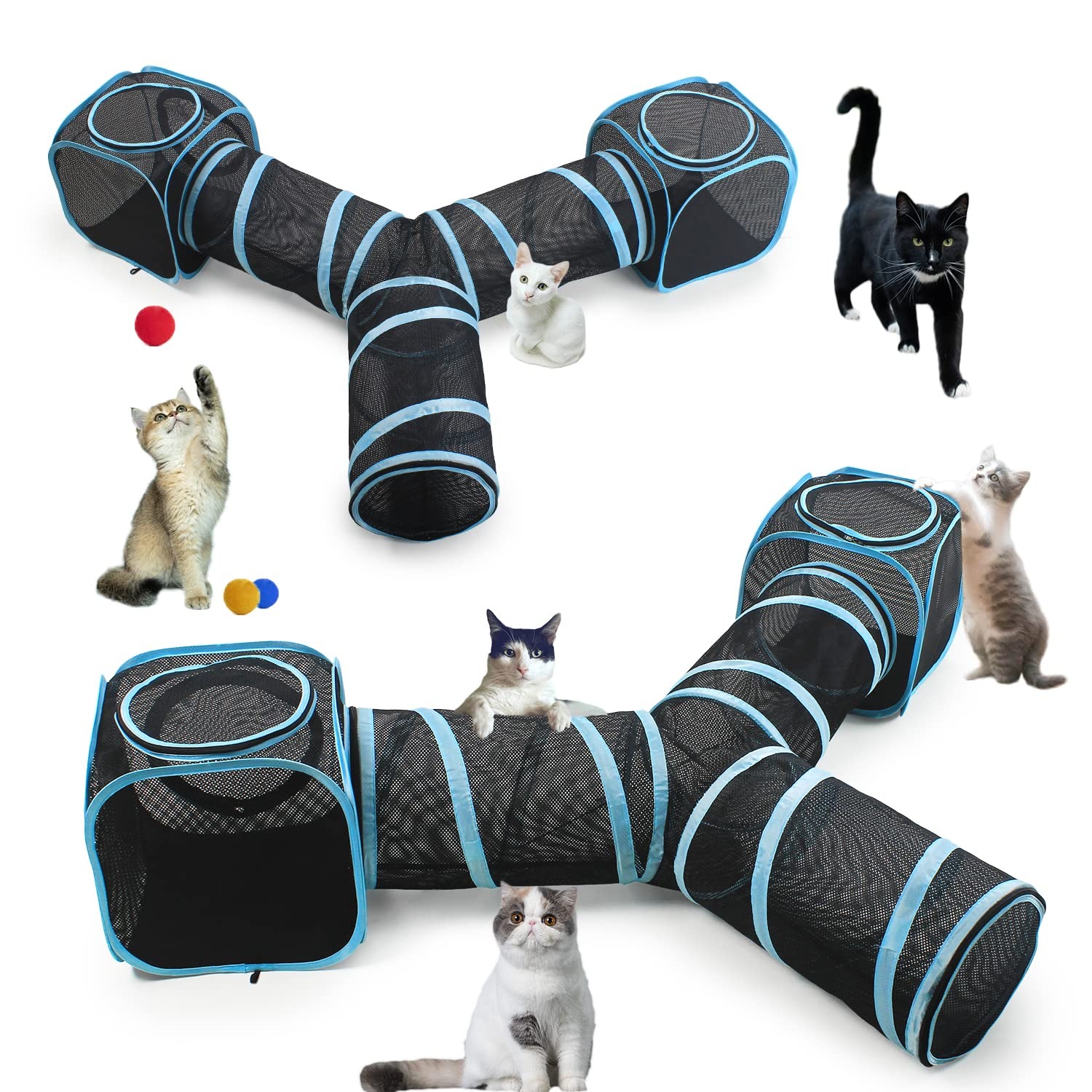
The idea is simple. You have two soft cubes with mesh walls, and a tunnel with three openings instead of the usual two. Zippers on the top and side panels let you join the pieces up however you like.
That three-way tunnel is the part worth paying attention to. A straight tunnel is fine, but a cat works out the geometry in about ten seconds. Enter here, exit there, done. Add a third arm and the whole thing changes. Now your cat can vanish into one end and reappear somewhere unexpected. For a second cat, that means never quite knowing where the ambush is coming from. For a solo cat, it means the tunnel keeps producing surprises.
The cubes are the anchors. They are where a cat stops, flops and watches. In a multi-cat house, two cubes means two private spots, which matters more than people expect. Cats share space better when there are enough separate perches and hideaways to go around.
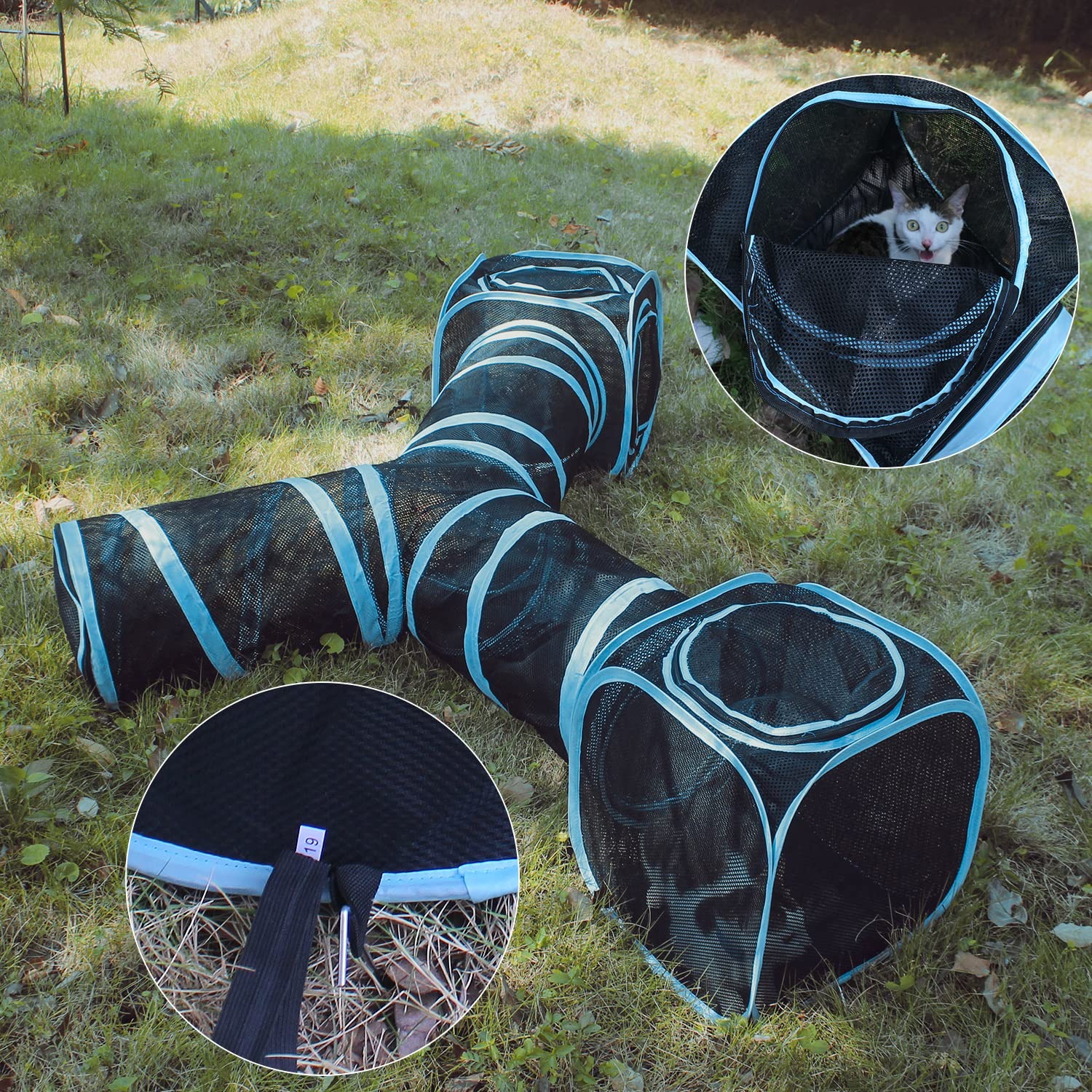
Mesh is the other design decision doing real work. A solid-walled tent gets stuffy and warm fast, especially outside on a sunny afternoon. Mesh lets air pass through, keeps the inside temperature closer to the air temperature, and lets light in. It also means you can see your cat at all times, which is reassuring when they go quiet.
Who this suits
This set earns its place in a few different households.
If you have an indoor cat and a safely fenced garden or a balcony, this is a straightforward way to give supervised outdoor time without a walking lead battle. Plenty of cats hate harnesses. A mesh cat tunnel asks nothing of them except curiosity.
If you have two or more cats, the branching layout gives them something to do together that is not wrestling on your bed. Chase games through a tunnel burn energy and tend to end in a nap rather than a scrap.
If you rent, or you move often, this matters too. You cannot build a catio into a rental. A portable cat tunnel folds flat and comes with you.
And if you travel with your cat, whether that is camping, caravanning or staying with family, a familiar play space makes an unfamiliar place far less stressful. Set it up in the corner of the room and your cat has one patch that smells like home.
It is less ideal if you want a permanent, secure outdoor enclosure that you can leave a cat in while you are at work. That is a catio, and it needs a rigid frame and proper fixings. This is a supervised play set, and treating it as one keeps everyone happy.
Setting it up well
Where you put it matters more than how you arrange it.
Indoors, pick a spot your cat already uses. The corner near the window they nap in, or the patch of floor by the heater. Cats are creatures of established habit, and a new object in a familiar place gets investigated far sooner than a new object in a room they avoid.
Outdoors, choose partial shade. Mesh breathes, but a dark cube in direct midday sun still warms up. A spot under a tree, beside a fence, or on a shaded section of lawn works best. Push the ground pegs in firmly at the base. On a windy day, bring it in rather than hoping the pegs will cope.
On decking or concrete, the pegs are no use, so weight it instead. A folded towel or a flat cushion inside a cube does the job and doubles as a bed. A rubber-backed mat underneath stops the whole thing sliding around on a slick surface.
For the first session, leave every opening wide. Do not zip your cat in. Let them walk through, walk out, and come back on their own terms. Throw a treat through the tunnel. Drag a wand toy along the outside of the mesh so they chase it from inside. Most cats are using it properly within a couple of days.
Changing the layout keeps it interesting
This is the trick most owners miss. A cat tunnel set stops being new after about a fortnight. Rather than buying another toy, move it.
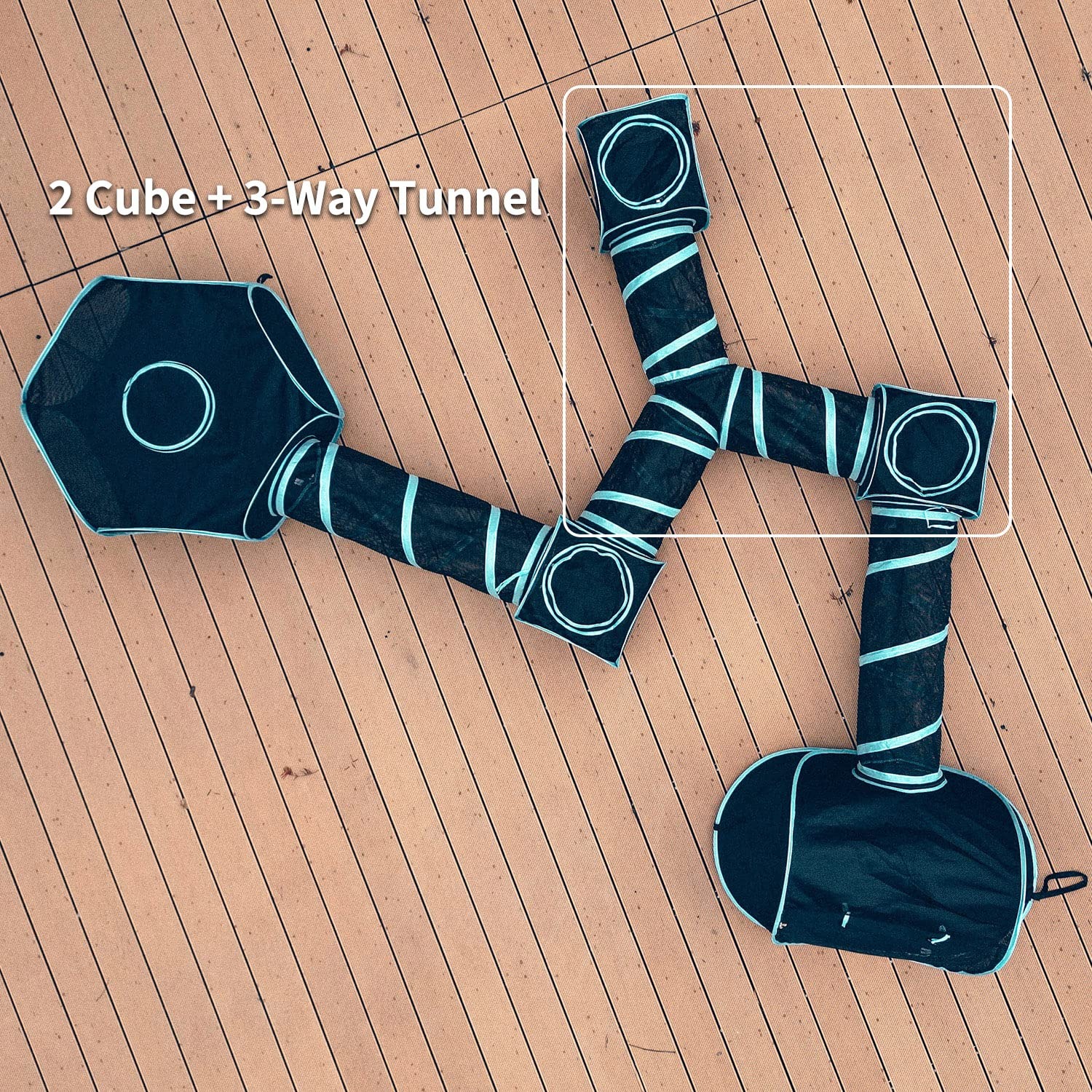
Unzip the cubes and reposition them. Put one cube at the end of a tunnel arm and leave the other arm open to the floor. Run the tunnel along a wall one week and across the middle of the room the next. Swap the blanket inside for a different one. Put the whole set outside on the lawn after a month indoors.
Small changes read as big changes to a cat. The layout being reconfigurable through zippers is not a gimmick, it is what gives the set a long life. If you add more INTURN pieces later, the same zippers join them on, and a two-cube set grows into something closer to a cat tunnel playpen.
Keeping it clean and lasting
Fabric and mesh need very little, but they do need something.
After outdoor use, shake out the grass, dirt and loose fur. It takes ten seconds and stops the build-up that makes a set look tired after one season. Spot clean marks with a damp cloth and a small amount of mild soap, then wipe again with clean water.
The important rule is drying. Never fold mesh fabric away damp. Open every panel, let the air get through it, and give it proper time. Musty smells in a folded cat tunnel are almost always down to someone packing it up wet after a rainy afternoon.
Skip the washing machine. The agitation stresses zipper tape and can leave panels pulled out of shape, and a distorted panel will not zip to its neighbour cleanly afterwards.
Check the zippers now and then. Run them slowly, and if one catches, work out whether a thread or a bit of fur is in the track before forcing it. Zippers are the one moving part on this set, so they are worth two seconds of attention.
If your cat starts scratching one particular spot on the mesh, put a scratching post right next to it. Redirecting the habit early saves the fabric.
The short version
A cat cube tunnel set solves a real problem. Indoor cats are safe but understimulated, and most of the fixes either cost a fortune, need building work, or get ignored after a week.
This one gives two mesh cubes and a branching three-way tunnel, joined by zippers you can rearrange whenever your cat looks bored. It needs no assembly, it folds flat, and the included pegs let you anchor it on grass for supervised fresh-air time. Mesh keeps the air moving and keeps your cat in sight.
Use it indoors, use it outdoors, take it on holiday. Move it around every couple of weeks. That is honestly the whole method, and most cats do the rest themselves.