

The complete guide
How To Choose And Use A Cat Tent And Tunnel
The problem with keeping cats inside
Indoor cats live longer. That is not really in dispute anymore. Roads, dogs, fights, parasites and wildlife laws all stack up against letting a cat wander, and in a lot of places councils now expect cats to stay contained at night or all the time.
The trouble is that the cat did not agree to any of this. A cat at a closed window is watching a world it can smell and hear but never touch. You see it in the chirping at birds, the sitting in doorways, the dash for the gap when you bring in the shopping. Boredom in cats does not look like sadness. It looks like overgrooming, night yowling, furniture damage and that strange flat mood where they sleep eighteen hours and ignore everything.
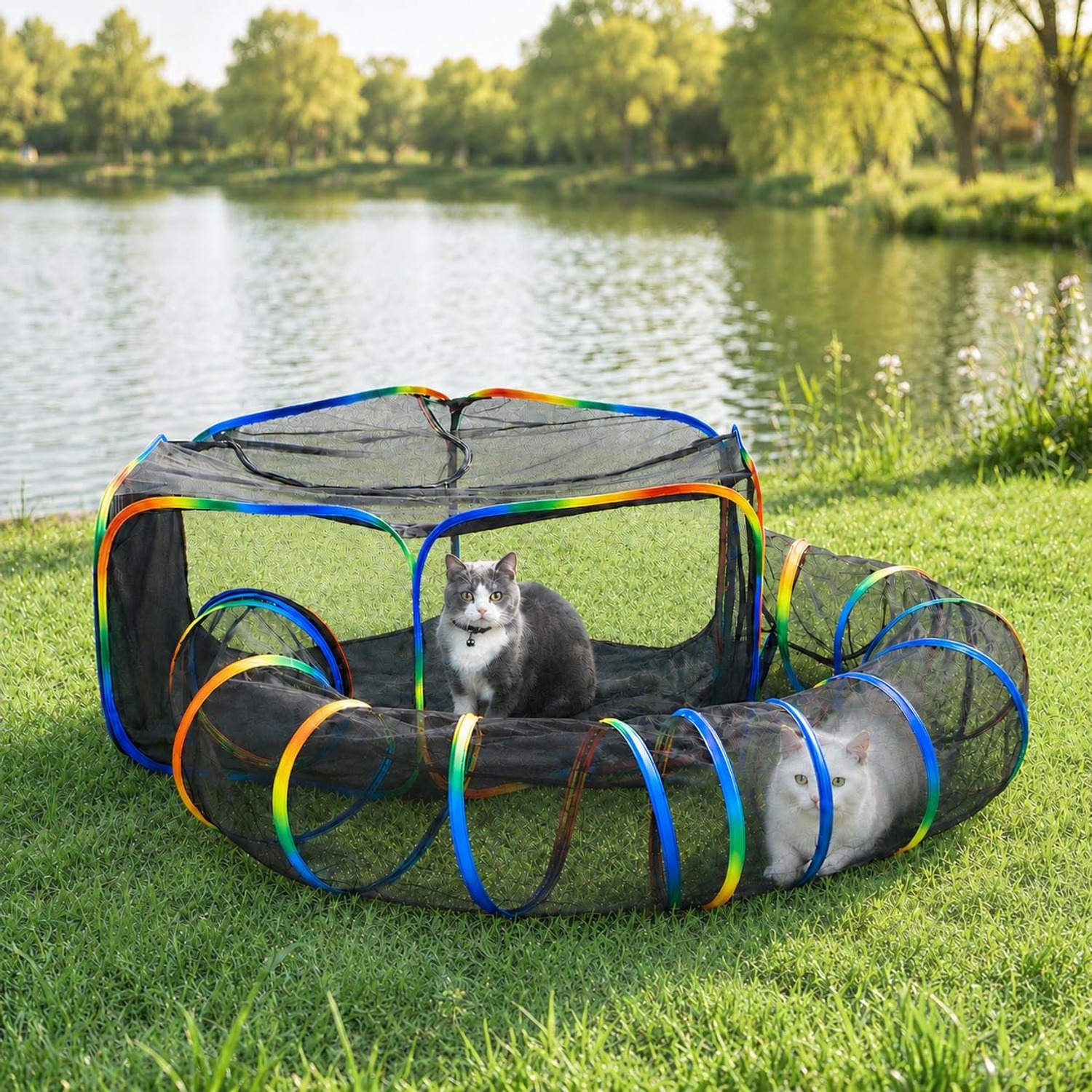
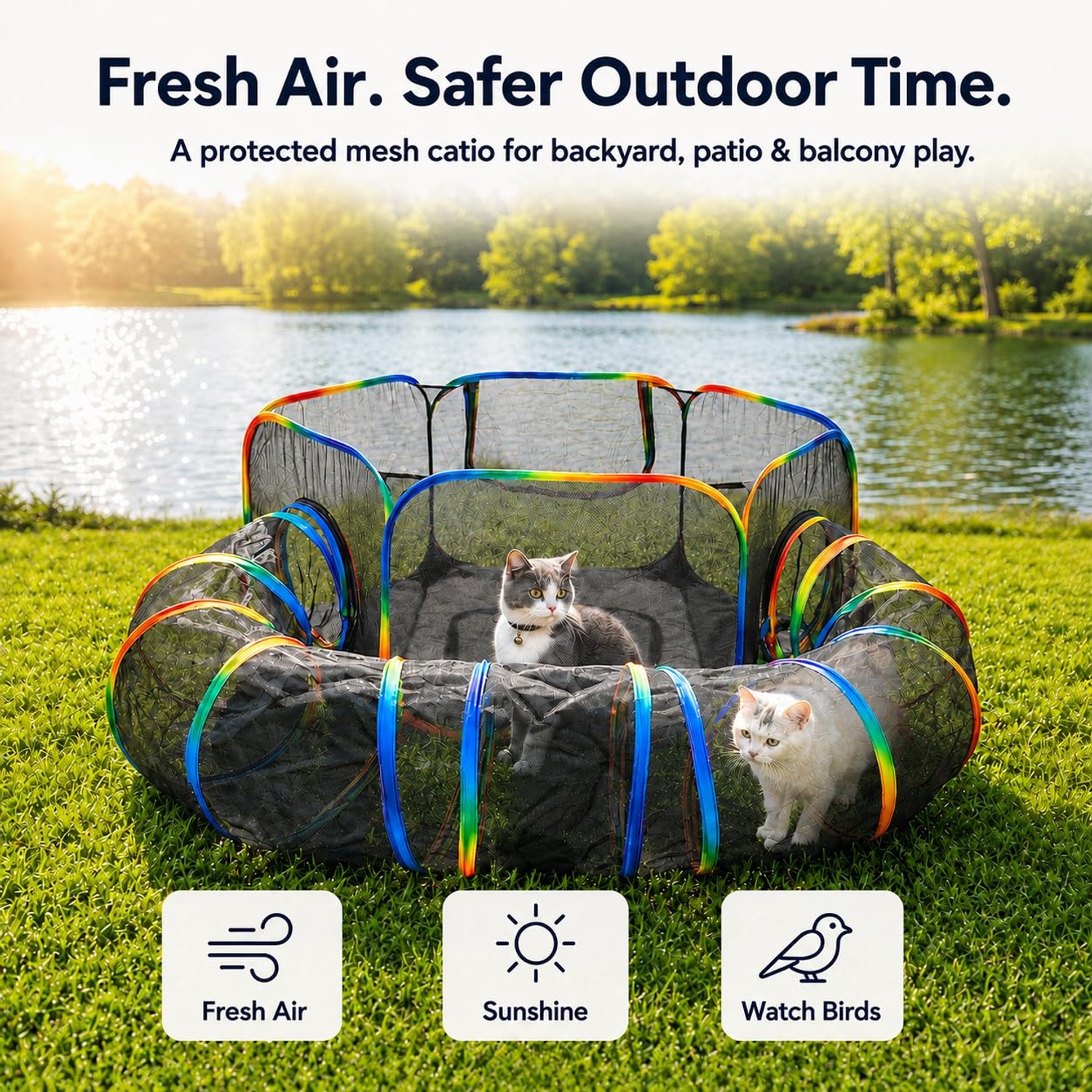
A cat tent and tunnel is a middle path. It gives a contained cat real outdoor time, with grass, breeze, sunlight and sound, while you keep control of where it is and what can get to it. It is not a replacement for a built catio. It is the version you can set up in two minutes and pack away before dinner.
How the set works
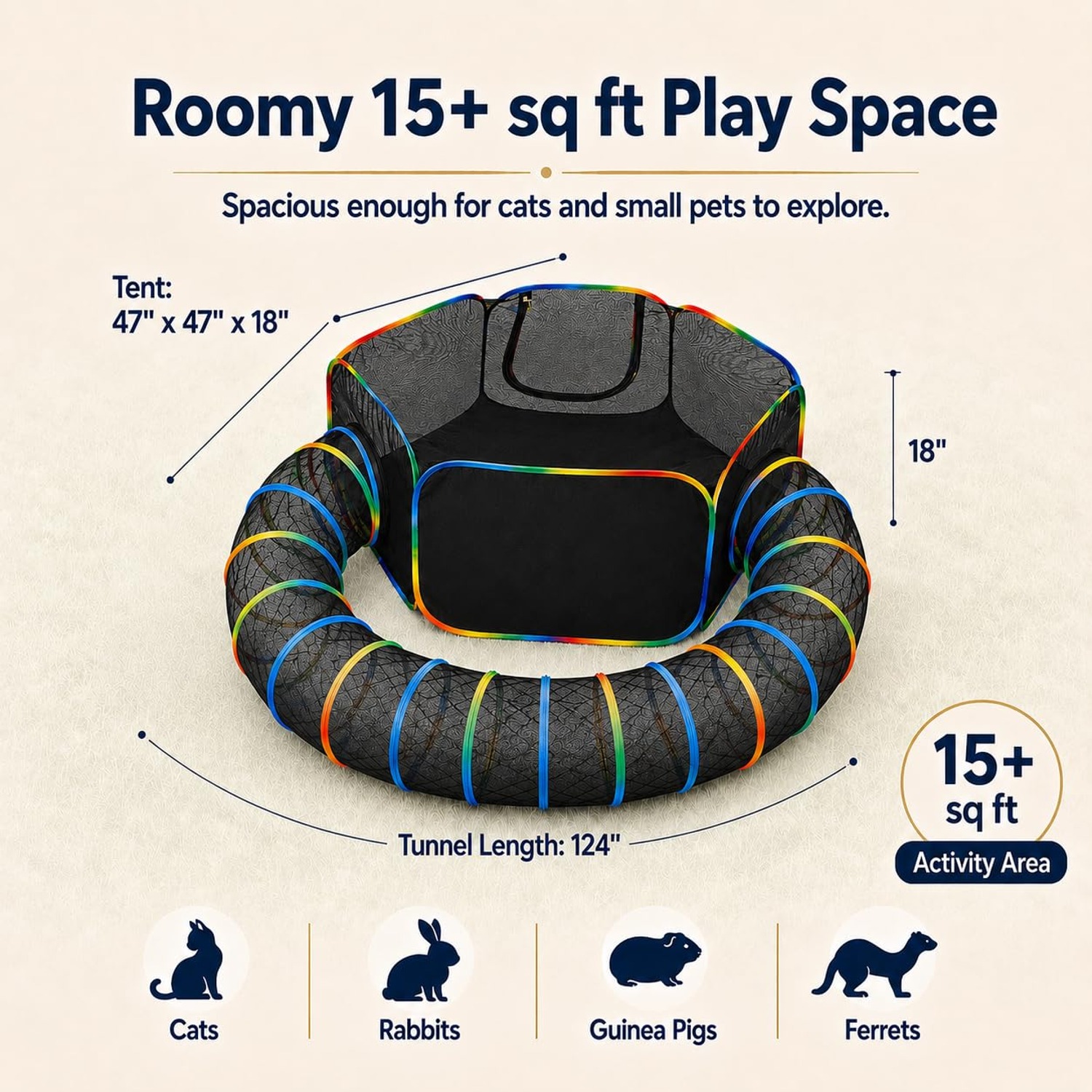
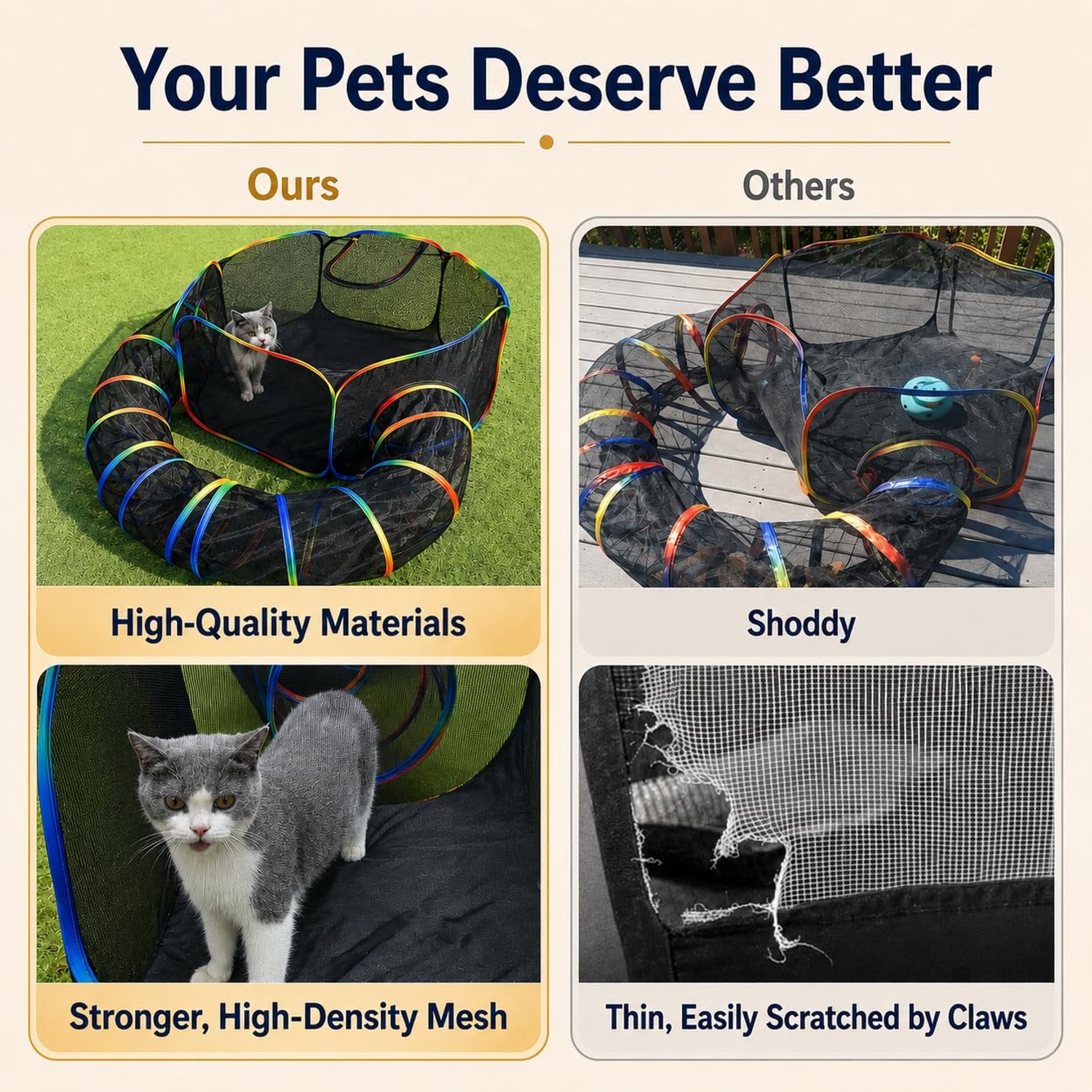
There are two pieces. The tent is the main space, built from polyester with mesh panels so your cat can see out in every direction and air can move through. Two large zipper doors let you get in, lift the cat in, or pass through a bowl without crawling around on the lawn.
The tunnel is a long fabric run that zips onto the tent. That connection is what turns a quiet sitting box into something a cat actually wants to use. Cats are ambush animals. A tunnel gives them a dark run to sprint through, a corner to lurk in, and a place to disappear when they want to feel hidden but still be outside.
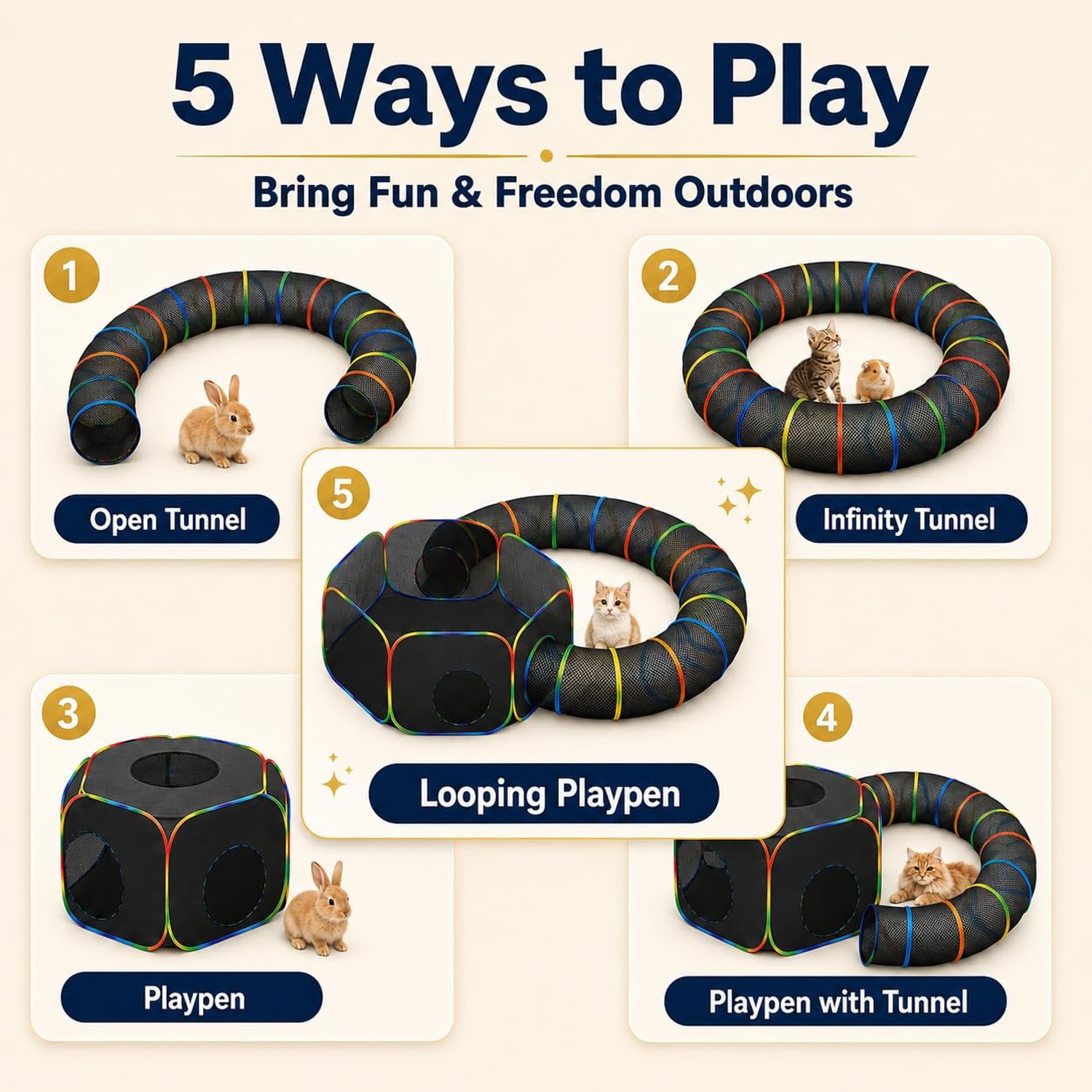
Because the tunnel zips on rather than being sewn in, you get options. Full setup on a good afternoon. Tent only on a narrow balcony. Tunnel only on the living room rug in winter. The whole thing then folds back into the supplied storage bag.
Assembly is required, though it is the unfold-and-zip kind rather than anything needing tools. The first time takes a few minutes while you work out how the frame opens and collapses. After that it is quick.
Who it suits
This works best for the indoor cat who clearly wants more. If your cat sits at the door, follows you onto the balcony, or sprints for open gaps, it is the right candidate for a portable outdoor cat enclosure.
It also suits people without a yard. A pop up catio on a balcony, a courtyard, a deck or a small patch of shared grass gives a cat outdoor time where building anything permanent is impossible. Renters get a lot out of this, since nothing is drilled, fixed or left behind.
Travellers are the third group. A foldable cat tent in the car boot means a campsite, a caravan park or a holiday house suddenly has a safe space your cat already knows. Familiar smells in a strange place do a lot for a nervous animal.
The set is rated for small pets, so it suits average-sized cats and kittens best. A very large cat may find the tunnel snug. Watch how your cat moves through on the first go and let the tent be the main space if the run feels tight.
How to choose the right setup
Start with your space. Measure the flat area you have before you buy anything. A tent and tunnel together needs a straight run, so an L-shaped balcony or a yard full of garden beds may only fit the tent. There is nothing wrong with that. Plenty of owners use the tent alone outside and keep the tunnel indoors.
Then think about your cat's personality. Bold cats head straight for the tunnel. Shy cats want the tent with a blanket in it and will take days before they go anywhere near the run. If your cat is the second kind, buying a set rather than a single piece actually helps, because you can introduce one part at a time.
Check the ground. Grass is ideal. Decking is fine. Hot concrete in summer is not, since dark fabric and bare paving both hold heat. Shade matters more than most people expect, so pick a spot with cover for at least part of the session.
Last, be honest about weather. This is a mesh and fabric enclosure, and waterproofing is not specified in this record. Treat it as fair-weather gear. Calm, mild days with some shade are what it is built for.
Getting your cat to actually use it
The single biggest mistake is putting the cat inside and zipping the door on day one. That teaches your cat that the tent is a trap.
Do it the slow way instead. Set the tunnel up indoors first and leave it alone. Cats investigate new objects on their own schedule, usually around three in the morning. Drop a few treats at each end. Once your cat is running through it, zip it to the tent and let them explore the whole thing indoors.
Only then take it outside, and keep the first session short. Five minutes of grass and breeze with you sitting right there is plenty. Build up from there. Within a week or two most cats are asking to go out.
Bring something that smells like home. A used towel, a favourite blanket, a worn t-shirt. Familiar scent makes a new outdoor cat playpen feel less like a strange box and more like their own patch.
Supervision, honestly
This is supervised equipment. Mesh and zips hold a relaxed cat perfectly well during play, and that is exactly what they are designed to do. They are not a security cage and they are not dog-proof.
So stay with your cat. Keep the yard closed to other animals. Check both zip doors are fully shut before you step back. Weigh the inside down with a mat on breezy days, and pack up if the wind picks up or the sun swings around onto the tent.
Add water for longer sessions, and a small litter tray if your cat is out for more than half an hour. The two zip doors make passing things in easy, which is one of the quiet advantages of this design.
Care and storage
Cleaning is simple. Shake out the fur, grass and dirt after each use. Spot clean fabric and mesh with warm water and a mild pet-safe detergent, then let everything dry fully in the shade.
Do not machine wash it. The pop-up frame does not survive a tumble, and the mesh can pull. Skip bleach and solvents too.
Dry storage is the thing that decides how long it lasts. Fold it into the bag only when it is completely dry, and keep it somewhere out of direct sun. Damp fabric packed into a bag turns musty fast, and sunlight slowly weakens polyester and zips.
Keep the bag somewhere easy to reach. An enclosure stored in the back of a shed gets used twice. One stored by the back door gets used all summer.
The short version
A cat tent and tunnel gives an indoor cat genuine outdoor time without the risks of free roaming. You get a mesh tent with two zip doors, a tunnel that zips on for a longer run, and a storage bag so the whole set folds away.
It suits renters, balcony dwellers, travellers and anyone whose cat clearly wants more than a window view. Introduce it slowly, use it on calm days with shade, supervise the whole time, and store it dry.
Done that way, it turns a few minutes of your afternoon into the best part of your cat's day.