
The complete guide
Choosing a Catio Kit, A Practical Buyer's Guide
The problem with a cat who wants out
Indoor cats live longer. That is well established, and most owners know it. The trouble is that the cat does not know it, and every time a door opens there is a small negotiation at your ankles.
Letting a cat roam free solves the boredom and creates four new problems. Cars. Dogs. Fights with other cats. And wildlife, which in many neighbourhoods is the one that gets people genuinely upset.
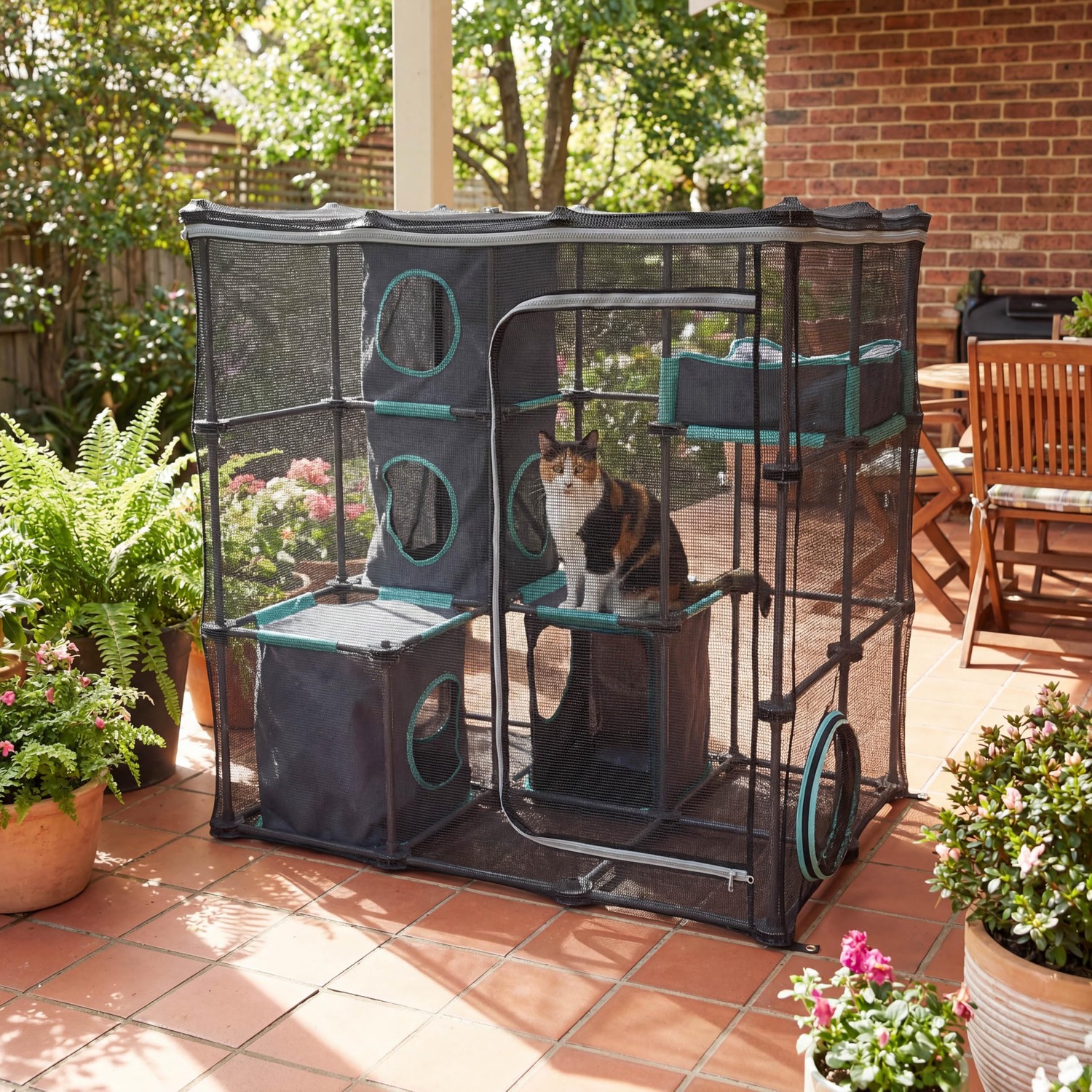
A catio kit sits in the middle. Your cat gets grass under their paws, warm air, birdsong and the smell of whatever the neighbours are cooking. You get to watch them do it from six feet away, with no risk of them disappearing over a fence.
How a mesh enclosure actually works
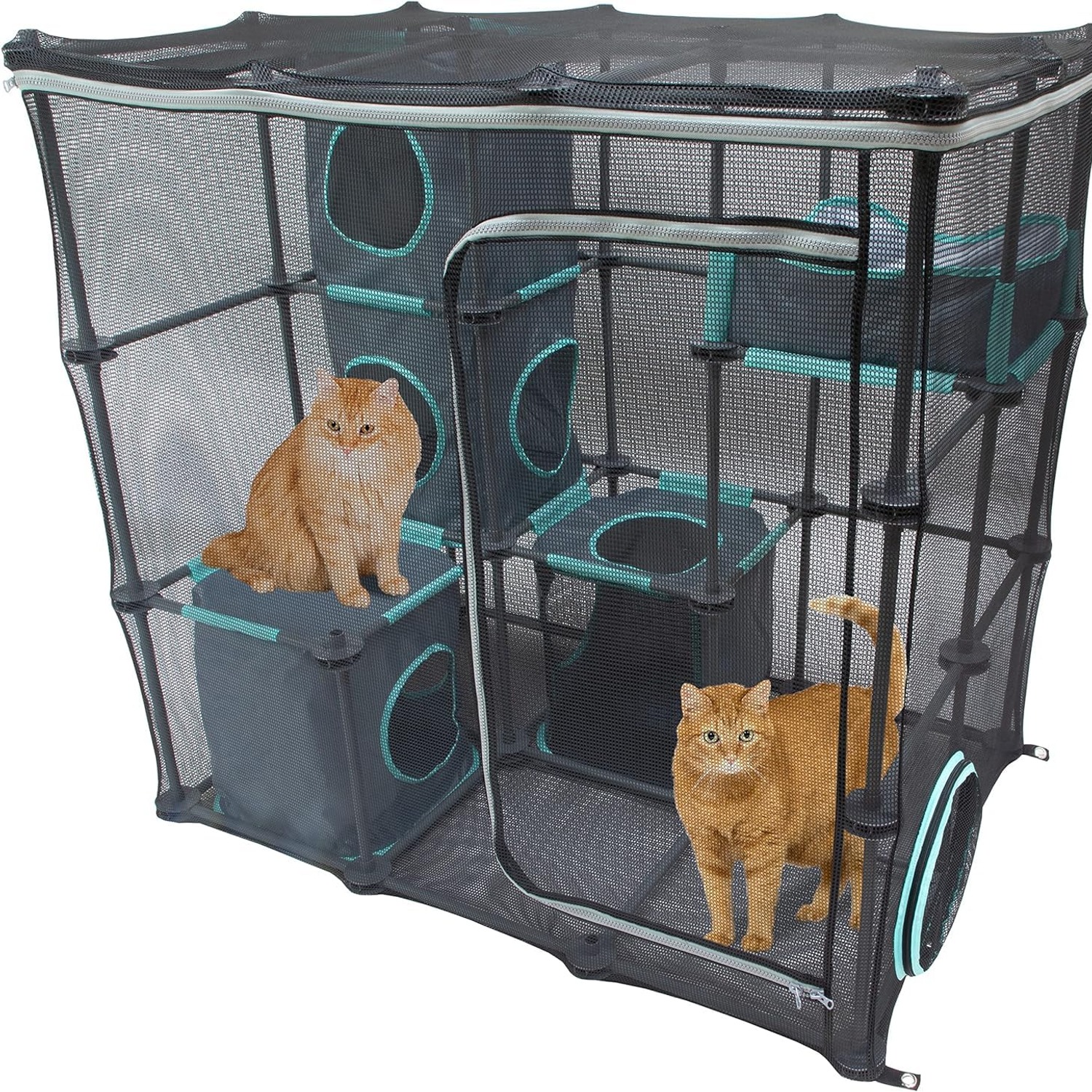
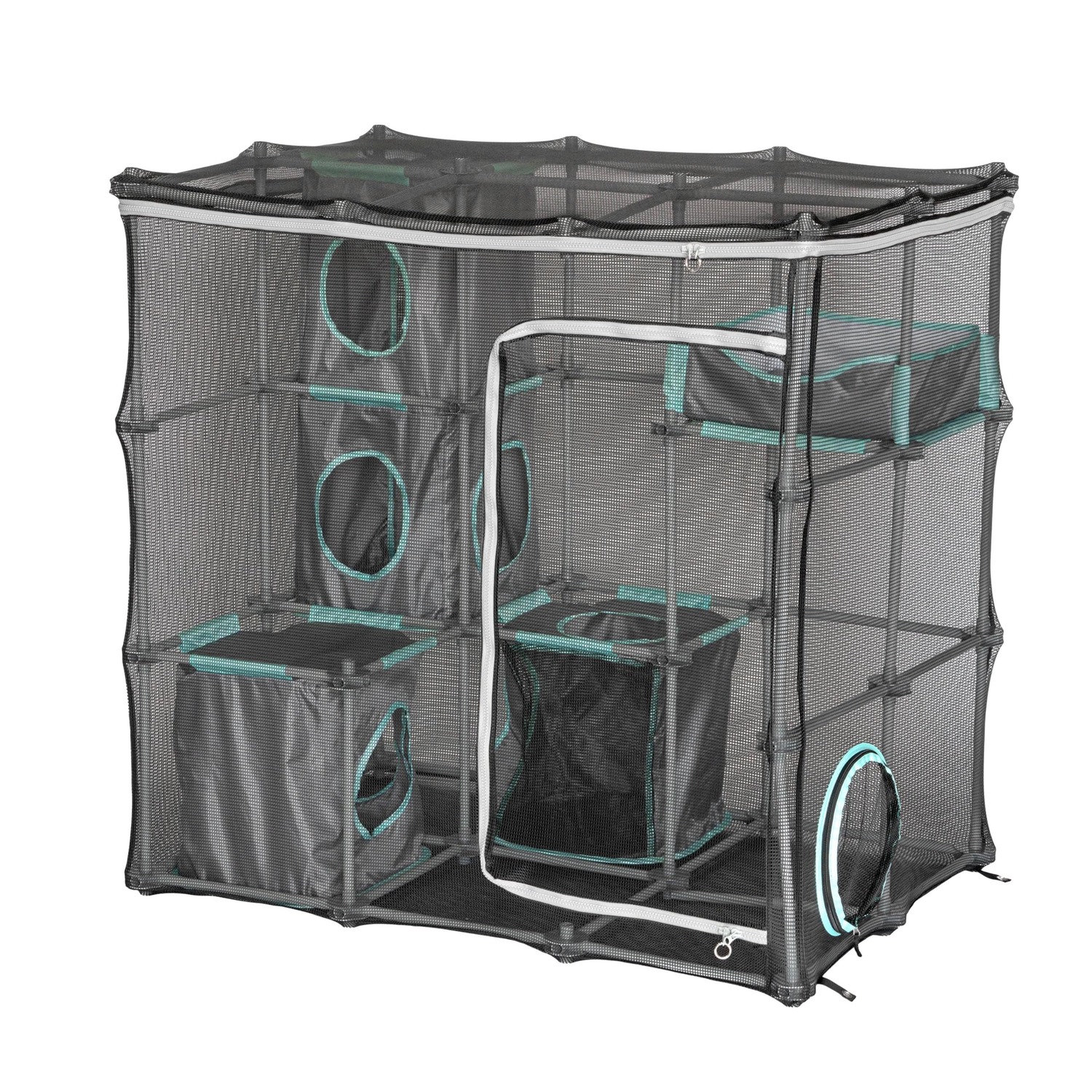
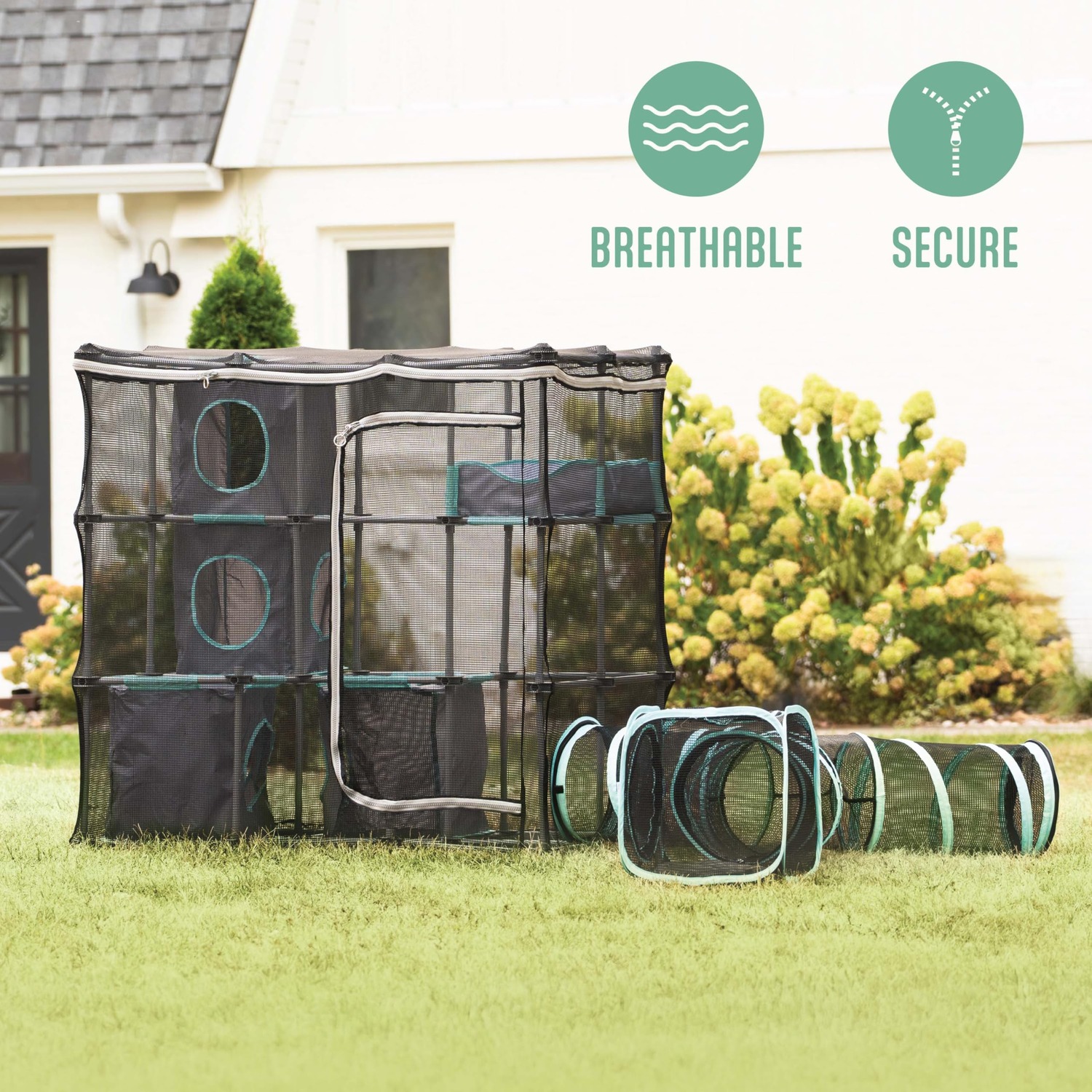
The idea is simple. A frame holds up panels of nylon mesh, forming an enclosed room. Air moves straight through the weave, so it does not get stuffy inside like a solid-walled hutch would. Light passes through too, which means your cat still gets the sun they came out for.
The mesh does two jobs at once. It contains the cat and it keeps the view open, both ways. You can see what your cat is doing without opening anything, and they can see you, which stops the whole thing feeling like a punishment.
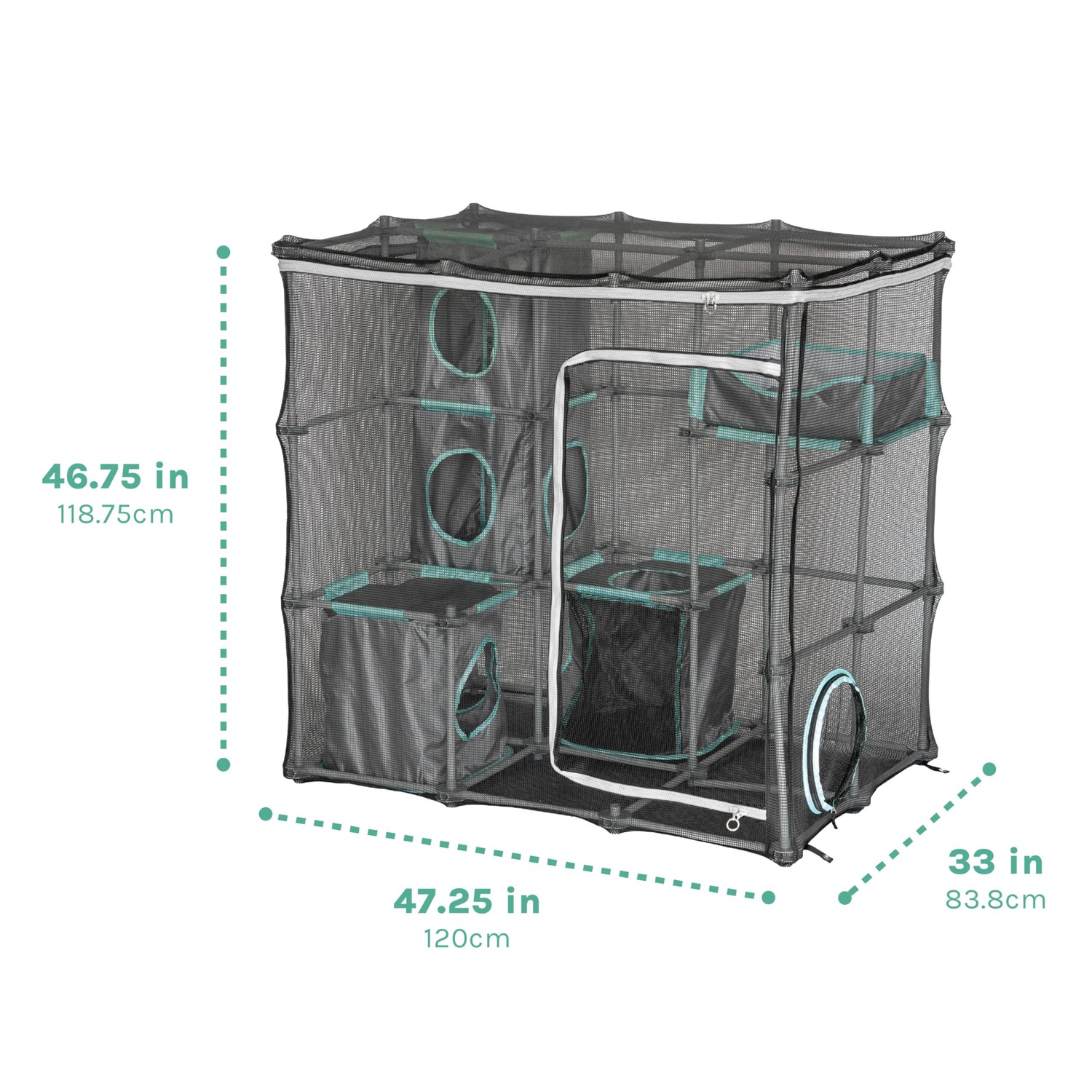
This particular enclosure measures 120 cm long, 83.8 cm wide and 118.7 cm high. The height matters more than people expect. Cats think in vertical space. A tall enclosure with three levels gives far more usable territory than a wide flat one of the same floor area.
Inside there are cubby cubes you can move around. They work as shade, as hiding spots and as perches. Shifting them to a different level every few weeks keeps the layout interesting, and a bored cat is the main reason these things end up in the shed.
Who it suits
Apartment dwellers get the most obvious benefit. If your only outdoor space is a balcony with a gap-filled railing, a mesh cat enclosure turns that balcony into usable cat territory for the first time.
Renters do well with it too. There is nothing to drill, nothing to anchor and nothing to explain to a landlord. When you move, it folds down and comes with you.
Multi-cat homes are the other strong fit. Several cats can use the space at once because the levels let them separate without leaving. One takes the top, one takes a cubby, one patrols the floor. That reduces the friction you get when cats are stuck sharing the same flat room all day.
It also suits older cats and cats recovering from surgery, assuming your vet agrees. A contained outdoor space lets them get air and stimulation without the physical demands of climbing a fence.
Choosing the right size and layout
Start by measuring where it will go. You need a flat area of at least 120 cm by 83.8 cm, plus a bit of clearance so the mesh is not pressed against a wall or a fence. Grass, decking, concrete and indoor flooring all work.
Then think about how many cats will use it. One cat in this footprint has room to spare. Two or three will use it comfortably if you spread the cubbies across the levels so they each have a spot. More than that and you should be looking at expanding.
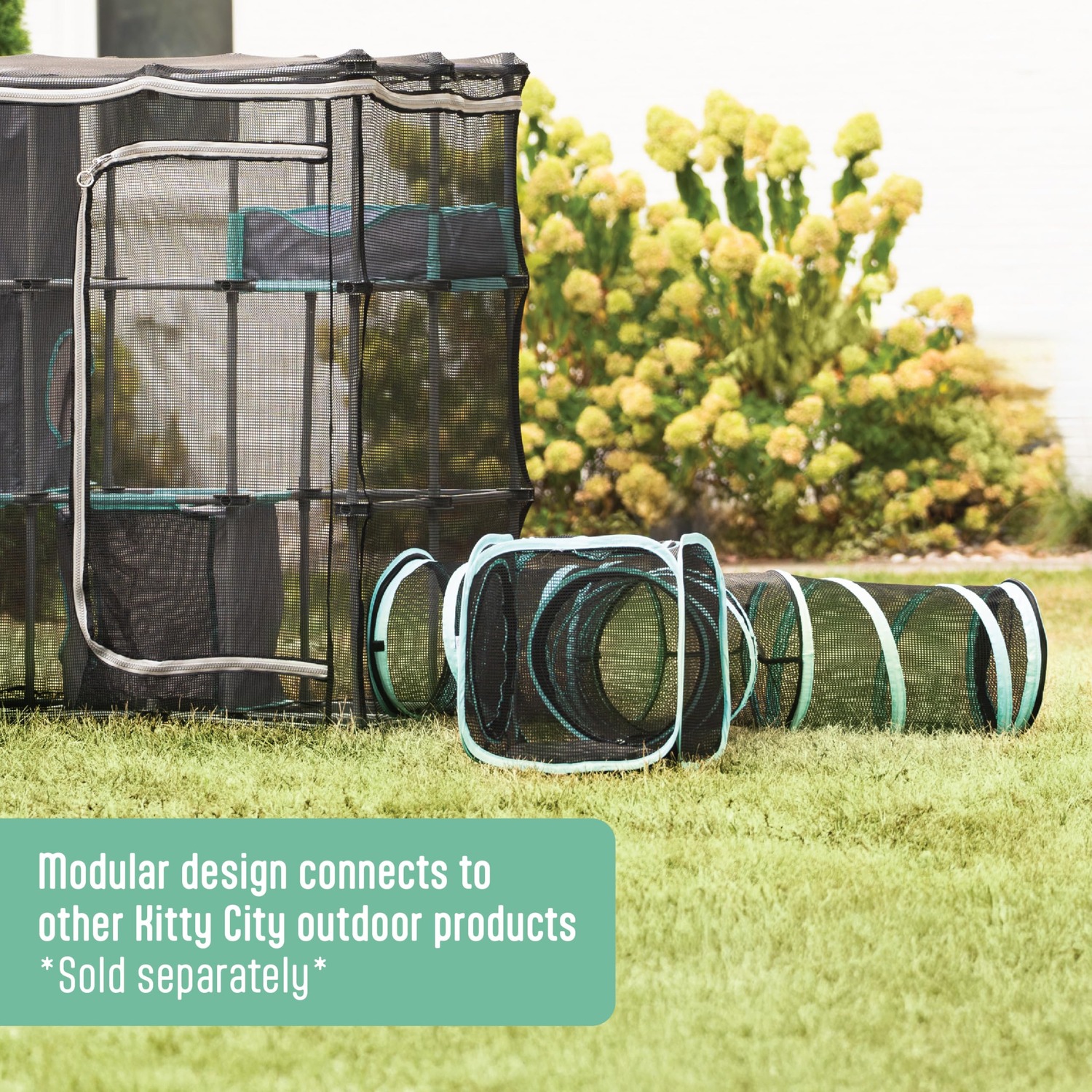
Expanding is where the tunnel port comes in. The port lets you join this unit to other Kitty City mesh sets, which is what turns a single enclosure into a modular catio. Two sections linked by a tunnel gives a cat something closer to a circuit, and cats love a circuit. They will run a loop for the sake of running it.
You can also use a tunnel to connect the enclosure to a doorway, since the mounting type is listed as door mount. Done well, that means the cat lets themselves out, spends twenty minutes in the sun and comes back in when they feel like it. That is the version most owners are quietly aiming for.
Weight, portability and where to put it
At 5.35 kg this is light. One person can move it, which changes how you use it. The sun shifts over the course of a day and so can the enclosure. Morning on the east lawn, afternoon in the shade of the house, inside when the wind picks up.
That portability is also what makes it practical for people who do not want a permanent structure in the yard. It is not a build. There is no foundation and no post holes. When the day is done it folds away.
Position matters more than most people realise. Avoid putting it in full afternoon sun with no shade option, and avoid placing it directly against a fence line where a neighbouring dog can reach it. Flat ground, partial shade and fresh water nearby covers most of what your cat needs.
On windy days, either bring it in or weigh the base down with something heavy and safe. A light structure in a strong gust is not where you want your cat.
Settling a cat into it
Do not pick up your cat and put them in a new enclosure. That sets the wrong tone immediately and some cats never fully forgive it.
Set it up indoors first with the zip door open. Put a blanket they already sleep on inside, maybe a toy, maybe a few treats scattered across the levels. Then walk away. Most cats investigate within an hour because the thing smells like them and has holes in it.
Once they are going in and out on their own indoors, move it outside and repeat. Keep the first outdoor sessions short, ten or fifteen minutes, and stay out there with them. The outside world has more noise and more smells, and some cats need a few goes before they relax.
End each session while the cat is still calm. If you always wait until they are agitated, they learn that the enclosure ends badly.
Keeping it clean and lasting
Care is hand wash only. That means spot cleaning with warm water and a mild pet-safe soap, then letting it air dry completely before folding. No machine washing, no dryer, no harsh chemicals that could irritate paws or lungs.
Fur works into mesh. A rubber brush or a lint roller over the panels after every few uses is far easier than tackling a month of buildup. Shake out leaves and grass before you fold it down.
Check the zips and seams each time you set it up. Zips are usually the first thing to go on any mesh product, and catching a sticky one early is better than discovering it has split. Keep the zip track free of grit.
Store it dry and out of direct sunlight. UV is the quiet enemy of nylon, and a product left in the sun for months will go brittle long before one that lives in a cupboard between uses.
The short version
If you have an indoor cat who stares out the window, this solves a daily problem. A nylon mesh enclosure measuring 120 cm by 83.8 cm by 118.7 cm, three levels, movable cubby cubes, a full-size zip door and a tunnel port for linking to other sets.
It weighs 5.35 kg, so you can move it with the sun or pack it away at the end of the afternoon. It is designed for supervised outdoor time, not for leaving a cat alone all day.
Check your measurements, start the introduction indoors, keep the first sessions short and hand wash only. Beyond that, the cat does the rest.