
The complete guide
Foldable Cat Enclosures, A Practical Buyer's Guide
The problem with an indoor cat who wants out
Plenty of cats live happily indoors until the day they discover the back door. Then the yowling starts. They sit at the glass, tail twitching, watching birds they will never be allowed to chase. It is not a small thing either. Fresh air, grass smells, moving shadows and sunlight all give a cat something to think about, and a bored cat tends to find its own entertainment in your curtains.
The usual answer is to let them out and hope. That works until it does not. Roads, dogs, other cats, ticks, snakes in some regions, and the simple fact that cats roam further than owners imagine. Councils in a lot of places now ask owners to keep cats contained, and plenty of us would prefer it anyway.
A foldable cat enclosure sits between those two extremes. Your cat gets outside. You still know exactly where they are. And because this one folds into a bag, it does not commit you to building anything.
How a tent and tunnel setup works
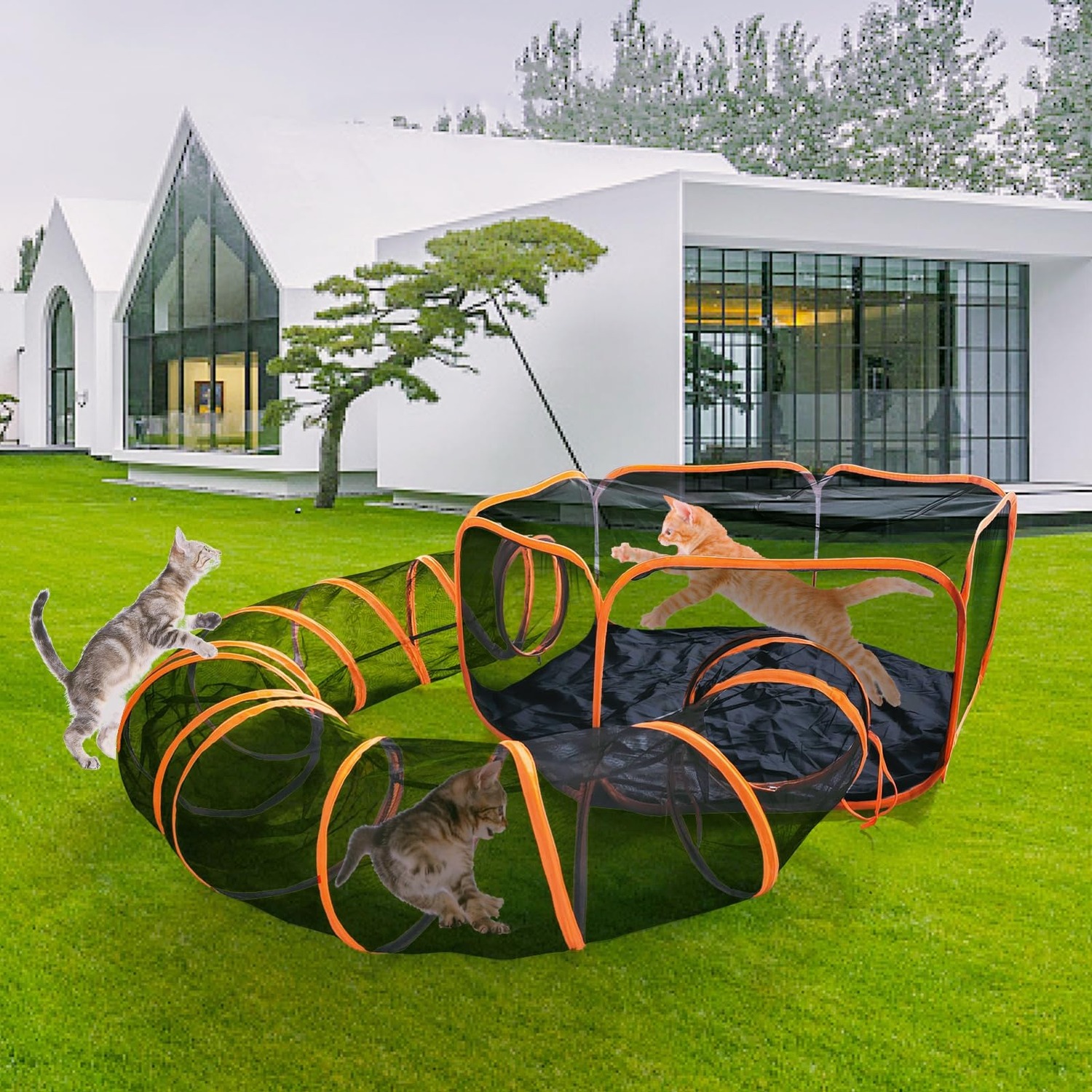
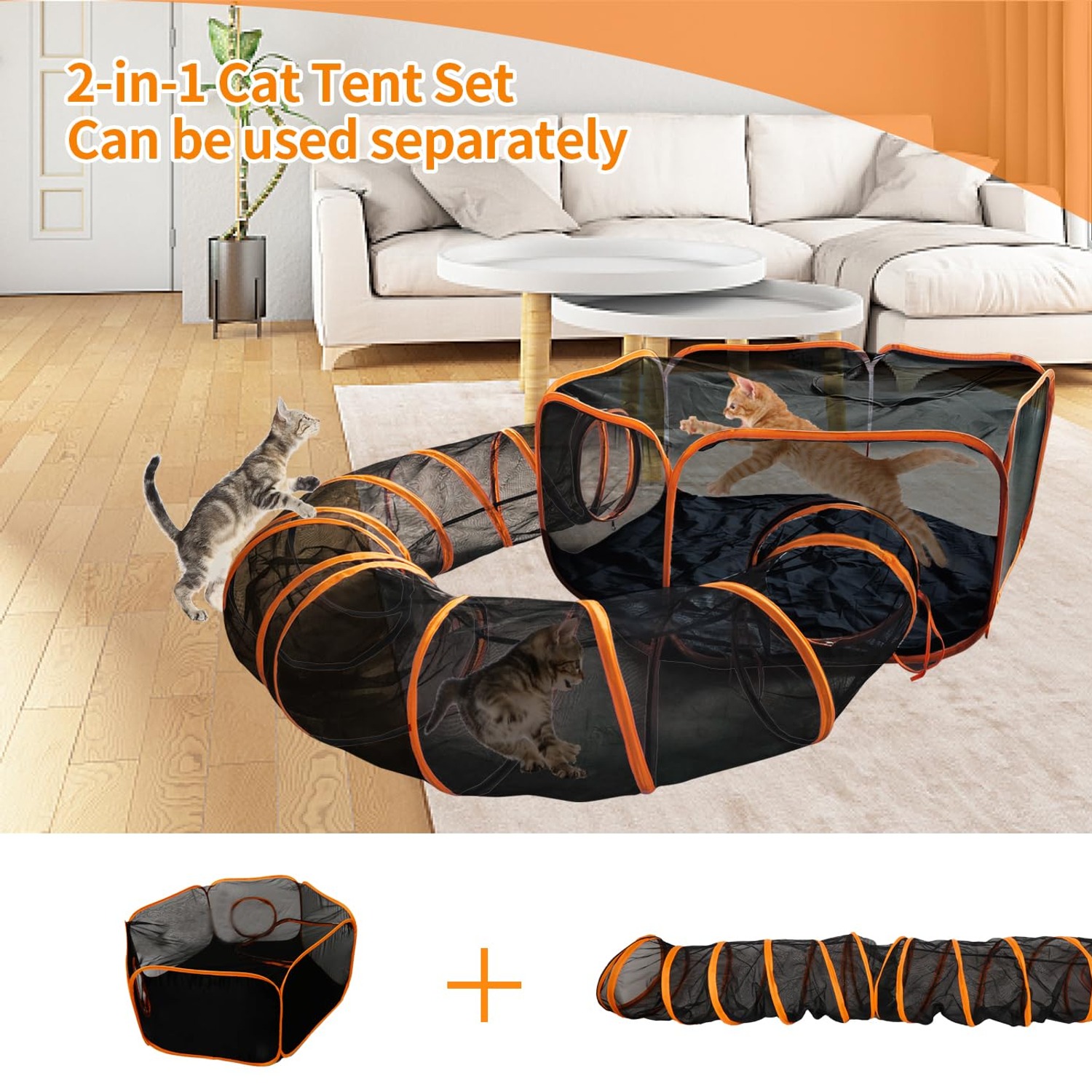
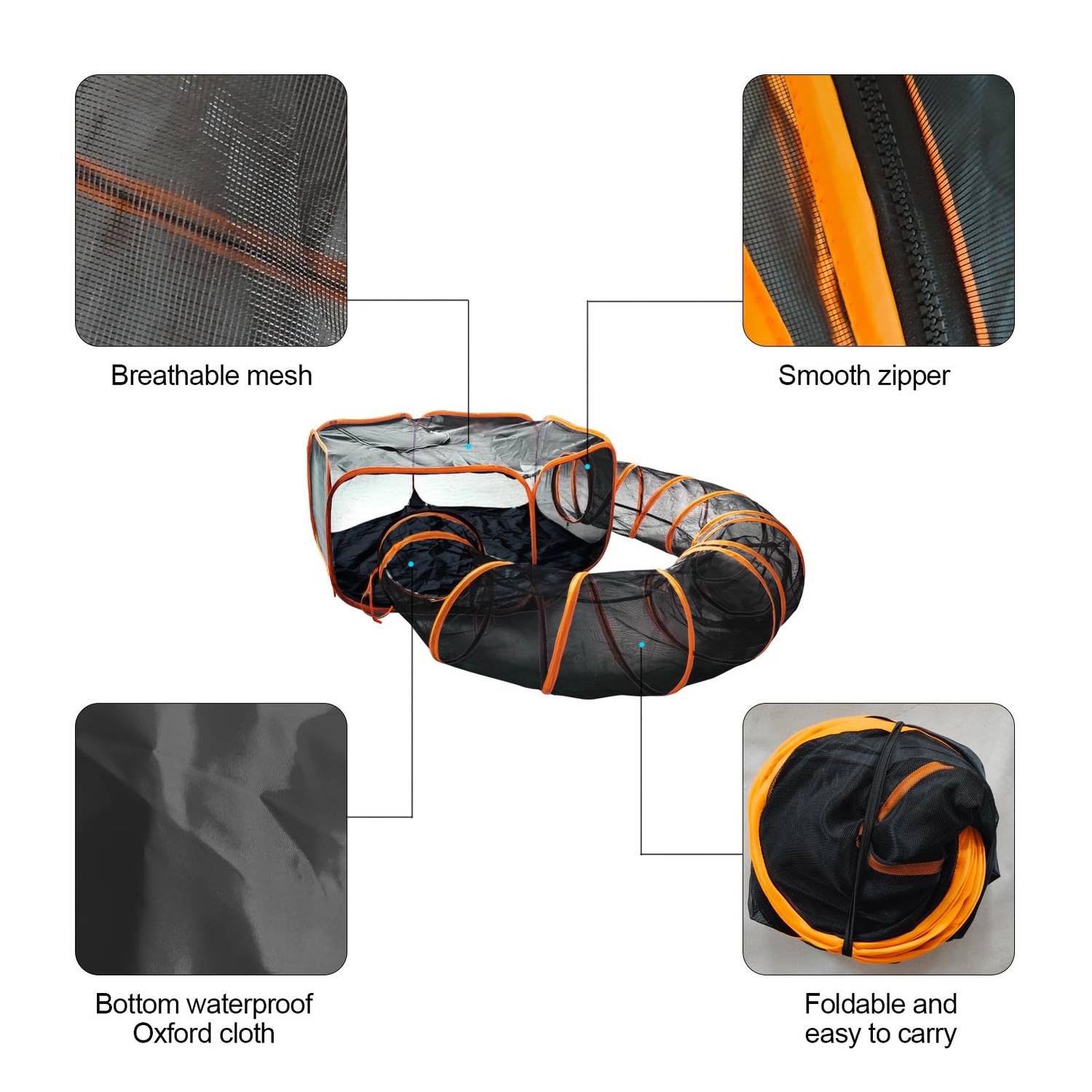
This design comes in two pieces that join up. The tent is the main room, a square that opens out to 120 x 120 x 45 cm with a solid fabric floor. The tunnel is a long wrap-around section that zips onto one of the tent's two large doors.
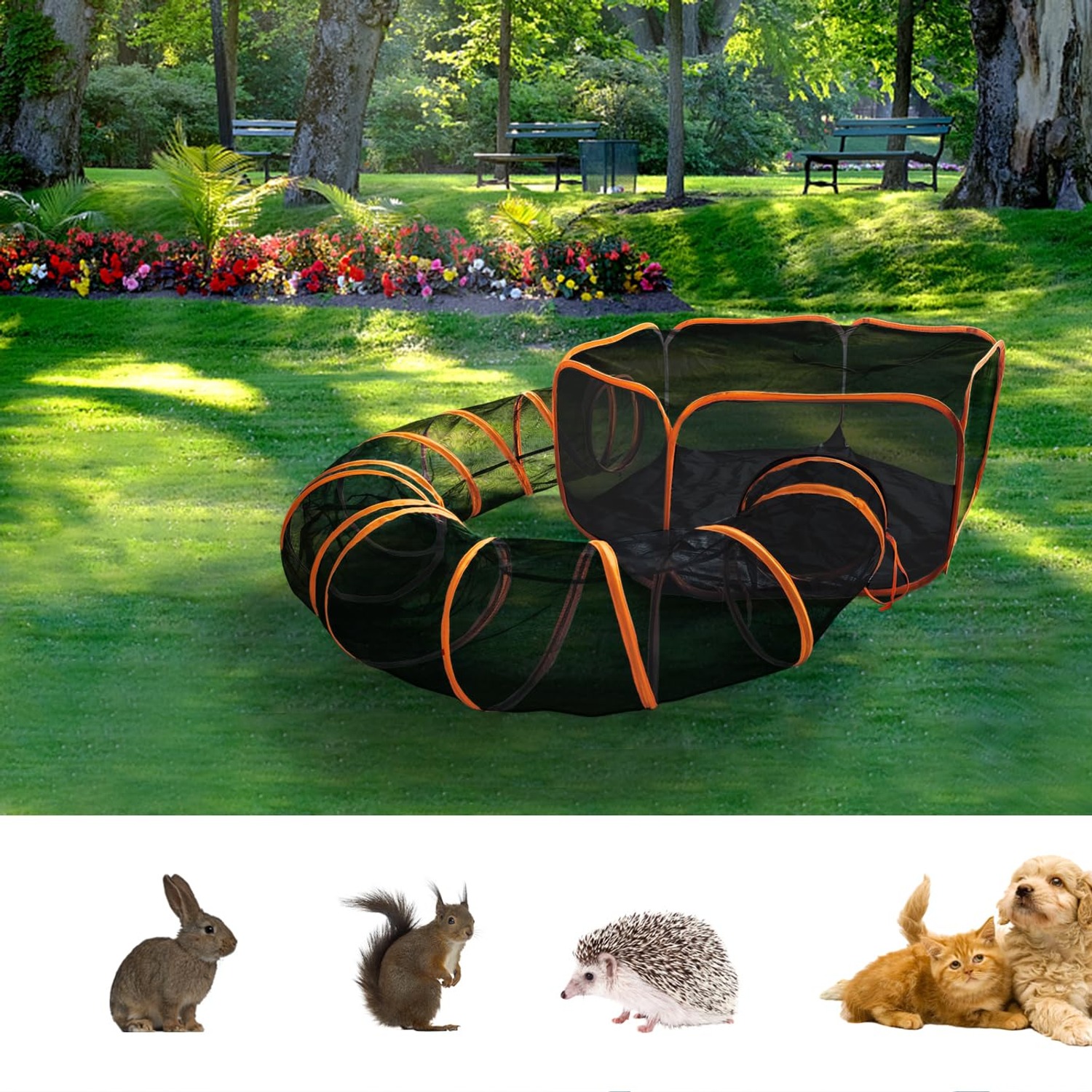
That zip connection is the useful part. Instead of a single box, your cat gets a circuit. They can wander out through the door, move along the tunnel and come back round, and the whole thing stays closed the entire time. Cats like a route. Give a cat a loop to patrol and it will use it over and over, which is a very different experience from being parked in a square of mesh.
The walls and roof are mesh. That keeps the air moving, which matters a lot once the sun is up, and it gives your cat a clear view in every direction. The frame is alloy steel, so the structure holds its shape rather than sagging. Underneath, a waterproof Oxford fabric base keeps paws on something solid and stops cold damp coming up from the lawn.
Two doors instead of one sounds like a minor detail. It is not. One door becomes your access point for water bowls, toys and lifting a reluctant cat back out, while the other handles the tunnel. You are not crawling in through the same opening your cat is trying to exit through.
Who this suits
An apartment cat with a balcony is the clearest fit. Set it up on a flat section of balcony floor, well away from the railing, and your cat gets sun and street noise without any chance of a fall. Used that way, a balcony cat tent gives you the main benefit of a built catio for a fraction of the cost and no drilling.
Renters are the second group. You cannot bolt a permanent run onto a house you do not own. Something that folds away solves that, and it comes with you when you move.
Campers and caravanners get a lot out of it too. A camping cat enclosure that packs into a bag means your cat does not have to stay shut in a van all day. Set it up in shade near your site, keep an eye on it, and your cat can sit outside like everyone else.
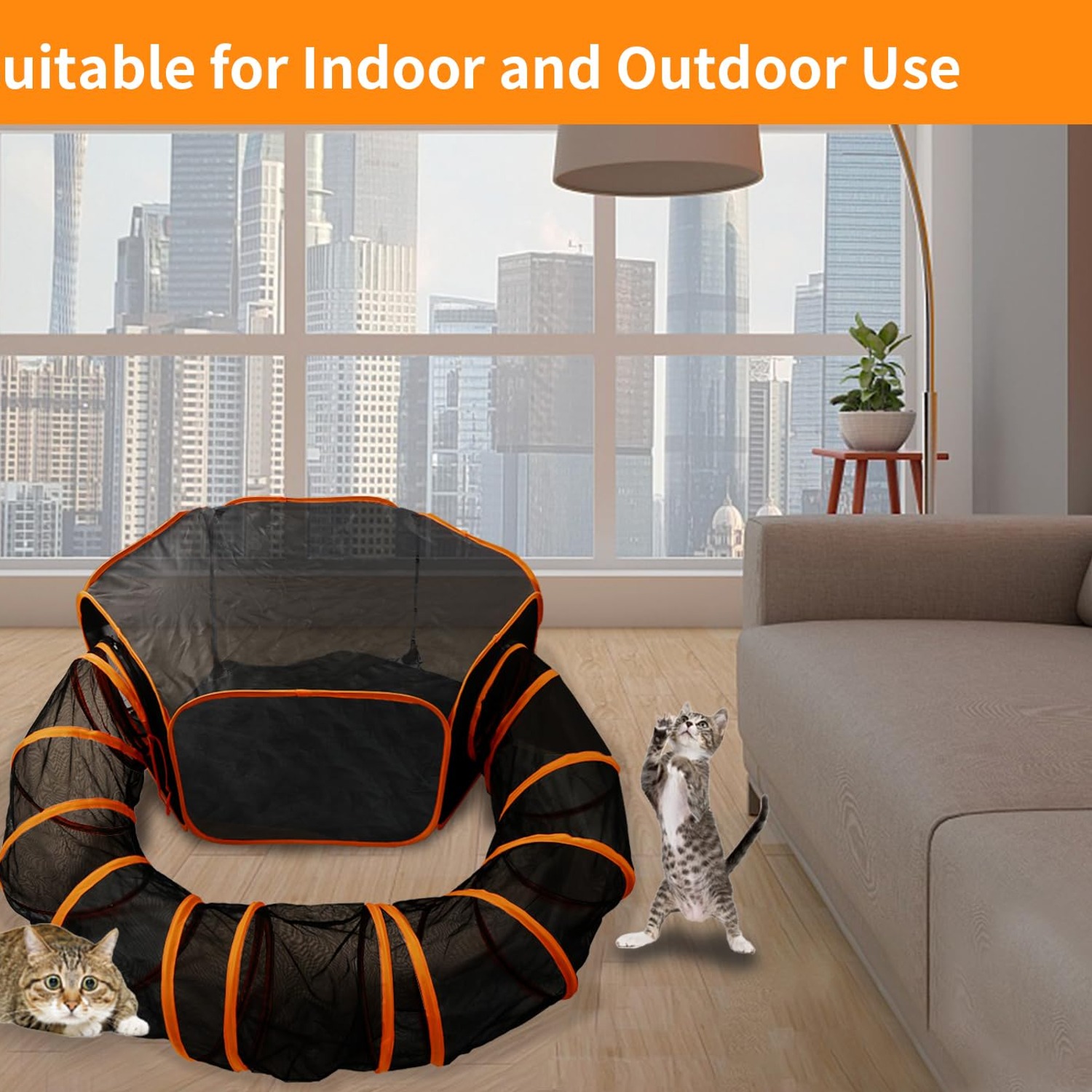
Then there is indoor use, which people often overlook. A new kitten who needs separating from the resident cat, a pet recovering from surgery, or a rabbit who needs a safe spot away from the dog. Indoors it works as a small catio, and the mesh means the animal inside can still watch the household rather than being shut in a dark room.
Choosing the right outdoor cat pen
Start with the ground, not the product. Walk your yard or balcony and find the flattest, shadiest patch you have. Measure it. If 120 cm square plus room for the tunnel does not fit with space to spare, you will end up wedging the enclosure against a wall and losing the loop that makes it work.
Next, think about height. At 45 cm the tent is low. Most cats are perfectly content to lie, sit and stretch in that space, because that is what cats do outside anyway. But if your cat is a tall breed or likes to stand up and look around, a low mesh cat tent will feel tighter than a tall pen. Worth knowing before you buy rather than after.
Think about how often you will actually use it. If the answer is a few afternoons a week and the occasional holiday, something foldable is the right call. If your cat is going to live outside for hours every day in all weather, a permanent timber and wire catio is the better long term build. These two products answer different questions.
Finally, check your climate honestly. Mesh breathes well, which is great, but mesh gives almost no shade and no rain protection. If your summers are harsh you need a tree, an awning or a shade sail over the top, and you need water inside every single time.
Setting it up without a fuss
The first time, do it indoors with no cat involved. Open the tent, work out which door the tunnel zips to, connect it, then fold it all back down. Five minutes of practice and you will have the one minute setup the design is capable of.
Outside, pick level ground and clear away sticks and stones that could press up into the base. Weigh the inside with a bed, a water bowl or a cushion so a gust cannot shift it, and if your site allows pegs or weights at the corners, use them. On a windy day, do not use it at all with a cat inside.
Introduce your cat slowly. Leave the doors open at first and drop a treat or a favourite toy inside, then step back. Most cats investigate within a few minutes. Some need a couple of sessions. Forcing a nervous cat into a new enclosure usually sets you back a week, so let curiosity do the work.
Stay nearby while they are in it. This is supervised outdoor time. A fabric enclosure keeps a relaxed cat contained very well, but it is not a locked cage and it should not be treated as one.
Looking after it
Shake the fur and grass out after each use. Wipe the mesh and the base with a damp cloth and a little mild soap, then leave it open in the shade until it is completely dry. This is the step people skip, and it is the one that matters, because folding a damp enclosure into a closed bag is how mildew and rust get started.
Do not put it through the washing machine. Spot clean marks as they happen. If it gets caught in rain, open it up at home and let it air out properly before it goes back in the bag.
Give the zips a quick look now and then. On any zipper closure product the zips take the most wear, so keep them clear of grit and never force them. Store the whole thing somewhere cool and out of direct sunlight, since UV is hard on mesh over time.
The short version
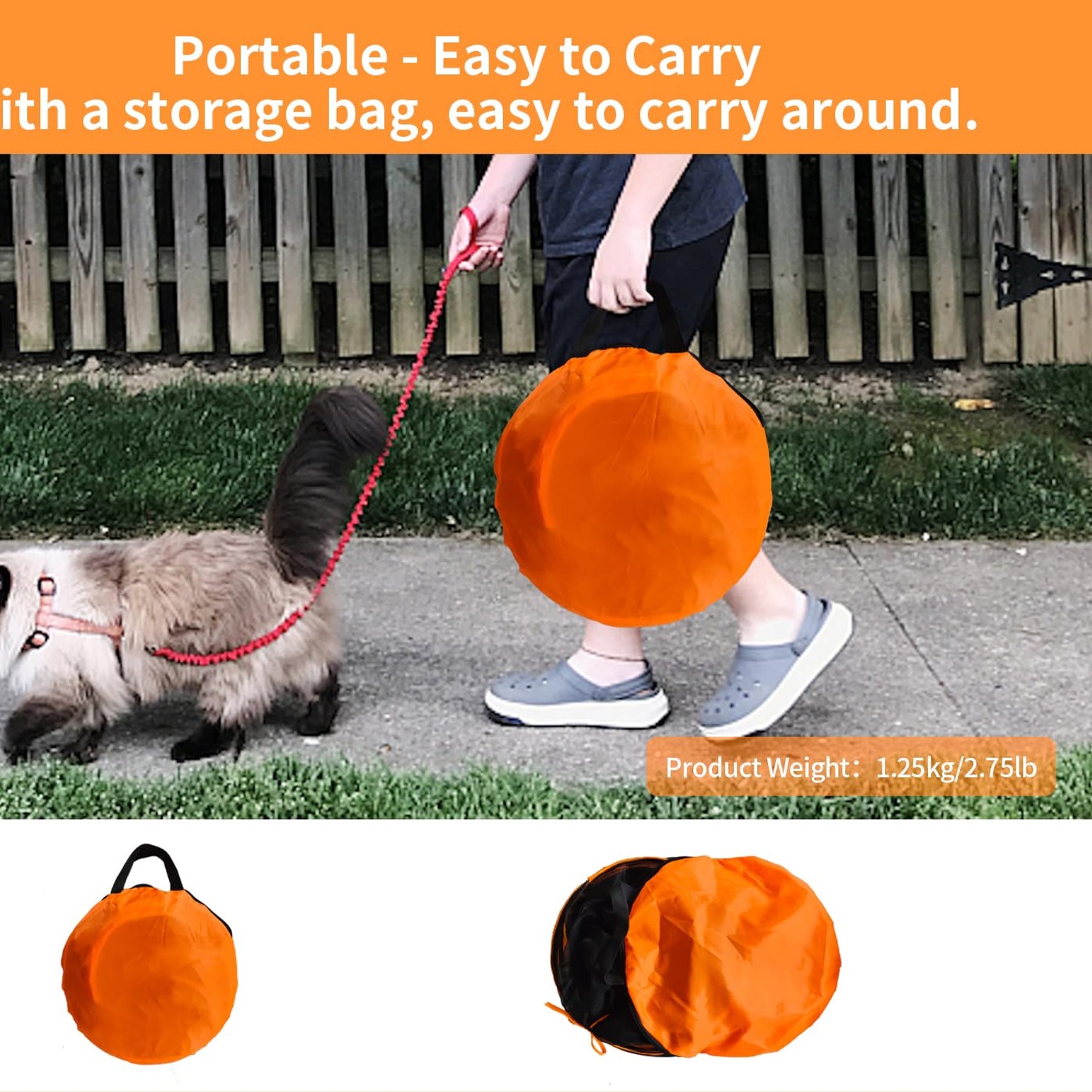
This is an orange, steel framed, two part enclosure: a 120 x 120 x 45 cm mesh tent with a wrap-around tunnel that zips on through one of two large doors. It needs assembly, takes about a minute to set up once you know it, folds into a supplied bag, and suits cats, rabbits and similar small pets.
Buy it if you want supervised outdoor time for an indoor cat and you need something that disappears into a cupboard afterwards. Measure your flattest shaded patch first, always put water inside, and stay close while your cat is in it. Used that way, it is one of the simplest ways to give a housebound cat a proper afternoon outside.