
The complete guide
The Modular Catio Buyer's Guide
The problem with letting cats outside
Cats want out. You can tell by the way they sit at the sliding door at seven in the morning, tail flicking, watching a bird that has no idea it is being studied. Indoor life keeps them safe, but it is boring in a way that shows up as weight gain, overgrooming and three in the morning sprints down the hallway.
Letting them roam free fixes the boredom and introduces every other problem. Roads. Dogs. Other cats and the vet bills that follow a territorial scrap. Native wildlife, which in a lot of places is now a legal issue as well as an ethical one. Plenty of councils have curfews or outright containment rules, and the fines are real.
A modular catio sits in the gap. Your cat gets the sun, the grass smell and the bird show. They do not get the road or the neighbour's terrier. You get to stop worrying at dusk.
How this one works
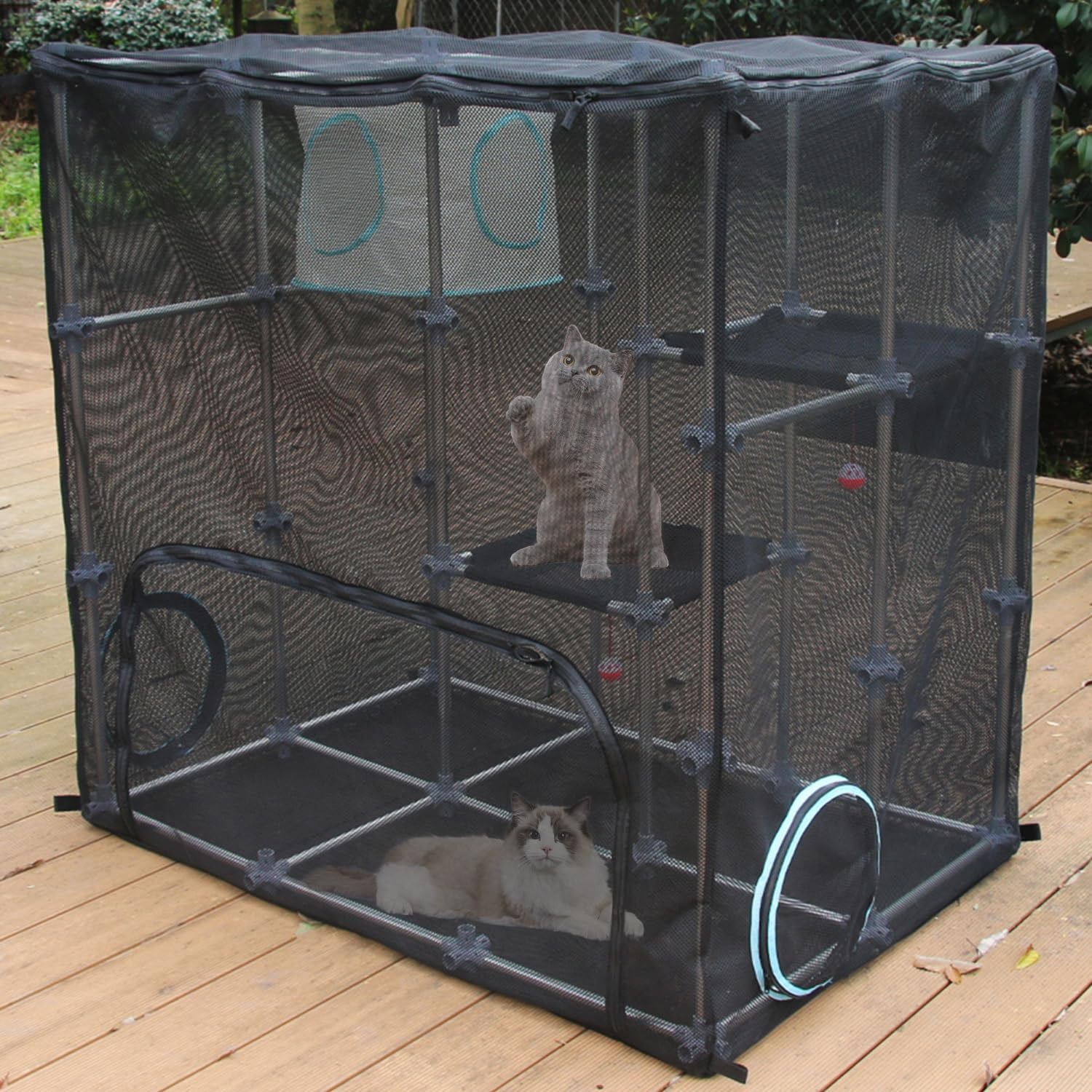
The INTURN mega kit is a framed enclosure measuring 119.4 centimetres long, 119.4 wide and 78.7 high. The frame is aluminium bar, and the walls are nylon mesh with zipper closures. It is a rectangular prism, so you get the full floor area rather than the pinched corners of a dome.
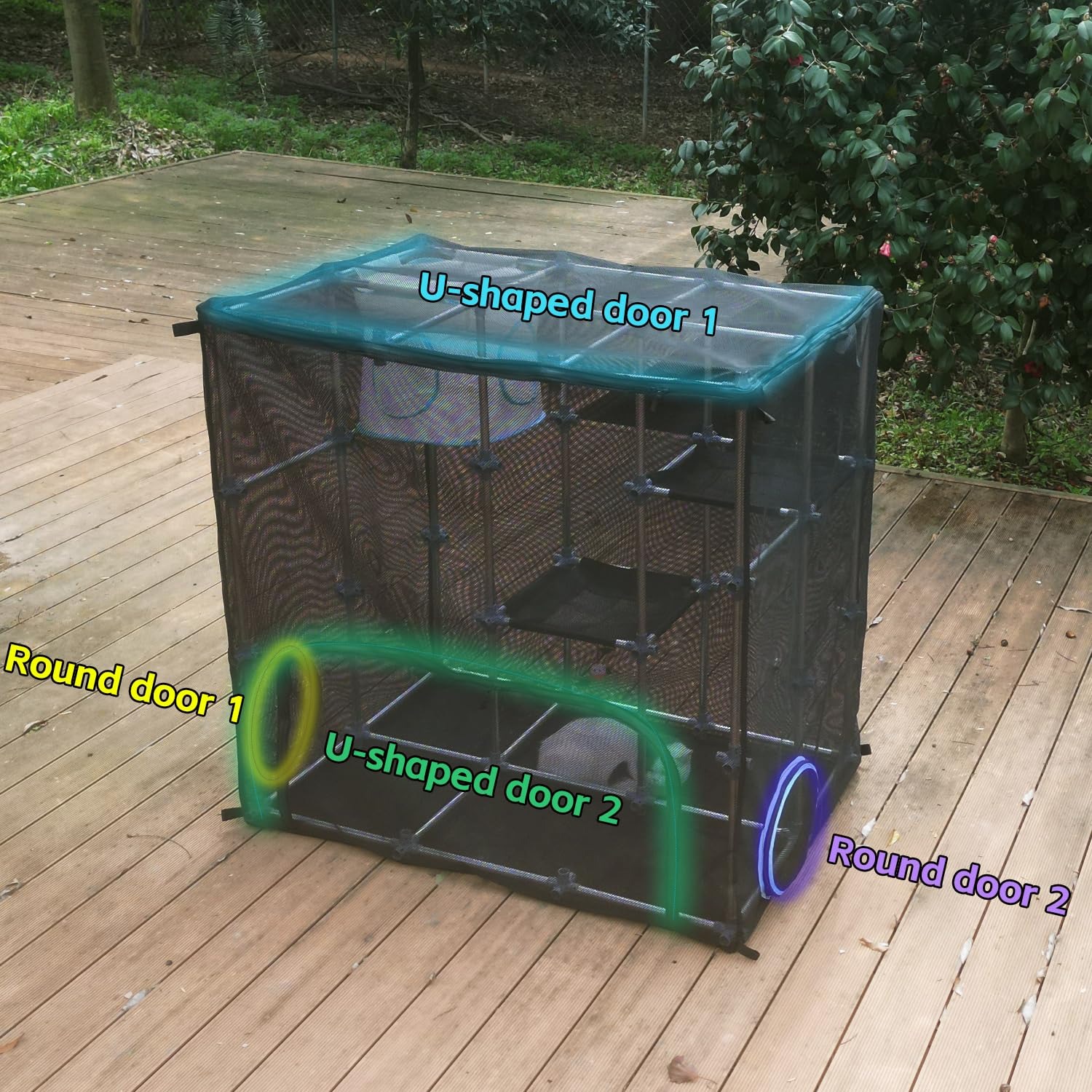
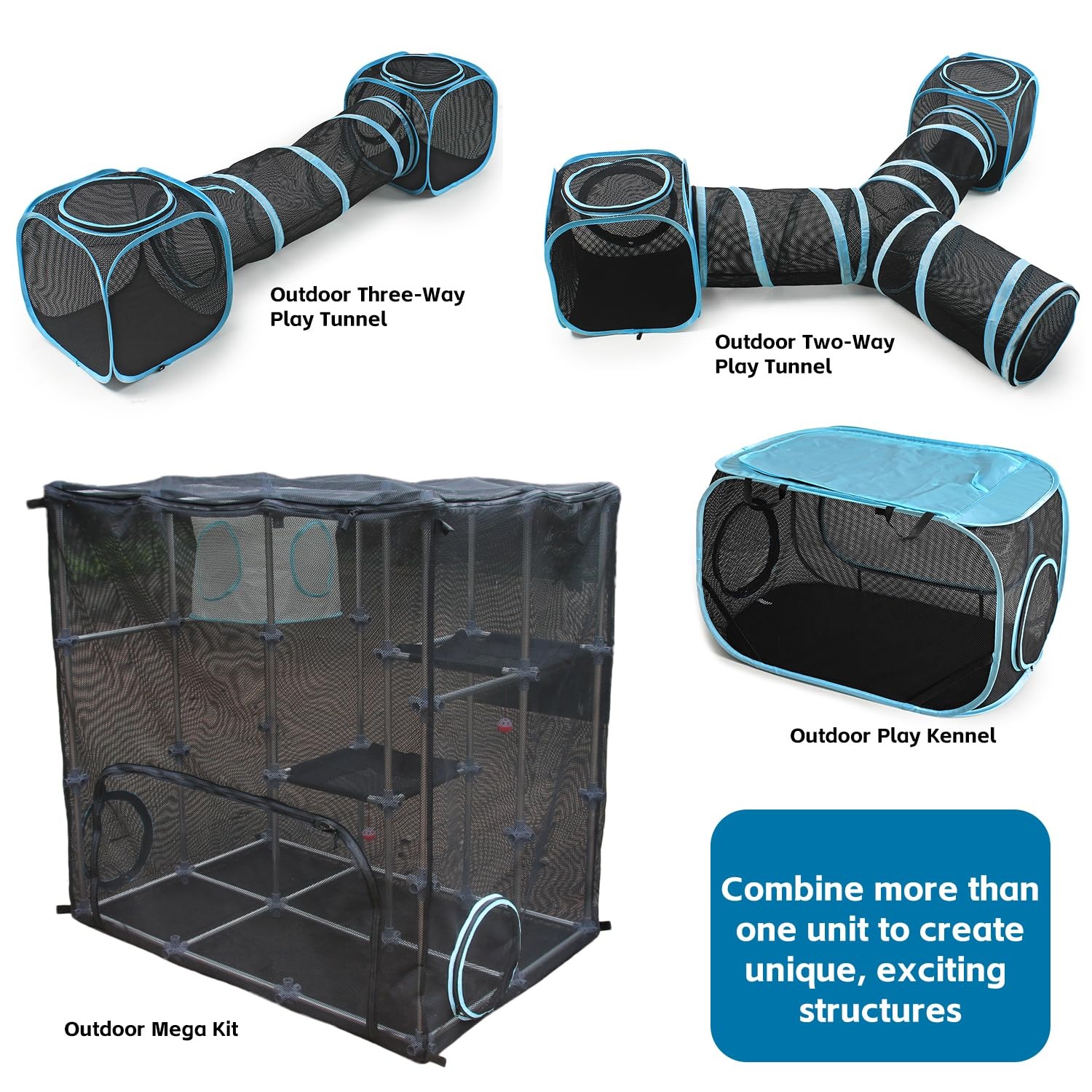
The part that changes how you use it is the door arrangement. There are double zip doors on both sides. Each one is an entrance for you, and each one is also a connection point. Unzip a side panel, bring up another INTURN piece, and the two join into one continuous space. That is the difference between a cat pen and an outdoor cat enclosure system.
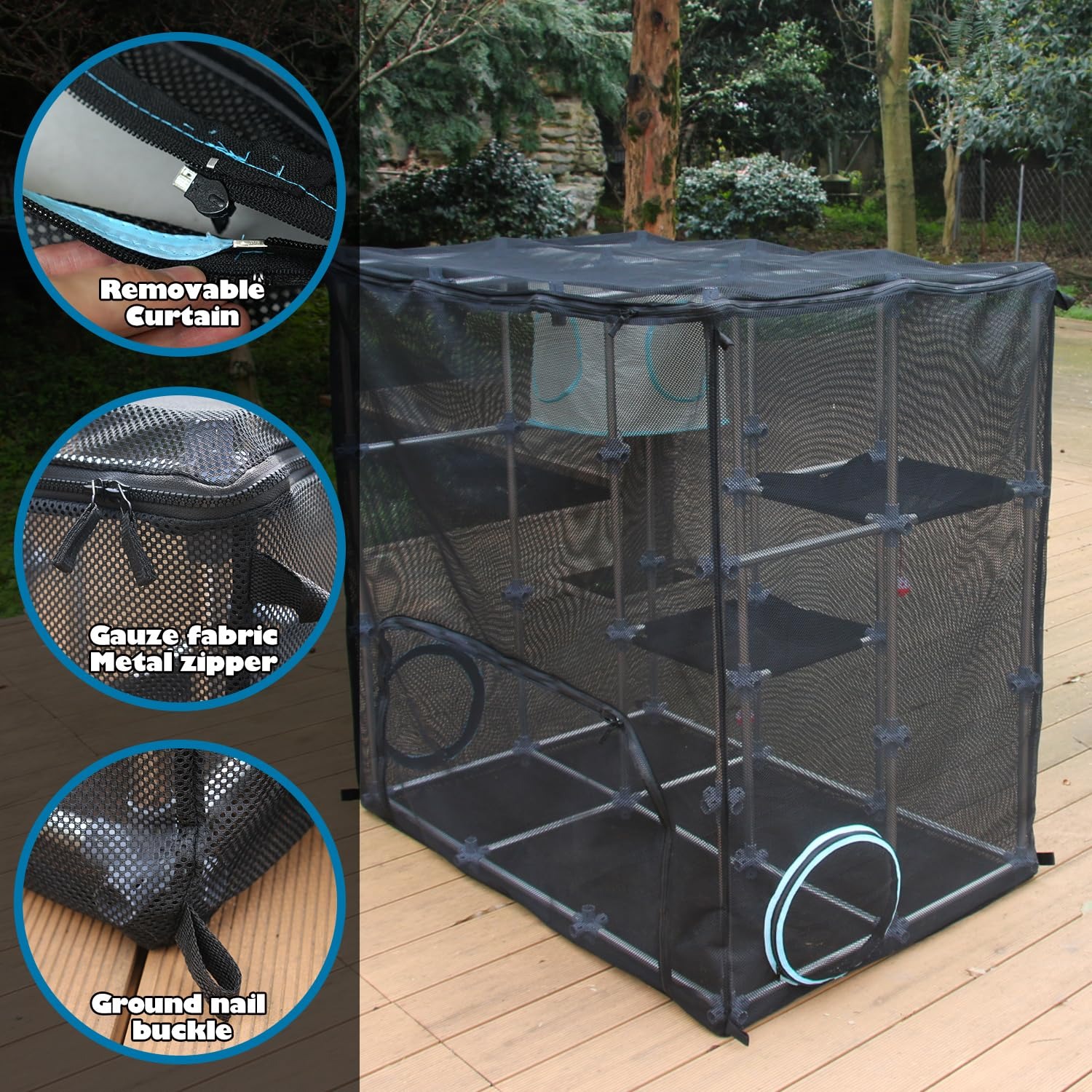
Mesh handles the walls for one practical reason, which is air. An enclosure with solid sides turns into an oven on a sunny afternoon and holds every smell. Mesh moves air through, breaks up harsh sun into dapple, and means you can look out the kitchen window and see exactly what your cat is doing. That last part is worth more than it sounds. You will check on them constantly in the first week.
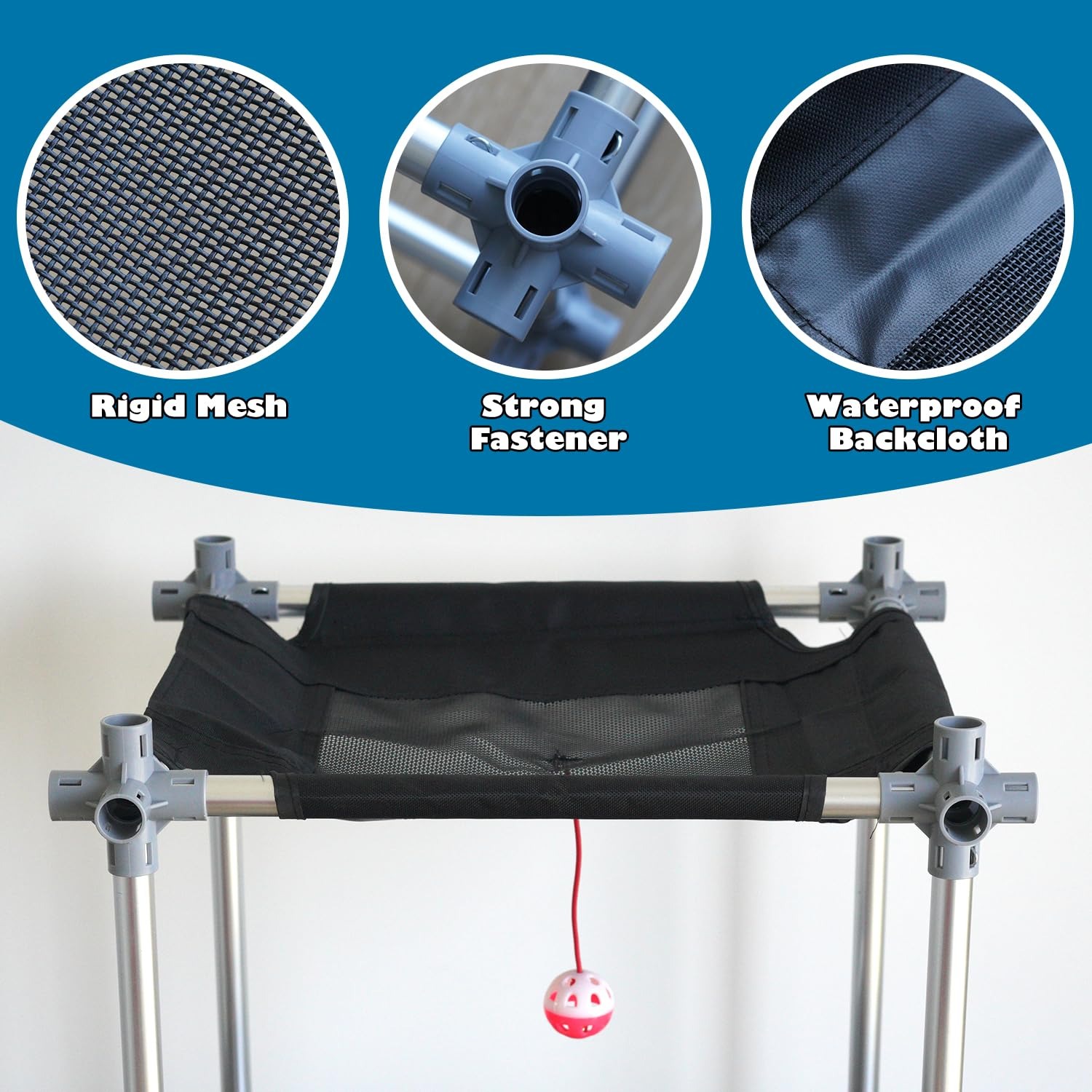
Aluminium for the frame is a weight decision. Steel is heavier and will rust outdoors unless it is well coated. Thin plastic poles bend. Aluminium holds its shape under a cat throwing itself at a wall, and still lets one adult pick the whole thing up and carry it to shade. Improved locking mechanisms on the joints are what stop that lightness turning into wobble.
Who it suits
This works best for the household with one to three cats and a patch of outdoor space they can give over. A courtyard, a deck, a corner of lawn, a deep balcony. You do not need a big yard. You need about a metre and a half square that gets some sun and some shade across the day.
It suits indoor cats being introduced to outdoor time for the first time, because the containment is total and you can sit with them. It suits older cats who want sun but no longer want to climb fences. It suits anyone under a council containment rule who still feels guilty about it.
It is less suited to a household with a cat that genuinely patrols a large territory and has done for years. That cat will not be satisfied by a square and a half of space, at least not without a tunnel run connecting to something bigger. The good news is that the connection points exist, so you can build toward that.
It is also not the right pick if you want something you throw open in ten seconds. Assembly is required. This is a kit, not a pop up cat enclosure.
How to choose and set it up
Measure before anything else. You need 119.4 by 119.4 centimetres of flat ground, plus a bit of clearance so you can walk around at least two sides to work the zips. On a balcony, measure to the inside of the railing, not the outside edge.
Think about sun across the whole day, not just the time you are looking. A spot that is lovely at ten in the morning can be scorching at two in the afternoon. Shade matters more than sun for a cat, because they can always find a warm patch but they cannot invent shade. Siting it half under an eave or a tree is ideal.
Check the ground is level. A frame sitting on a slope puts uneven load on the joints and makes the zips harder to work. On grass, peg the corners. On paving or decking, weight them. A lightweight frame is easy to reposition, which also means wind can move it, and you do not want that happening with a cat inside.
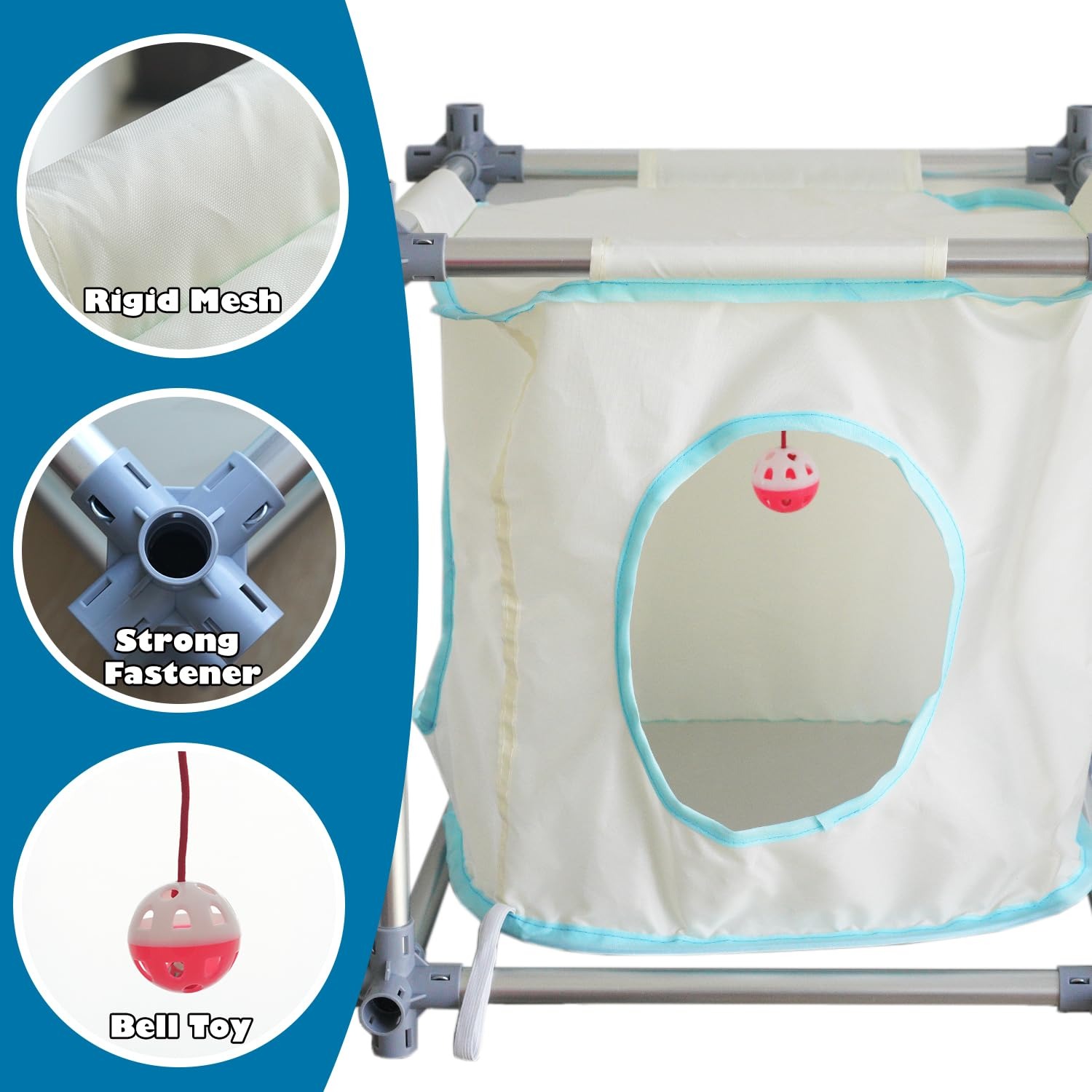
Then set up the inside. The frame takes hammocks and tents, and layering the space is what turns a box into somewhere a cat wants to be. Give them one high perch and one hiding spot at ground level. Most cats will use both, switching depending on mood and who is walking past the fence.
Introduce them slowly. Leave the doors open with the catio against a familiar wall for a day or two. Put a blanket that smells like home inside. Drop a few treats in without making a ceremony of it. Sit in a chair nearby and read something. The cat will investigate on their own schedule, and pushing it just makes the whole structure suspicious. A week is normal.
Expanding later
The reason to buy an expandable cat enclosure rather than a fixed one is that your situation changes. You adopt a second cat. You move to a place with a better yard. Your cat gets bolder and the original footprint starts to feel small.
With the side zip doors, you add rather than replace. A tunnel section can run from the catio to a back door so your cat lets themselves in and out. A second panel doubles the floor area. For a multi-cat house, two linked spaces mean a cat who wants quiet can get away from one who wants to wrestle.
Plan the shape loosely before you start buying pieces. Think about where people walk, where the hose goes, where you park the bins. A cat enclosure system that blocks the path to the clothesline will annoy you within a fortnight.
Keeping it in good shape
Maintenance is light but it is not nothing. Spot clean the mesh with warm water and a mild pet-safe detergent, then let it dry completely before you fold anything. Bleach and solvents weaken nylon fibres, so leave them out. Do not put mesh panels in a washing machine, because the agitation stretches the weave and stresses the stitching.
Dry the aluminium bars after rain. Aluminium does not rust, but water sitting in joints collects grit, and grit is what makes locking mechanisms stiff. Run the zips every few weeks and brush out any sand or dirt. A zip that sticks is a zip that will eventually fail, and a failed zip on a side door is a cat loose in the garden.
Give the mesh a quick look for pulls or thin spots whenever you clean. Catching a small snag early is a two minute fix. Catching it late is a new panel.
If the catio is coming out of use for a season, store it dry and out of direct sun. UV is harder on nylon than rain is.
The short version
This is a 119.4 by 119.4 by 78.7 centimetre enclosure in aluminium and breathable nylon mesh, with zip doors on both sides that connect to other INTURN pieces. It needs assembling, it needs a level spot with some shade, and it needs anchoring if there is any wind.
What you get for that is a cat who can lie in the sun, watch birds and smell the grass without you having to wonder where they are. For one to three cats, with room to build it bigger later, that is a fair trade.