
The complete guide
How to Choose an Outdoor Cat House That Your Cat Will Actually Use
The problem with "he'll be fine out there"
Cats are tough. They are also small animals with a high surface-area-to-weight ratio, which is a technical way of saying they lose heat fast when they are wet. A cat sitting under a car or behind a woodpile is sheltered from direct rain, but it is still sitting on cold ground with air moving past it, and that combination drains body heat quickly. In wet weather it is worse, because damp fur stops insulating almost completely.
Most owners notice this before they can explain it. The cat starts coming in earlier. It sits by the door longer. It picks one scruffy spot behind the shed and refuses to use anywhere else. What that cat is telling you is that it wants somewhere dry, enclosed and slightly off the ground, and it has not found a good option.
An outdoor cat house fixes a narrow problem very well. It is not a replacement for bringing a cat inside, and it will not make an unsafe neighbourhood safe. What it does is give a cat a reliable dry spot it can get to on its own terms, at any hour, without waiting for a door to open.
How a cat shelter actually works
The physics are simple. A small enclosed space with a cat in it warms up from the cat's own body heat. The smaller the space, the faster it warms and the better it holds. This is why a cat house that looks too small often works better than a roomy one. You are not building a bedroom, you are building a pocket of still, warm air.
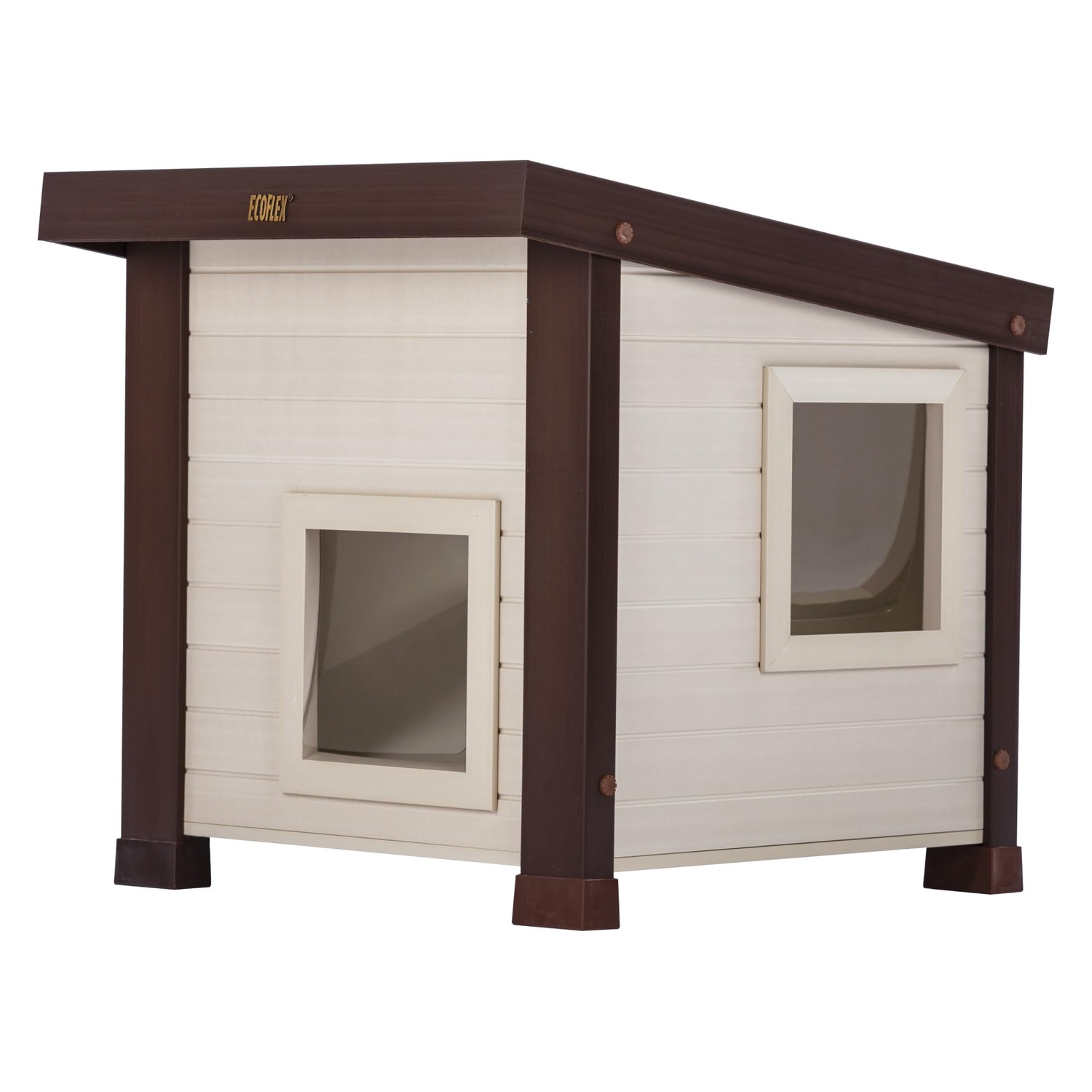
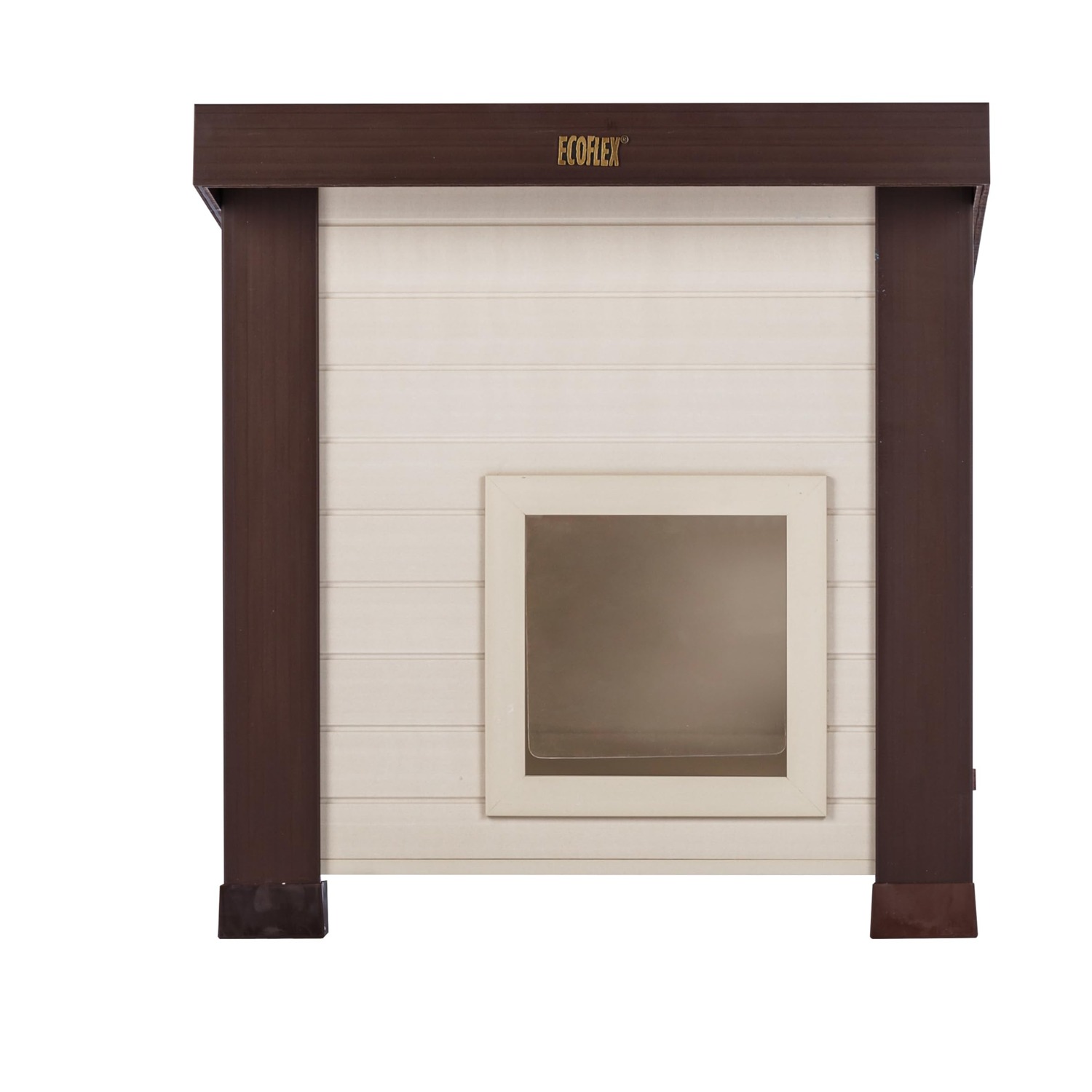
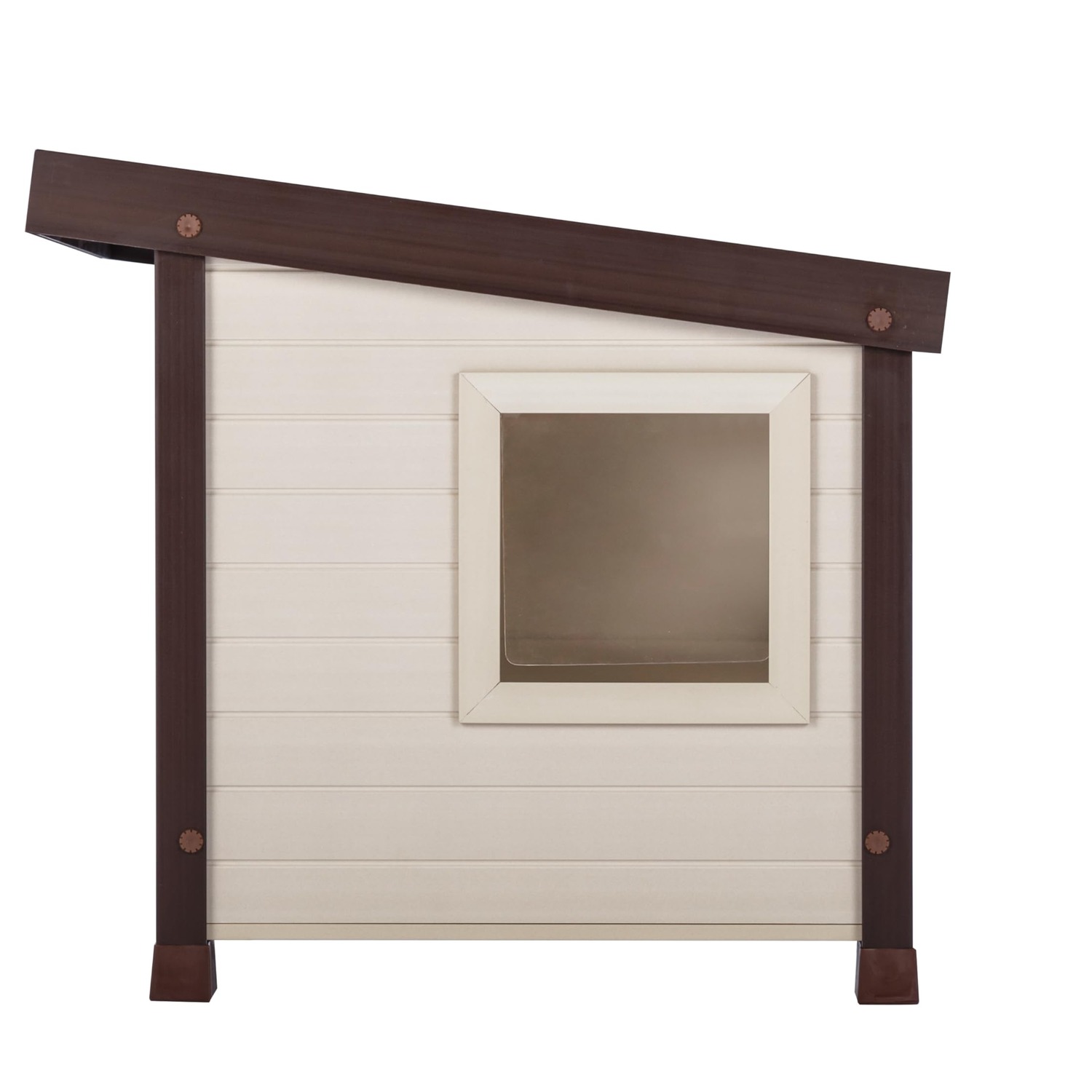
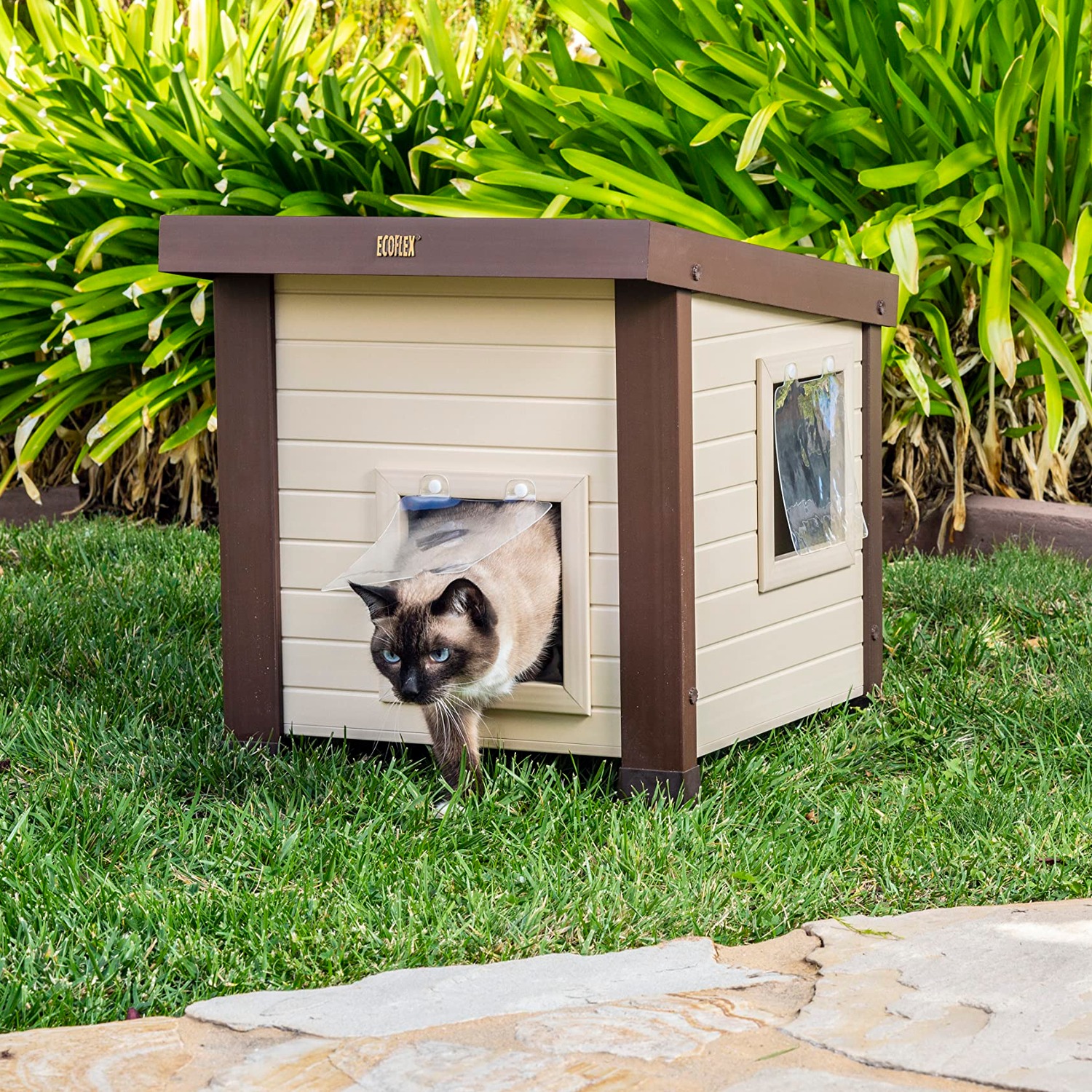
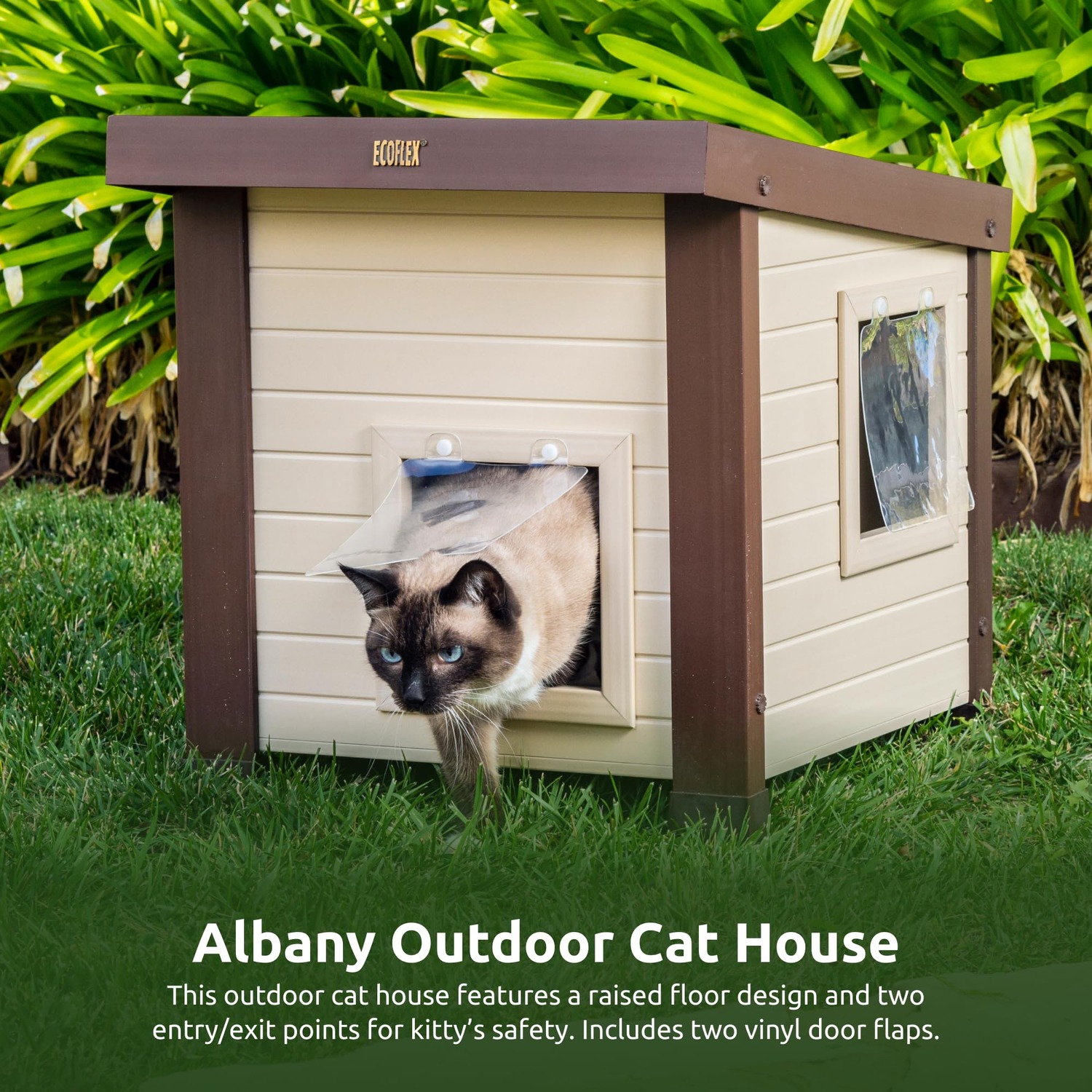
Three things make that pocket work. First, a roof and walls that keep rain off. Second, something at the doorways to stop wind blowing straight through, which is what the vinyl flaps on this house do. Third, a floor that is not in direct contact with cold, wet ground. The elevated floor on this model handles that, and it has a second benefit: air can move underneath, so the base does not sit in a permanent puddle and the inside does not go musty in summer.
The resin construction matters too. Timber shelters look lovely but they absorb water, swell, and eventually rot from the base up. Resin panels shed water, wipe clean, and do not hold odour the way porous surfaces do. For a shelter that lives outside year-round, that is the practical choice.
Why two doors is not a gimmick
If you take one thing from this guide, make it this. A cat will not willingly enter a space with only one exit unless it already trusts the space completely. This is instinct, not fussiness. A single-door box is a place where something can corner you.
Two openings change the maths. The cat can see daylight at the far end, and it knows it can leave in either direction. For a house pet that already trusts its garden, this is a nice-to-have. For a semi-feral or stray cat, it is often the difference between a shelter that gets used and an expensive garden ornament.
The same logic applies to placement. A cat house pushed into a tight corner with shrubs crowding both doorways has effectively lost its second exit. Give both openings a clear line out.
Who this suits
This shelter makes sense for a few different situations. Indoor-outdoor pet owners use it as a daytime base so the cat is not scratching at the door every time a shower passes through. People who feed strays use it as a stray cat shelter, usually sited quietly at the back of a property where the cats already gather. Rural owners put them in barns and sheds for working cats, where the enclosed shape keeps a cat out of draughts even under a roof.
It is also a natural fit inside a catio. An enclosure keeps the cat safe from traffic and wildlife, but most catios are open to the weather. Putting a house in the most sheltered corner gives the cat somewhere to retreat to, which encourages it to spend longer outside.
Where it does not suit: it is not a carrier, it is not secure housing, and it should not be used to keep a cat outside that would rather be in. It also will not help a cat that is unwell. Sick cats need warmth, food and a vet, not a garden shelter.
Choosing the right size and spot
Size first. With shelters, snug beats spacious. A cat should be able to turn around and curl up, and not much more. If the house is too big, the cat's body heat disperses and the space never warms. The dimensions recorded for this listing read as packed measurements rather than assembled ones, so if you are planning around a tight space in a catio, message us and we will confirm the assembled footprint before you order.
Placement does more work than people expect. Look for level ground so water runs away rather than pooling under the base. Face the doorways away from the wind that usually brings your weather. Use a wall, fence or hedge on the windward side as a buffer. If you can get it under an eave or a tree canopy, the whole thing stays drier and lasts longer.
Avoid two common mistakes. Do not put it in the middle of an open lawn, because cats do not like crossing exposed ground to reach shelter. And do not put it next to the food bowl. Cats prefer eating and sleeping in separate places, and food attracts other animals you would rather not have nosing around the sleeping spot.
Bedding, warmth and winter
Straw is the standard for cold-weather cat shelters, and for good reason. It is hollow, it traps air, and it does not soak up water. Hay is different and does hold moisture, so skip it. For a pet cat in a sheltered position, a fleece blanket or washable pet mat is comfortable and easy to launder.
Towels and old jumpers seem kind but they go damp and stay damp, which makes the cat colder rather than warmer. If you use fabric bedding, check it after rain and swap it out when it feels cool and heavy.
For genuinely cold winters, a pet-safe heated pad placed inside adds real warmth. One is not included with this house. If you go that route, use an outdoor-rated power supply, follow the pad instructions closely, and route the cable so it cannot be chewed or tripped over.
Keeping it clean
Cleaning is straightforward and it pays off. Smooth resin wipes down with warm water and a mild, pet-safe detergent. Rinse it, let it dry completely, then put fresh bedding in. Strong-smelling cleaners can put a cat off the house entirely, so keep it gentle.
Bedding is where smells start, so change it on a schedule rather than when you notice. Every few weeks suits most pet cats. Shelters used by strays or multiple cats need checking more often. After any illness or flea problem, strip the house out completely and clean it thoroughly before putting it back in service.
Twice a year, give the structure itself a look. Check the door flaps are still hanging properly, make sure the panel joins are snug, and clear leaves and cobwebs from under the raised floor so air keeps moving.
The short version
An outdoor cat house works because it does three unglamorous things well: it keeps rain off, it blocks wind at the doorway, and it lifts the cat off cold ground. This one adds a second door, which sounds minor and is actually the feature most likely to decide whether your cat uses it at all.
Put it somewhere sheltered and level, point the doors away from the weather, give it straw or a washable mat, and clean it on a schedule. Do that and you have solved a small, real problem for your cat, which is usually the best kind of purchase.