
The complete guide
Outdoor Cat Tunnels, A Practical Buyer's Guide
The problem with letting a cat outside
There is a gap between what cats want and what owners can safely allow. Your cat sits at the glass door, watching birds and moving grass, clearly wanting in on it. You know what is out there: roads, dogs, other cats, fences that lead into other people's yards. So the door stays shut, and the cat keeps watching.
An outdoor cat tunnel closes that gap without a building permit. It is a fabric run you unroll on the lawn, peg down, and let your cat into. They get the smells, the sun on their back, the sound of insects. You get to know exactly where they are the whole time.
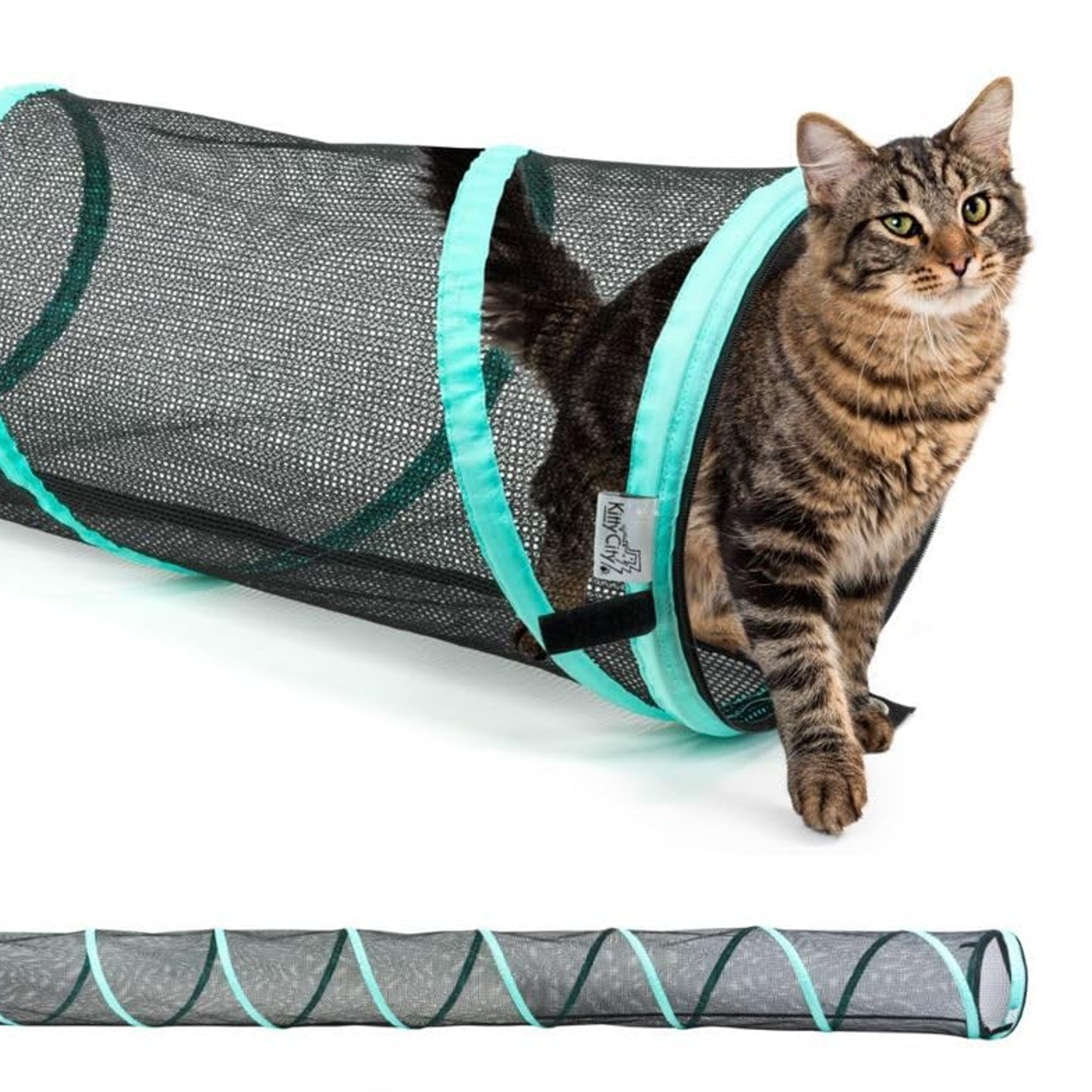
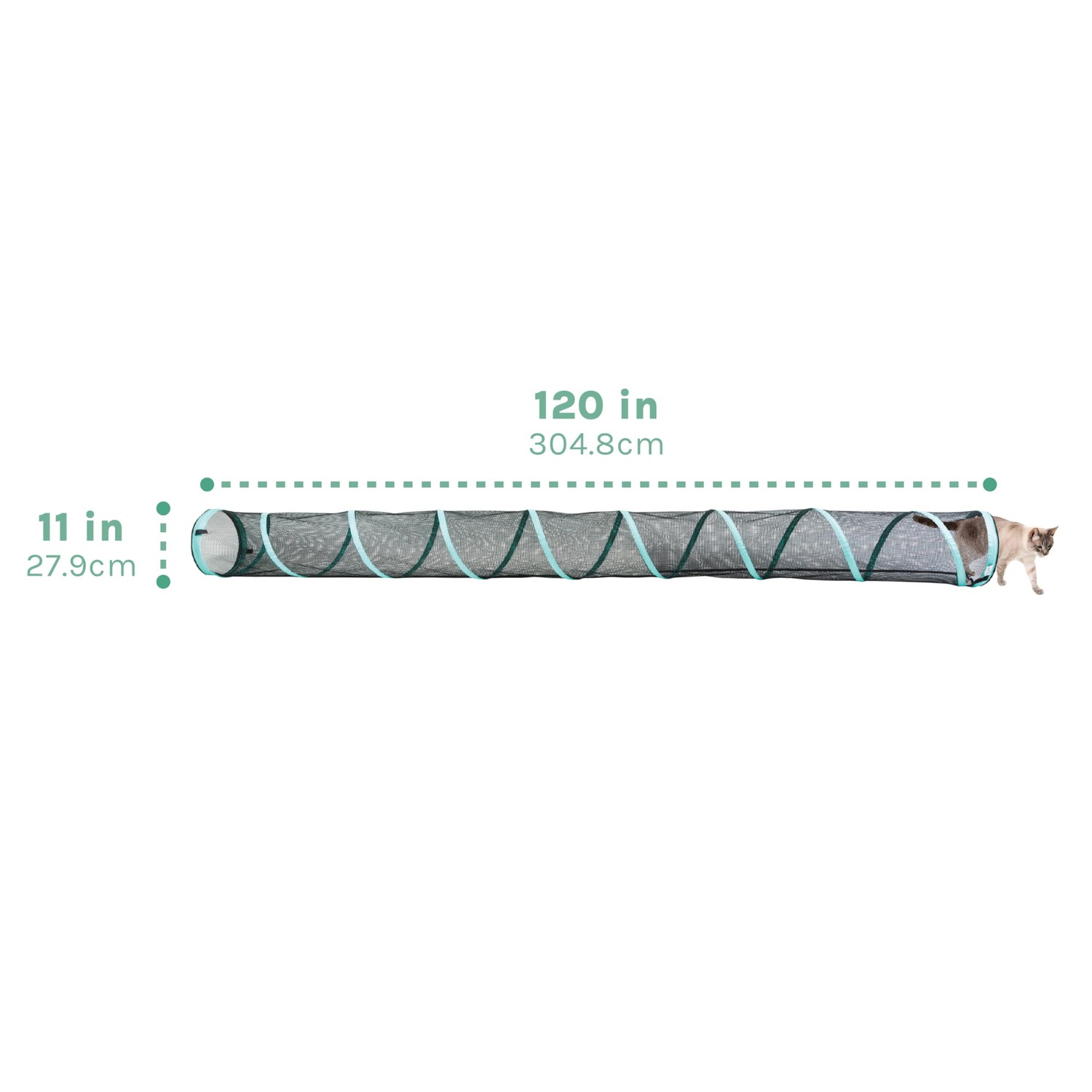
This particular model runs 3.05 metres, which is around ten feet. That length matters more than it sounds. A one metre play tube is a toy. Three metres is a route. A cat can build up speed in it, stop halfway and flop in the sun, then dash out the far end. It changes from a novelty into actual enrichment.
How it works
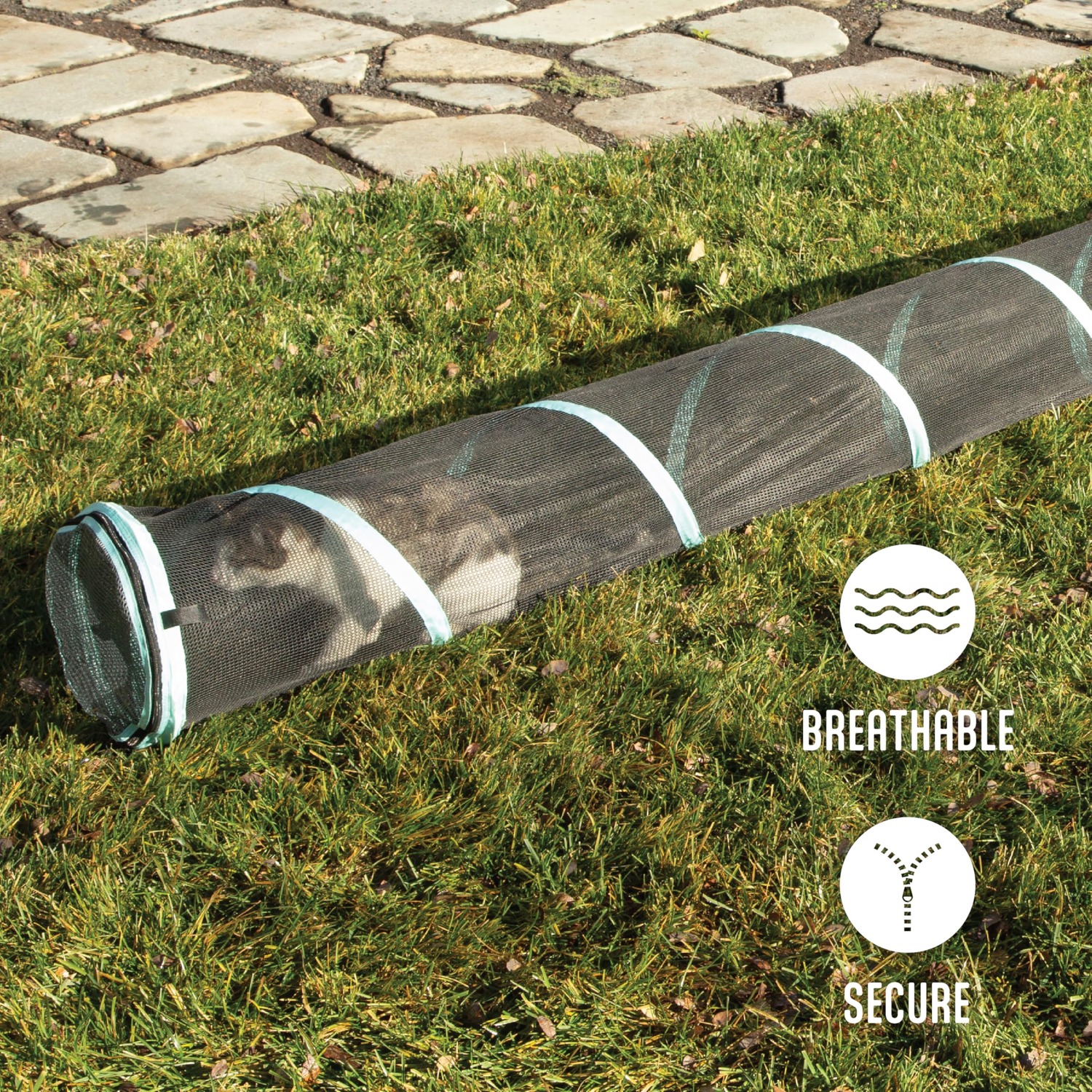
The build is simple on purpose. A polyester tube, 0.28 metres across, with a zip at each end and stakes to hold it to the ground. Total weight is 816 g, so you can carry it out, set it up and bring it back in without it becoming a chore.
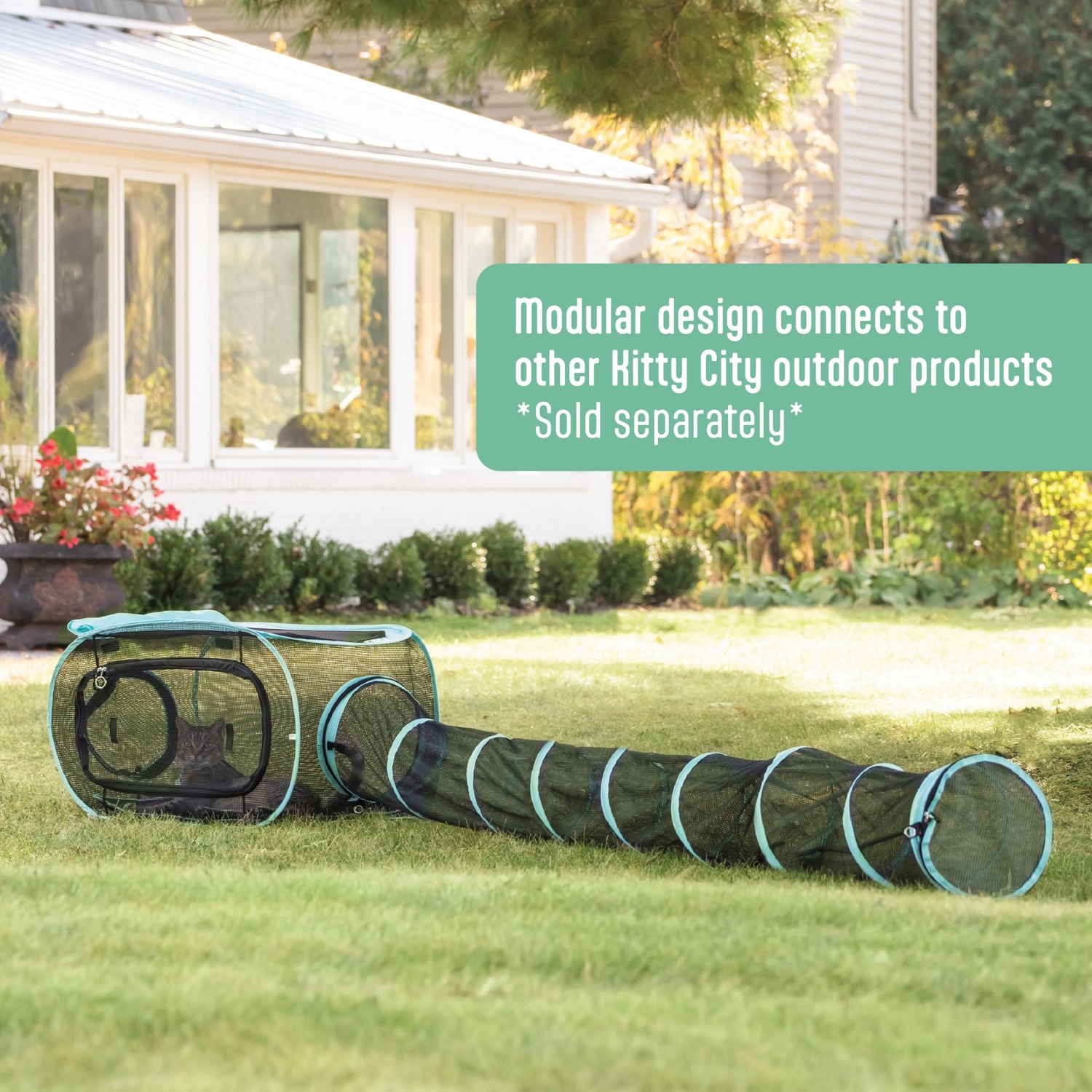
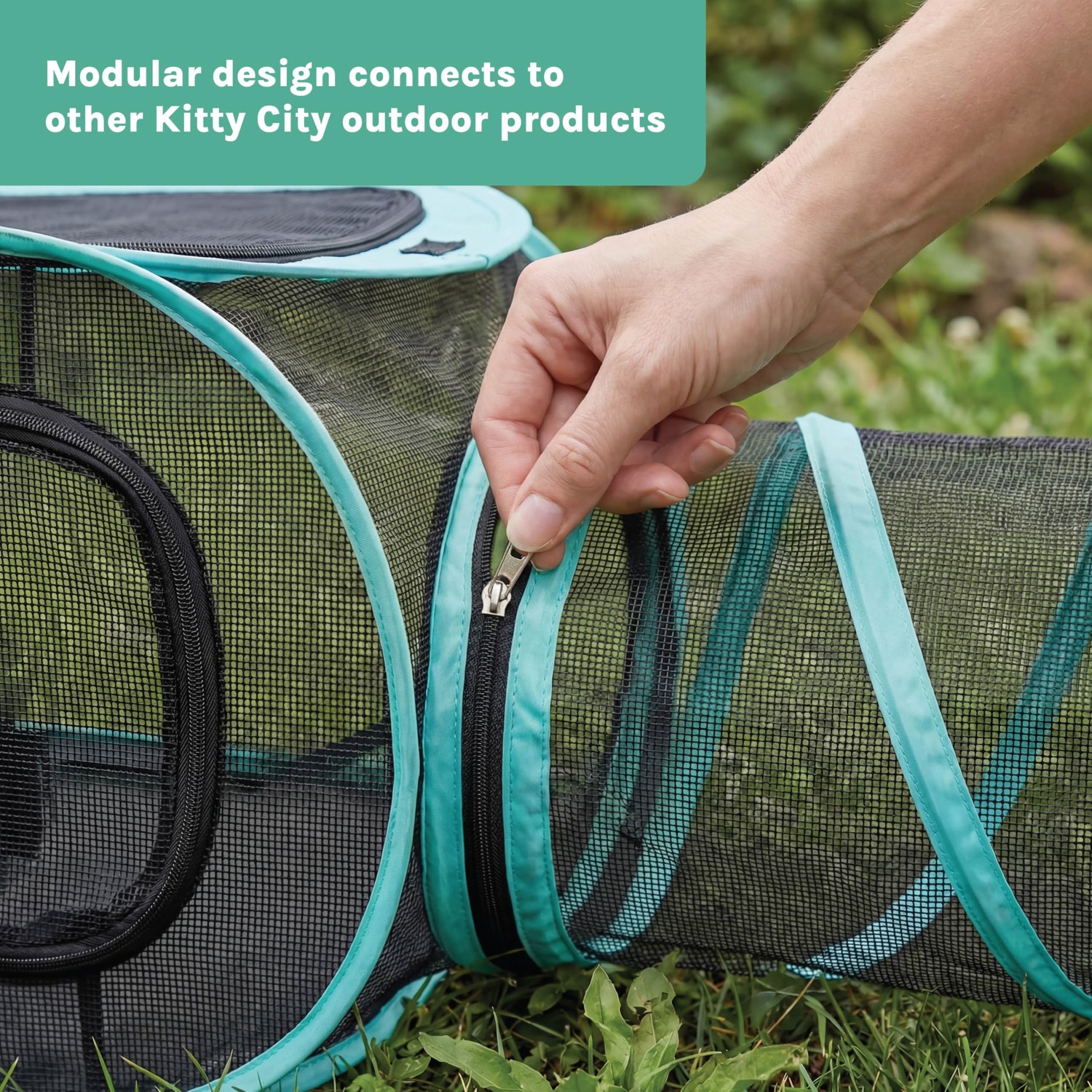
The zips do the heavy lifting. Close both and your cat is in a sealed run. Open one and the tunnel becomes a passage, which is how most people end up using it. Run one end up to the back door, or to a catio panel, or to a window the cat already likes sitting in. Now the tunnel extends the safe zone outward instead of being an island in the middle of the yard.
Stakes stop the thing wandering. A cat moving at speed inside a lightweight tube will push it sideways if nothing holds it. Pegged into grass or soil, the tunnel keeps its shape and its line. On paving you lose that option, so plan to weight the ends or butt them against something solid.
Because it folds, it is not a fixture. That is the difference between this and a built catio. A collapsible cat tunnel comes out when the weather is good and goes back in the cupboard when it is not. Renters, apartment dwellers with a shared courtyard, and anyone who moves often tend to prefer that.
Who it suits
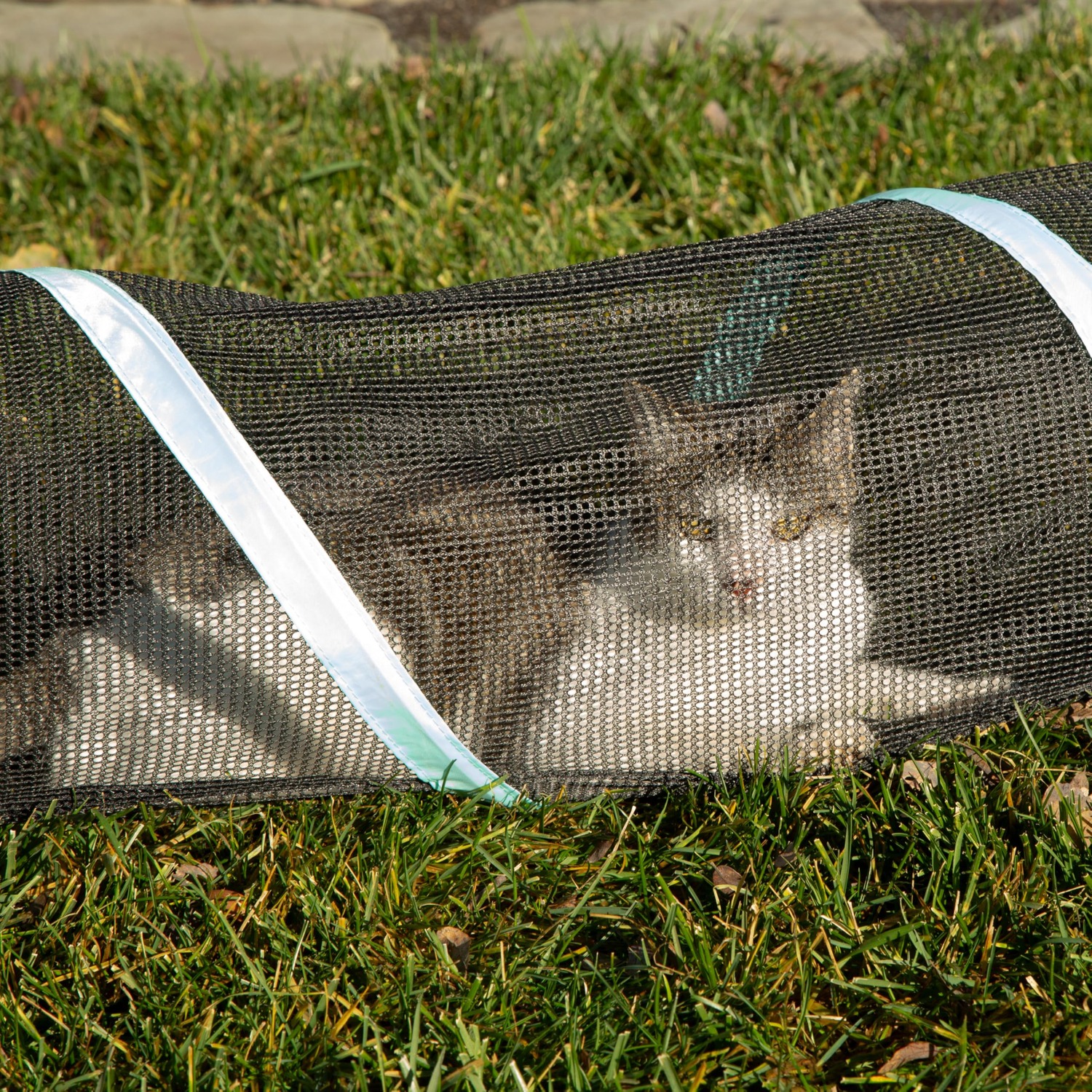
Indoor cats get the most out of it. A cat who has never been allowed out properly will often be cautious for the first few sessions, then start treating the tunnel as the highlight of the day. The enclosed sides are a big part of that. Cats feel exposed on open ground, and a tunnel gives cover from above and both flanks at once.
It also suits nervous rescues. Rather than asking a shy cat to walk into open space, you are offering a narrow, covered route where they can see out but nothing can get at them. Short sessions, close to the house, work better than long ones at the far end of the garden.
Senior cats do well with it too. There is no climbing involved, no jumping, one level only. An older cat who has lost interest in the tall scratching post will still happily lie in a warm tunnel for half an hour.
The product is rated for small breeds and all ages. Larger cats can use it, but at 28 cm across, a big Maine Coon will find it close-fitting. If your cat is on the bigger side, measure them shoulder to shoulder while standing and compare before you order.
Households with dogs need to think it through. The tunnel is for cats. A dog who enjoys pouncing on anything that moves under fabric is a hazard here, so separate them during use.
How to choose the right setup
Start with your space. Three metres is longer than a lot of small courtyards, so walk it out before you buy. You do not need three metres of straight line though. The tunnel is adjustable enough to lay in a gentle curve around a garden bed or along a fence, which often fits a tight yard better than a straight run.
Then think about the endpoint. A tunnel that simply stops in the middle of the lawn is less useful than one that connects something. The best arrangements have at least one end meeting a door, a window, a catio, or another piece of the cat tunnel system. That way your cat chooses when to go out and when to come back, which is where the real enrichment lives.
Consider whether you want to expand later. This tunnel is compatible with the Kitty City Outdoor Mega Kit, so it can work as a cat tunnel enclosure connector down the track. If you think you might build a larger cat run tunnel setup eventually, starting with a compatible piece saves money.
Surface matters for stability. Grass and soil are ideal because the stakes bite. Decking, pavers and concrete need a workaround. A planter pot at each end, or running the tunnel into a wall, does the job.
Finally, be realistic about weather. The listing does not claim a waterproof rating, so treat it as fair-weather gear. It is a light fabric tunnel, not an all-season shelter.
Getting your cat to use it
Do not force it. Shoving a cat into a tunnel is the quickest way to make sure they never go near it again.
Lay it out somewhere familiar first, maybe indoors, with both ends open. Leave it alone for a day. Most cats investigate on their own schedule. If yours does not, drop a few treats just inside the opening, then further in over the next couple of days. A wand toy dragged through the tunnel works on nearly every cat that still has a prey drive.
Once they are comfortable indoors, move it outside on a calm, mild day. Keep the first outdoor session short, five or ten minutes, with you sitting nearby. Build from there.
Some cats take to it in an afternoon. Others take two weeks. Both are normal.
Care and storage
Outdoor gear picks up grass, dirt and the occasional spider. Shake the tunnel out after each use and wipe it down with a damp cloth and mild soap when it needs it. For a proper clean, it can go in the machine on a gentle cycle.
Air dry it fully. Folding away a damp polyester tunnel invites mildew, and that smell is very hard to shift once it takes hold. Lay it out in the shade until it is completely dry, then fold and store it flat somewhere dry.
Check the stakes and zips now and then. Bent stakes can be straightened, and a zip that is sticking usually just needs grit brushed out of the teeth.
The short version
If you want your cat to have outdoor time without the risks of free roaming, a 3 metre cat tunnel is one of the cheapest and least disruptive ways to do it. This one is 3.05 metres long, 0.28 metres across, weighs 816 g, zips at both ends and stakes into the ground. It folds away when you are done and links up with the wider Kitty City outdoor range if you decide to expand.
It will not replace a full catio. It does not need to. For most households it does the important part, which is giving an indoor cat real time outside, in a space you control, without anyone losing sleep over it.