

The complete guide
How to Choose a Portable Catio That Your Cat Will Actually Use
The problem with an indoor cat and a sunny day
Indoor cats live longer. That part is settled. What nobody tells you is how much your cat will resent the arrangement every time a bird lands on the fence. They sit at the window, chatter at nothing, and plant themselves by the back door the second it opens.
Letting them out solves the frustration and creates four bigger problems. Cars. Dogs. Other cats. Wildlife, both the kind that hurts your cat and the kind your cat hurts. Add in council rules about roaming cats in plenty of areas and a rental agreement that says nothing permanent gets built, and the options narrow quickly.
A portable catio sits right in that gap. It is a contained outdoor space your cat can use while you watch, and it folds away afterwards. No building permit, no posts in the lawn, no conversation with a landlord.
How a pop-up enclosure works
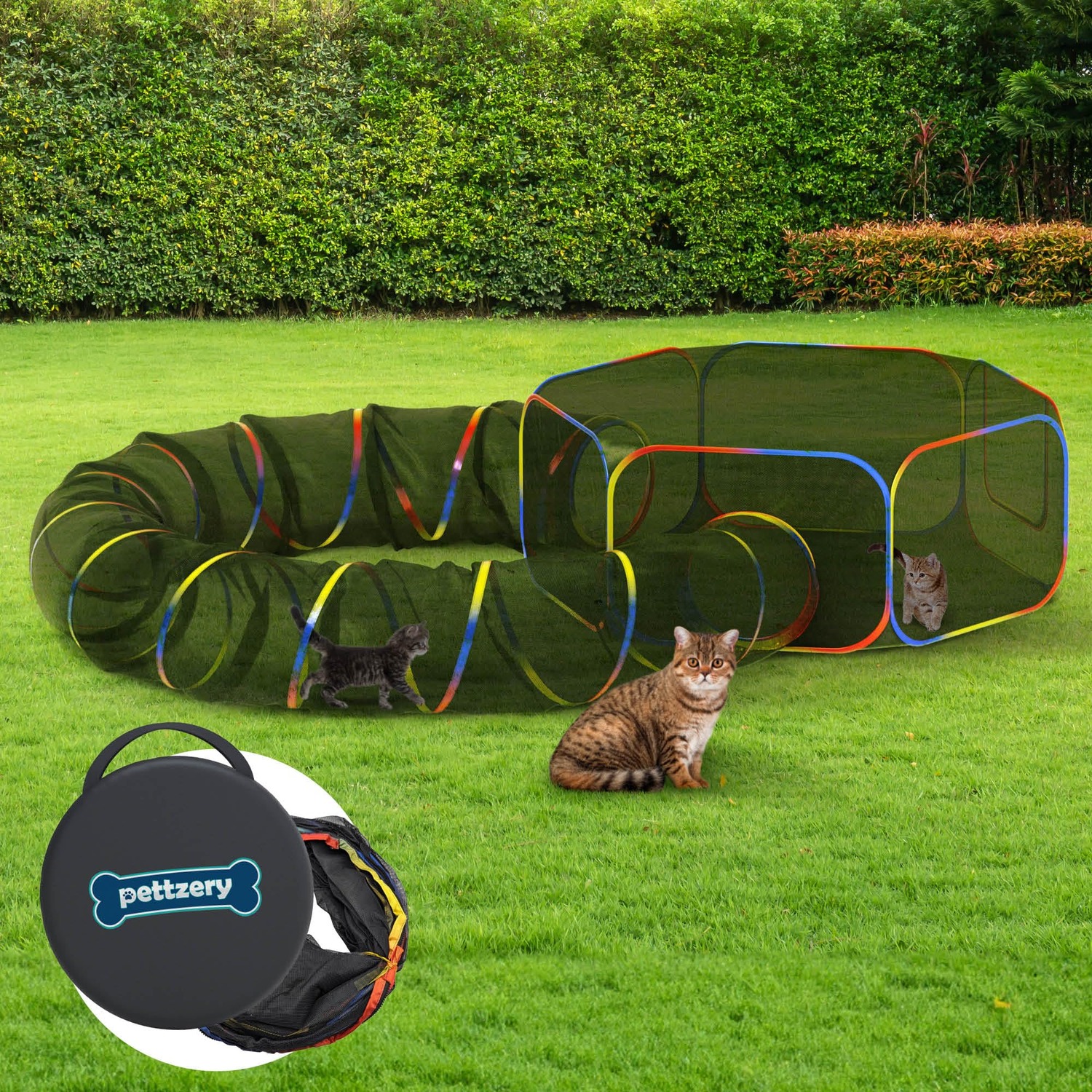
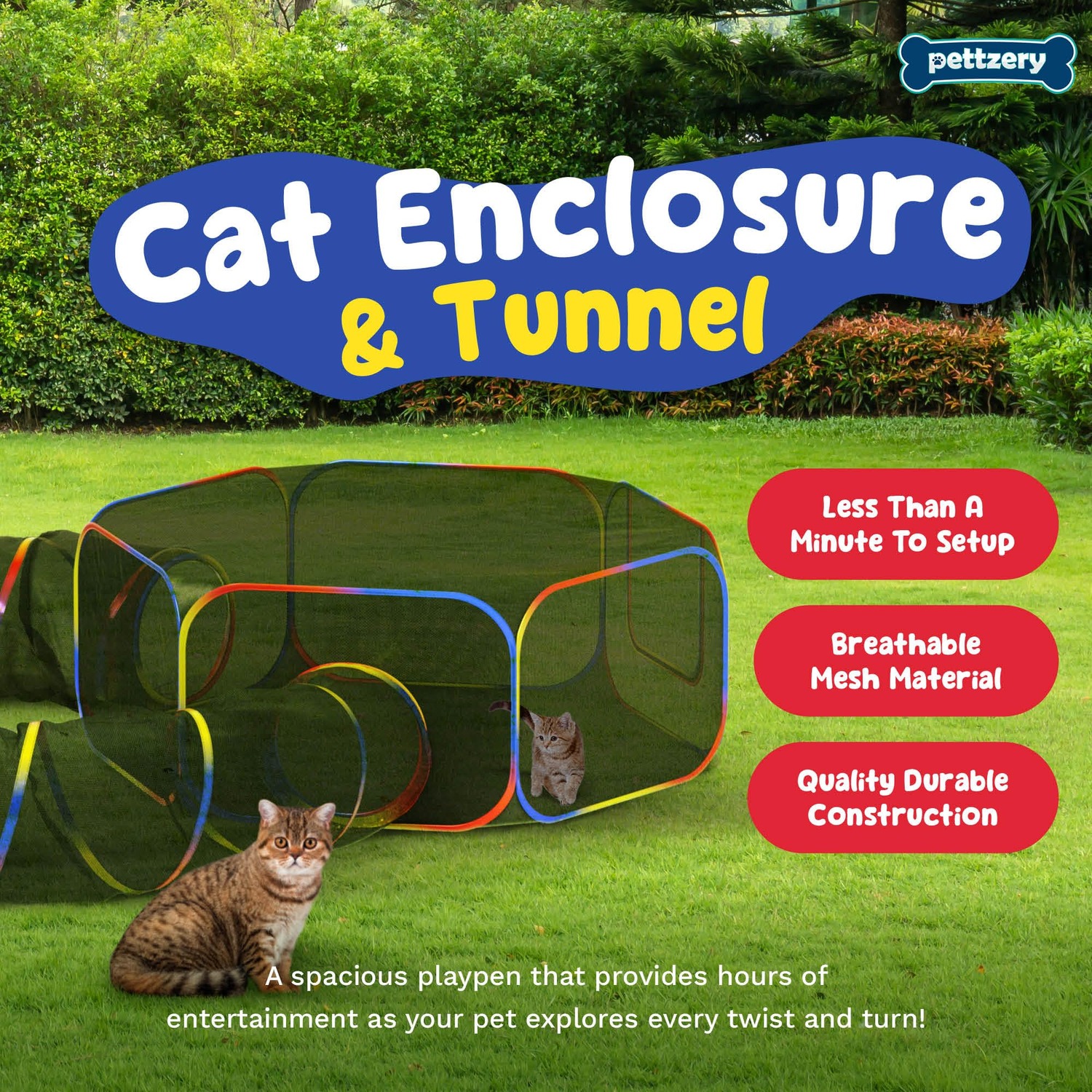
The design is simple on purpose. Mesh panels form the walls so air and light pass straight through, and an Oxford cloth structure holds the shape. Zippered doors let you get your cat in and out. Pull it from the bag, let it spring open, and it is standing. That is the whole process, and it takes about a minute.
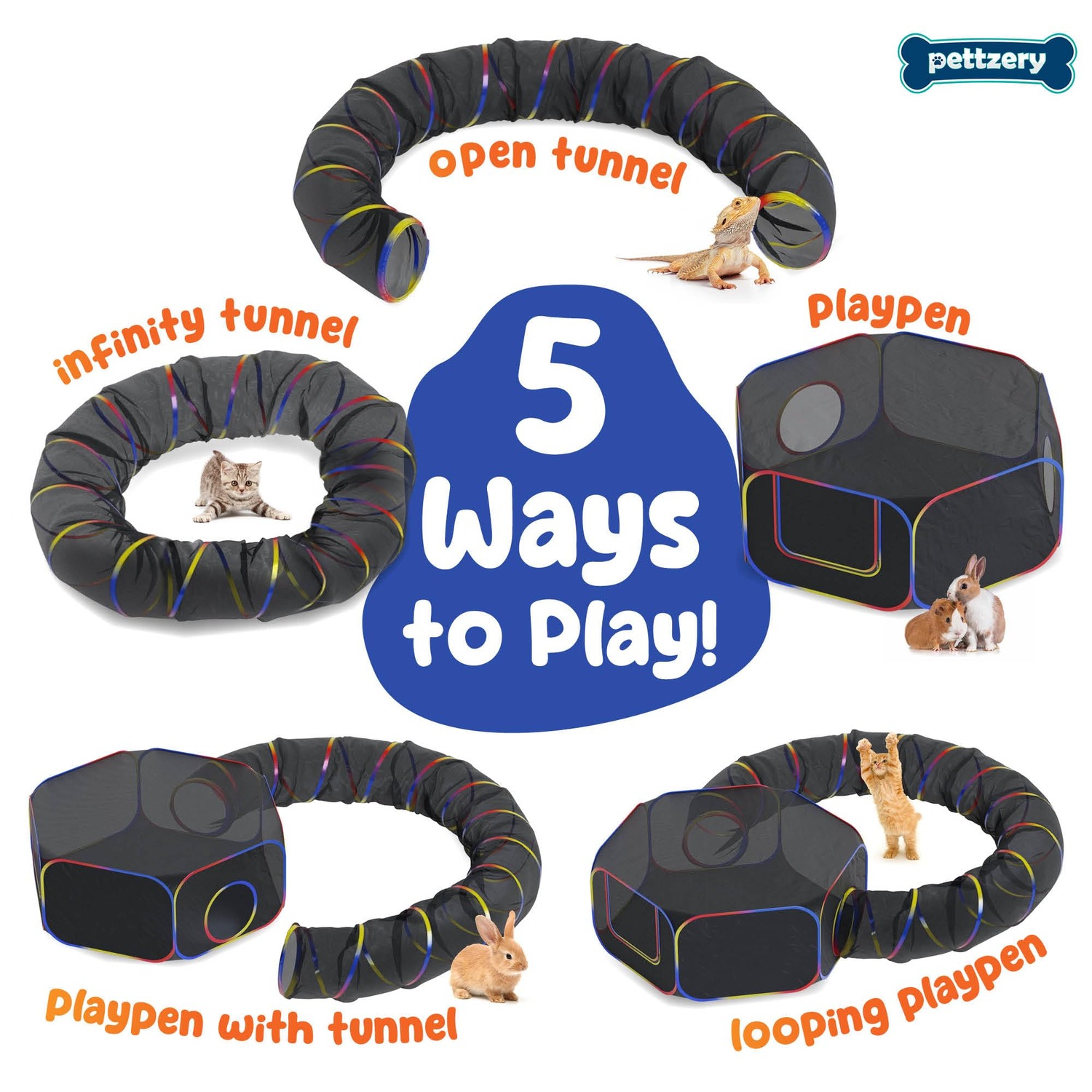
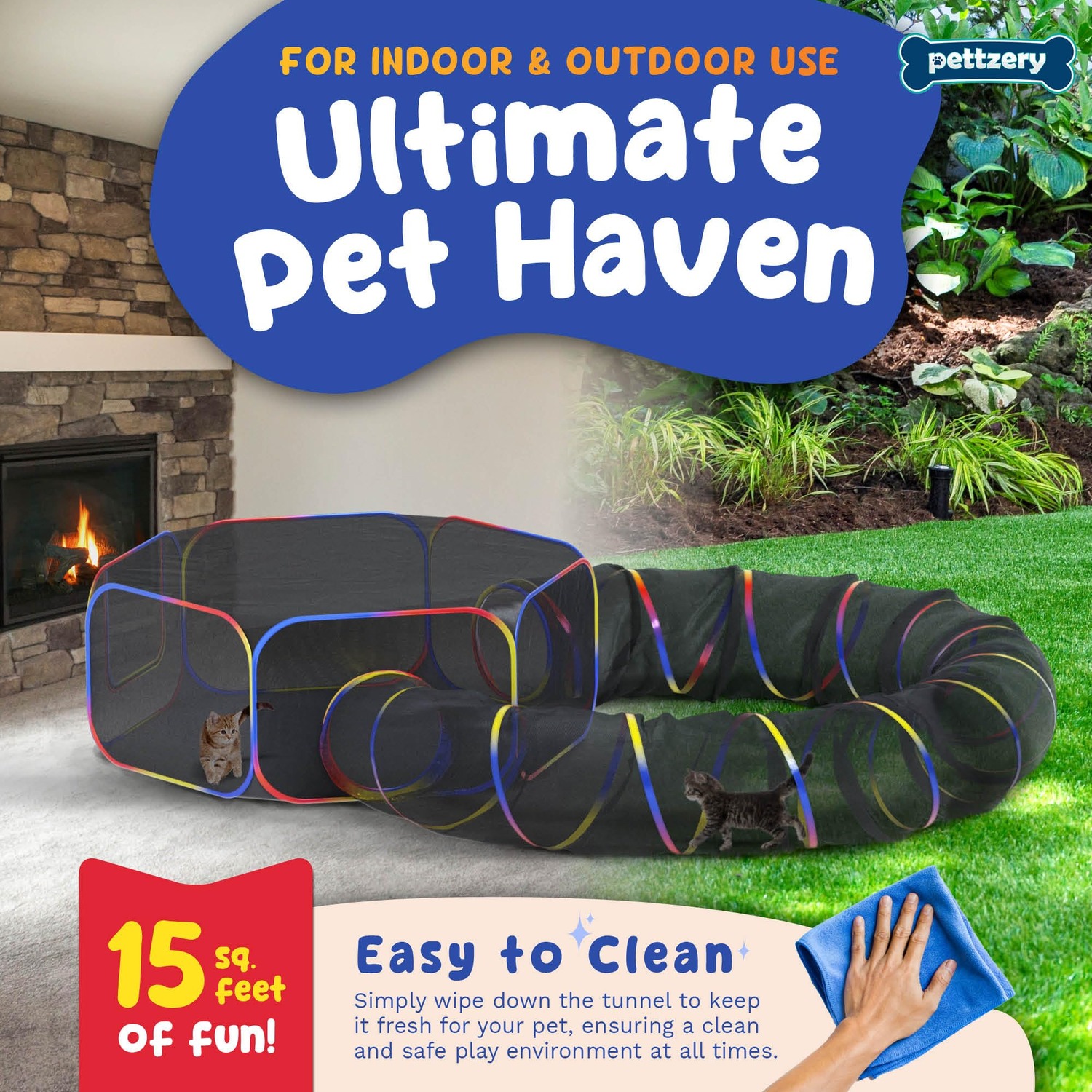
This particular set is two pieces. The tent is the main living space at 119.4 cm square and 45.7 cm high, which comes to just over 15 square feet of floor. The second piece is a long play tunnel. Zip the tunnel onto the tent and your cat has a route to run, a place to disappear and a spot to lie in wait. Unzip it and you have two separate items, which is useful when the weather turns and you want the tunnel indoors.
The mesh does more than hold the cat in. It keeps you in the loop. You can glance over from the kitchen window and know exactly where your cat is and what they are doing, which is the part that lets you relax.
Who it suits
Apartment dwellers get the most obvious benefit. A cat enclosure for apartment living that needs no screws, no brackets and no permanent footprint is rare, and this one fits on most balconies and courtyards with room to spare. When visitors come, it goes back in the cupboard.
It also works well for people who already have a yard but no fence a cat respects. Rather than cat-proofing an entire boundary, you contain a square of lawn and move it to follow the sun.
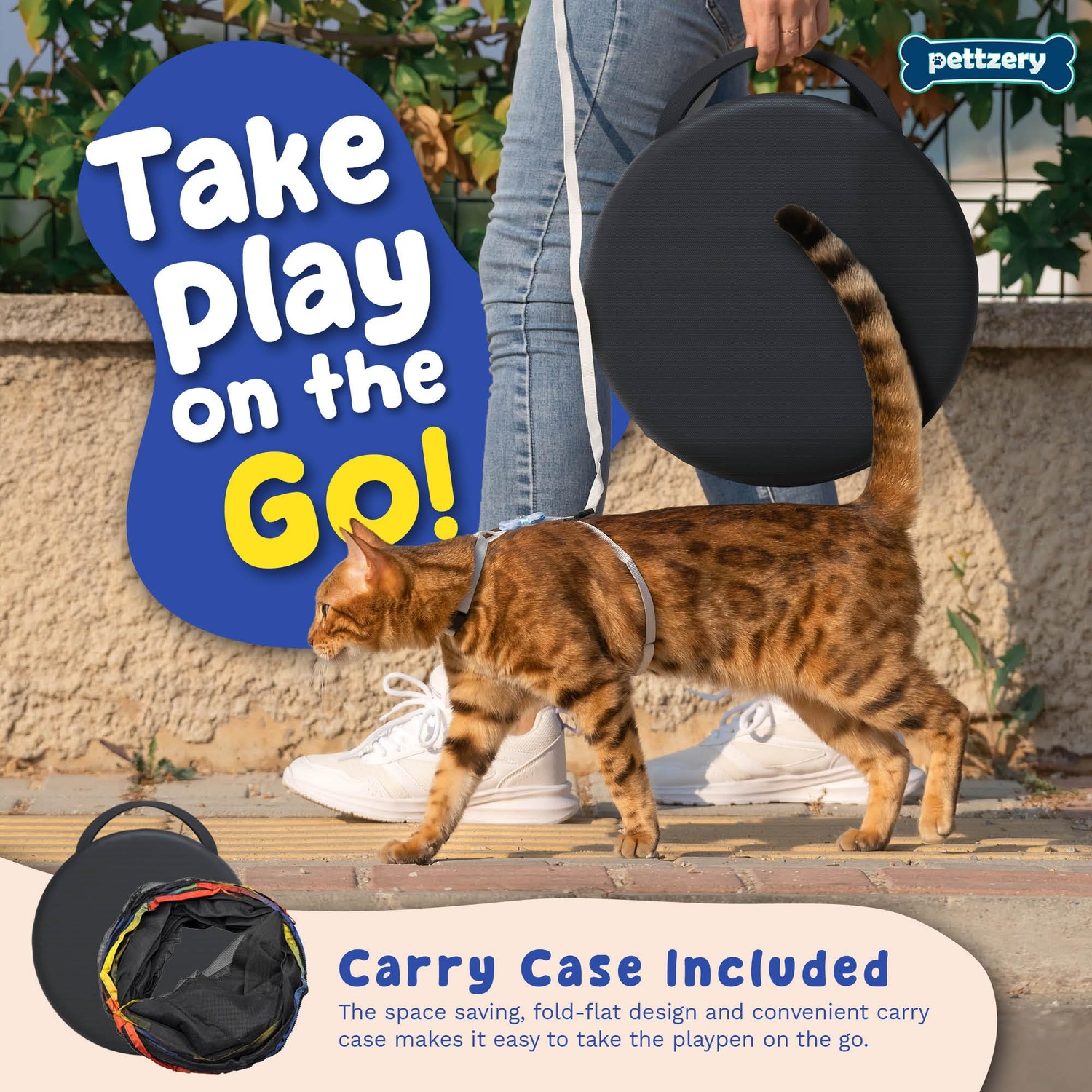
Travellers are the third group. A travel catio that folds into a carry bag can come to the holiday house, the caravan park or a family member's garden. Cats cope with new places far better when they have a familiar, enclosed base.
Finally, multi-pet households. The listed target species cover cats, ferrets, guinea pigs and rabbits, so the same enclosure can serve different animals at different times of day.
What to look at when comparing options
Floor area, not just footprint. A tent that sounds big can lose space to sloped walls. Square designs like this one keep usable floor from edge to edge, which matters when a cat wants to stretch out flat.
Height. At 45.7 cm, this enclosure is built for lounging, low play and sunbathing rather than climbing. If you want a cat to perch at eye level, you are looking at a different, taller category of product.
Setup time. This is the factor people underestimate. An enclosure that takes 15 minutes to pitch gets used twice. A pop up cat tent that is ready in a minute gets used most days of the week in good weather, and that is the whole point.
Whether a tunnel is included. Tunnels change how cats use the space. Without one, a mesh cat tent is a box your cat lies in. With one, it becomes something they move through and play in. Buying the tunnel separately later usually costs more than getting a set.
Packed size and the bag. If it does not fold small and if there is no bag, it will end up in a corner of the shed gathering spiders. A foldable catio with a proper carry bag is one you will actually move around.
Setting it up for the first time
Start indoors. Open the tent in the living room with the door unzipped, drop in a blanket that already smells like your cat, and walk away. Curiosity does most of the work. Some cats are inside within minutes, others take a day or two.
Once your cat treats the inside as normal, move it to the garden or balcony on a mild day. Pick a spot with part shade, since mesh walls do not block much sun and cats overheat faster than people expect. Put down water. Keep the first outdoor session short, maybe 15 or 20 minutes, and stay out there with them.
Add the tunnel on the second or third outing rather than day one. A new tunnel plus a new location plus the outdoors all at once is a lot for a nervous cat. Once the tent feels safe, the tunnel is just a fun extra.
On grass, weight the corners if there is any breeze. A couple of bricks or a heavy plant pot will do. This is a light, portable enclosure, and light things move in wind.
Keeping it in good shape
Soft enclosures last for years when you treat them sensibly, and fail in a season when you do not.
Shake the grass, sand and fur out after every outdoor session. Spot clean mesh and fabric with warm water and a mild detergent, then let it air dry completely before folding. Damp fabric in a bag turns musty fast and the smell is hard to get rid of. Keep bleach and solvents away from the mesh.
Check the zippers before each setup. Grit in a zipper track is the single most common cause of failure on a cat tunnel tent, and a stuck slider that gets forced is a broken slider. A quick brush and the occasional rub with a candle stub keeps them running.
Store it in the carry bag in a dry cupboard rather than an outdoor shed, and keep it out of long-term direct sun when it is not in use. UV is harder on mesh than cats are.
A few honest limits
This is a supervised-use product. It is not a locked kennel and it is not a permanent structure. Do not leave a cat in it alone, do not leave it out overnight, and bring it inside when rain or strong wind is forecast. The brief does not list a waterproof rating, so treat it as a fair-weather item.
It will also not replace a full timber catio if what you want is all-day, all-weather access. That is a different build at a very different price. What this does is cover the realistic case for most households, which is an hour of safe sunshine a few times a week.
Product weight, colour and country of origin are not specified in this record, so if any of those matter for your situation, factor that in.
The short version
If you have an indoor cat who stares out the window, a portable catio is one of the cheapest ways to fix that. This one gives you a 119.4 cm square mesh tent, over 15 square feet of floor, a zip-on play tunnel and a one-minute setup, all folding into a carry bag when you are done.
It suits apartments, rentals, small yards and holidays. It is made from Oxford cloth and breathable mesh with zipper closures, and it needs no assembly at all. Use it while you are nearby, keep it dry and clean, and your cat gets the outdoors without the risks that usually come with it.