
The complete guide
How To Choose A Walk-In Catio Your Cat Will Actually Use
The problem with doors
Anyone who lives with a cat knows the back-door standoff. The cat sits, stares, and waits for the half second it takes to slip through. You know what is out there. Roads, dogs, other cats, snail bait, neighbours who do not share your enthusiasm for a feline in their vegetable patch. So you keep the door shut, and the cat sulks by the glass.
Keeping cats indoors is the safe call. It is also, if we are honest, a bit dull for them. Indoor cats sleep more, move less, and put on weight more easily than cats with outdoor access. Behaviourists keep coming back to the same point, which is that the problem is not the lack of space, it is the lack of stimulation. Fresh air, moving leaves, insects, birds, changing light. None of that happens on a lounge rug.
A walk-in catio splits the difference. Your cat gets the outdoors. You get to stop worrying about traffic. Nobody has to negotiate at the door.
What a walk-in catio actually is
The word catio is just patio plus cat. In practice it covers everything from a mesh box clipped to a window to a full-height garden room. The walk-in version is the one tall enough for a person to step inside, which usually means somewhere around 170cm and up.
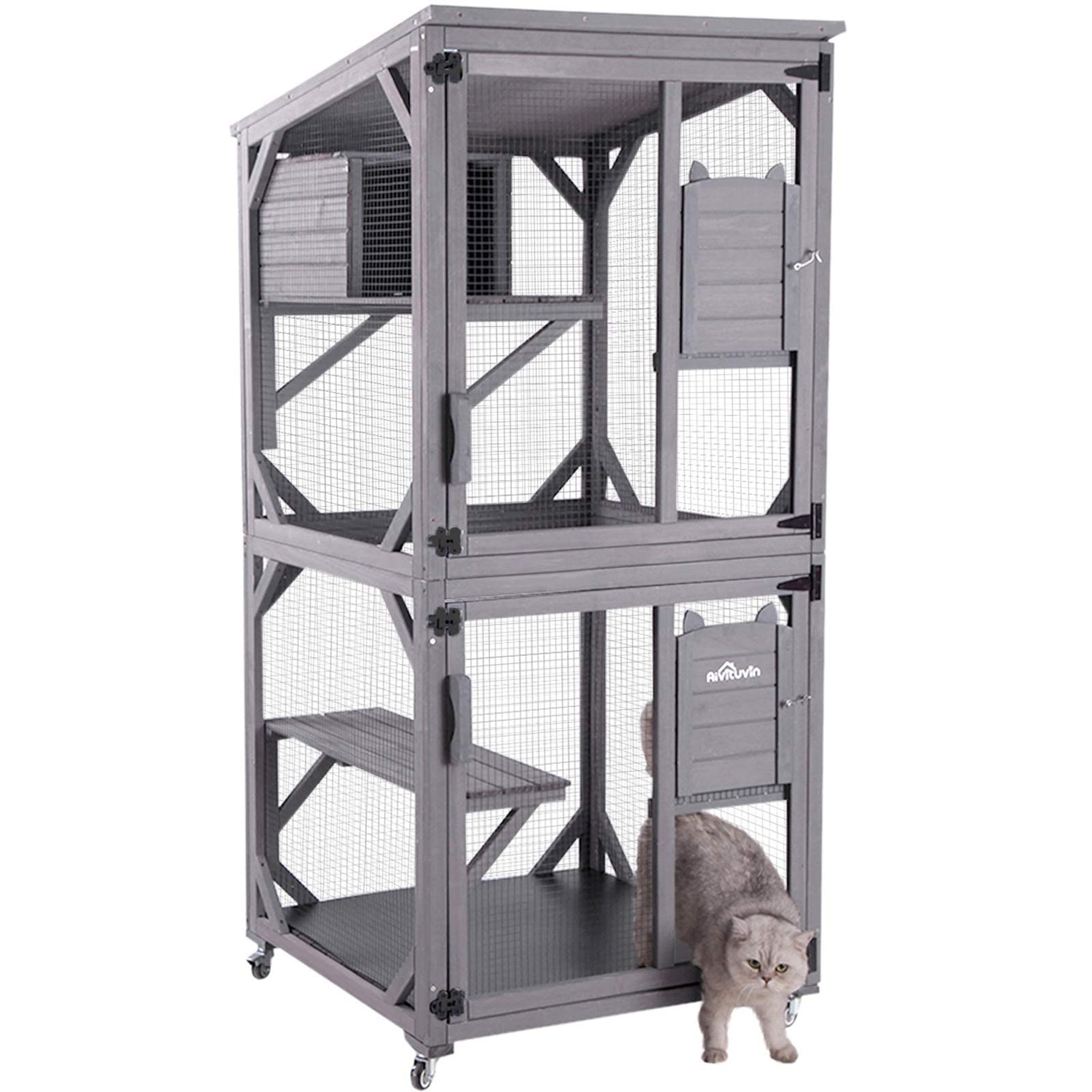
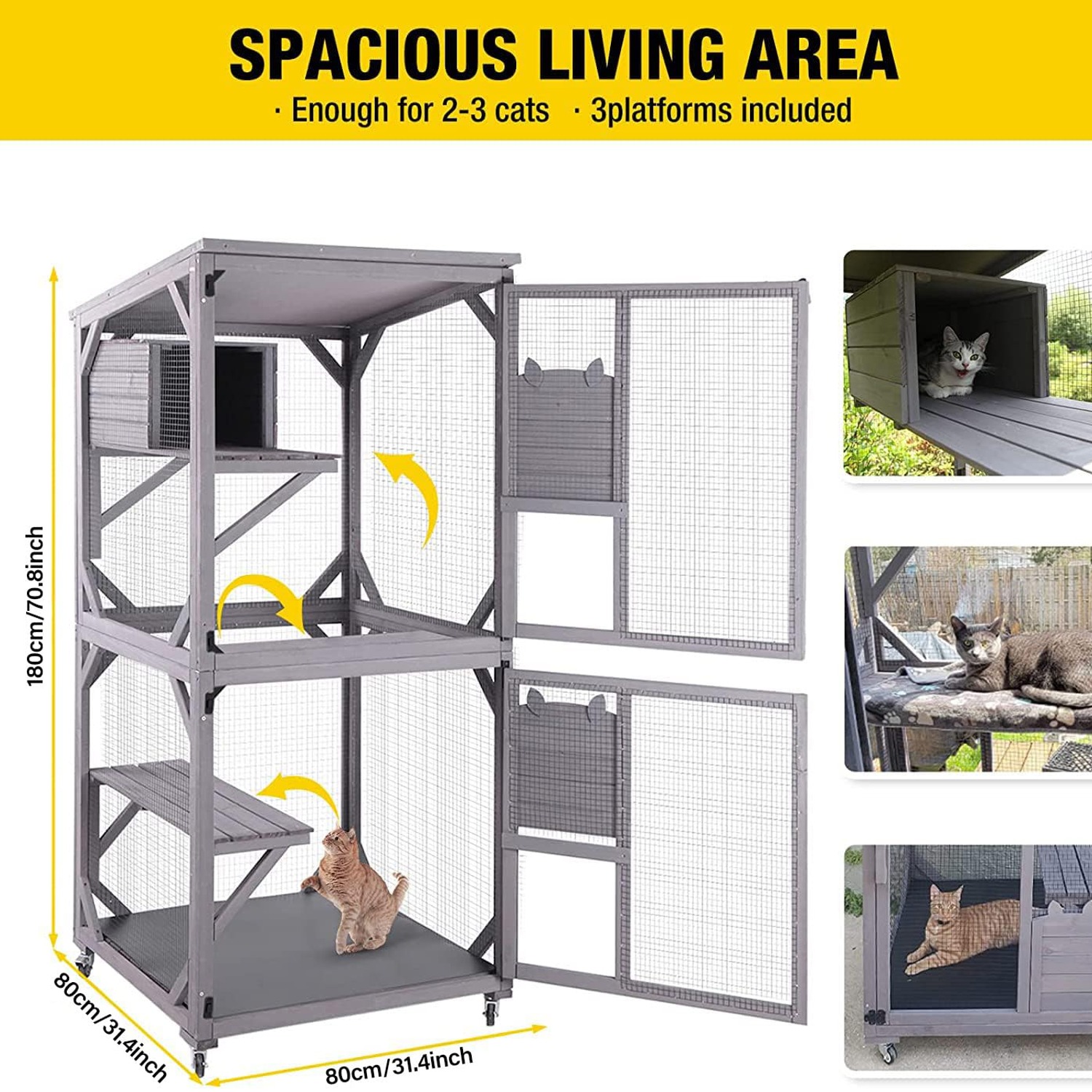
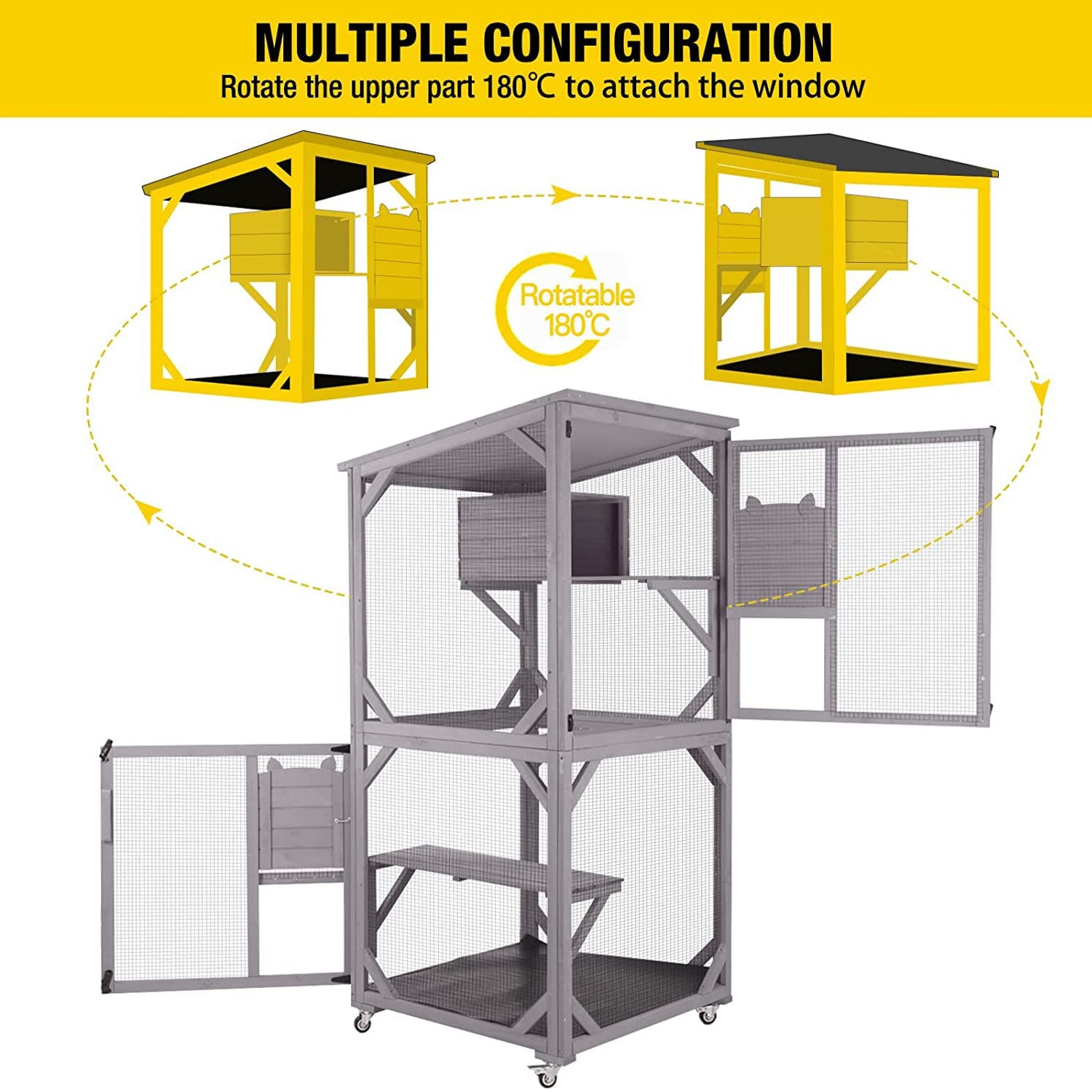
This model is 180cm tall on an 80 by 80cm base. That shape tells you a lot about how it is meant to work. It is not a big floor area, roughly the space a small table takes. What it has is height, and height is the currency cats care about. Two internal levels mean your cat can climb, perch above eye level, survey the yard, and nap somewhere that feels defensible. The nesting box that comes with it gives them a closed retreat for the days when the wind picks up or the neighbour starts the mower.
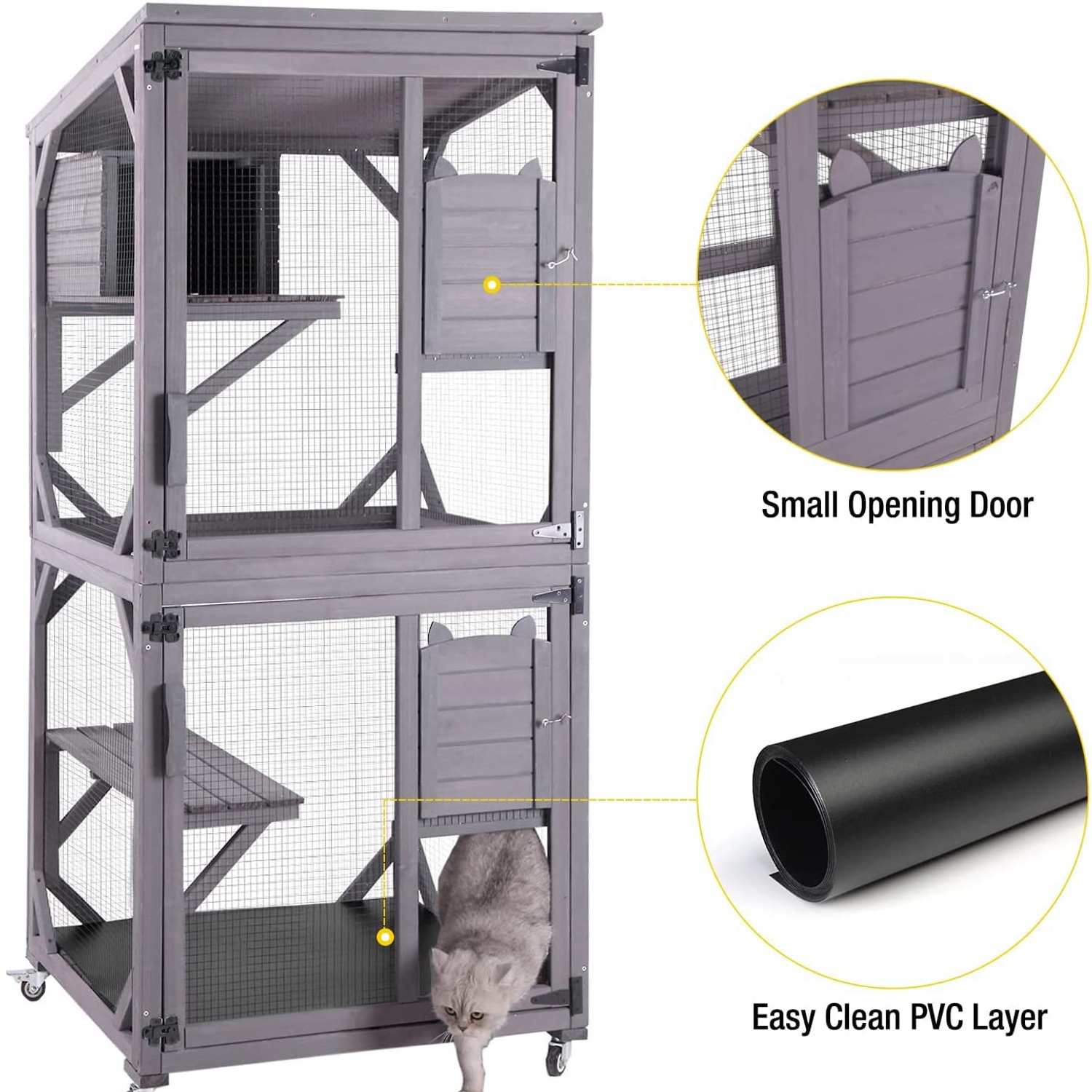
Construction is timber with PVC parts, finished in grey. Timber matters for two reasons. It does not heat up the way bare metal does in direct sun, and it does not scream cage when it is sitting on your deck. The PVC side of things includes the removable cleaning board, which is the unglamorous feature you will appreciate most once the novelty wears off.
The wheels change how you use it
Most garden cat enclosures go in one place and stay there. You pick a spot, you build it, and that is the spot forever. The trouble with that is sun. A corner that is perfect at ten in the morning can be brutal by two in the afternoon, and shady all winter.
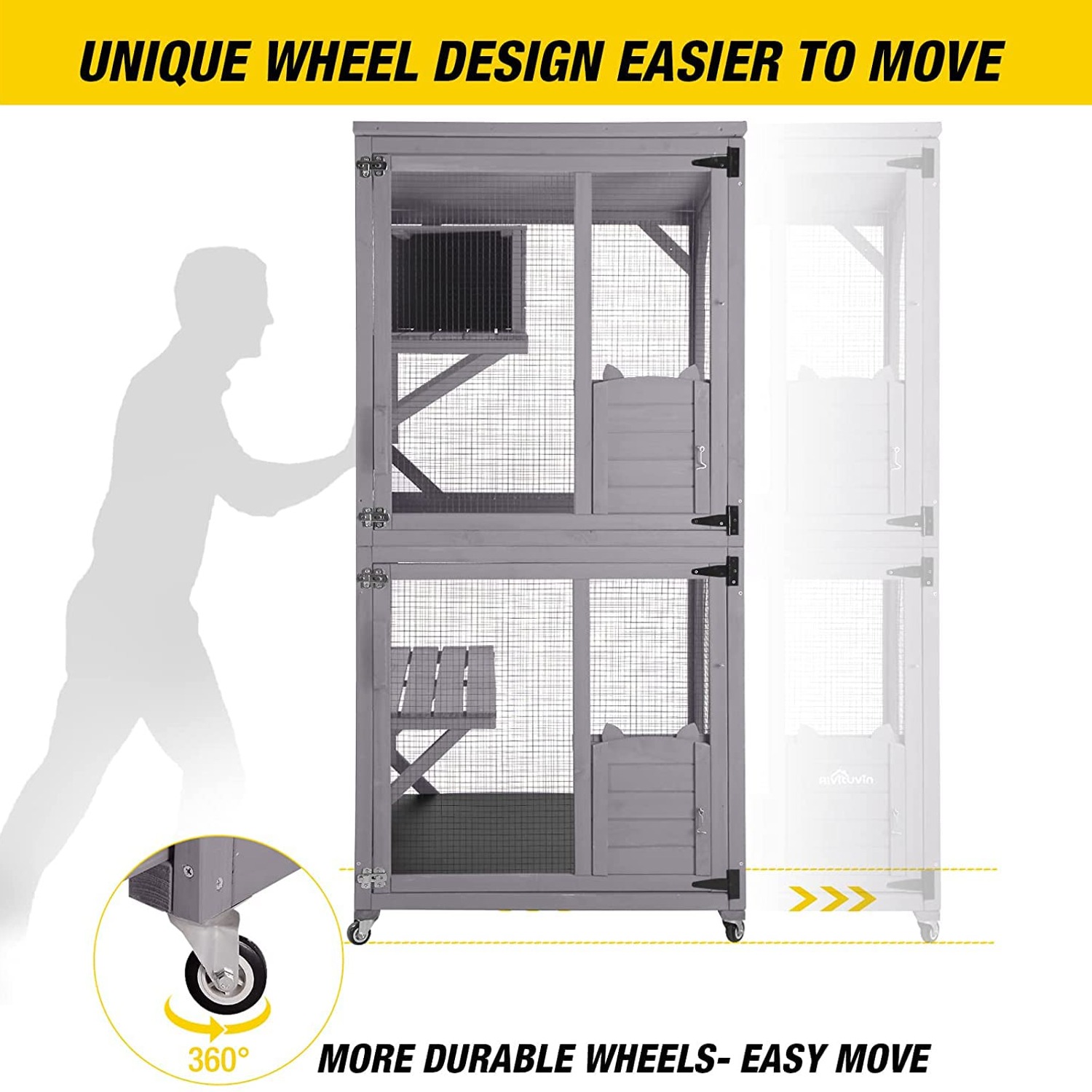
Four universal wheels with brakes mean this one is not fixed. You can roll it into the morning sun, shift it under the eaves before rain arrives, move it off the lawn when the grass needs cutting, and push it against a wall when you are having people over. Lock the brakes and it stays put.
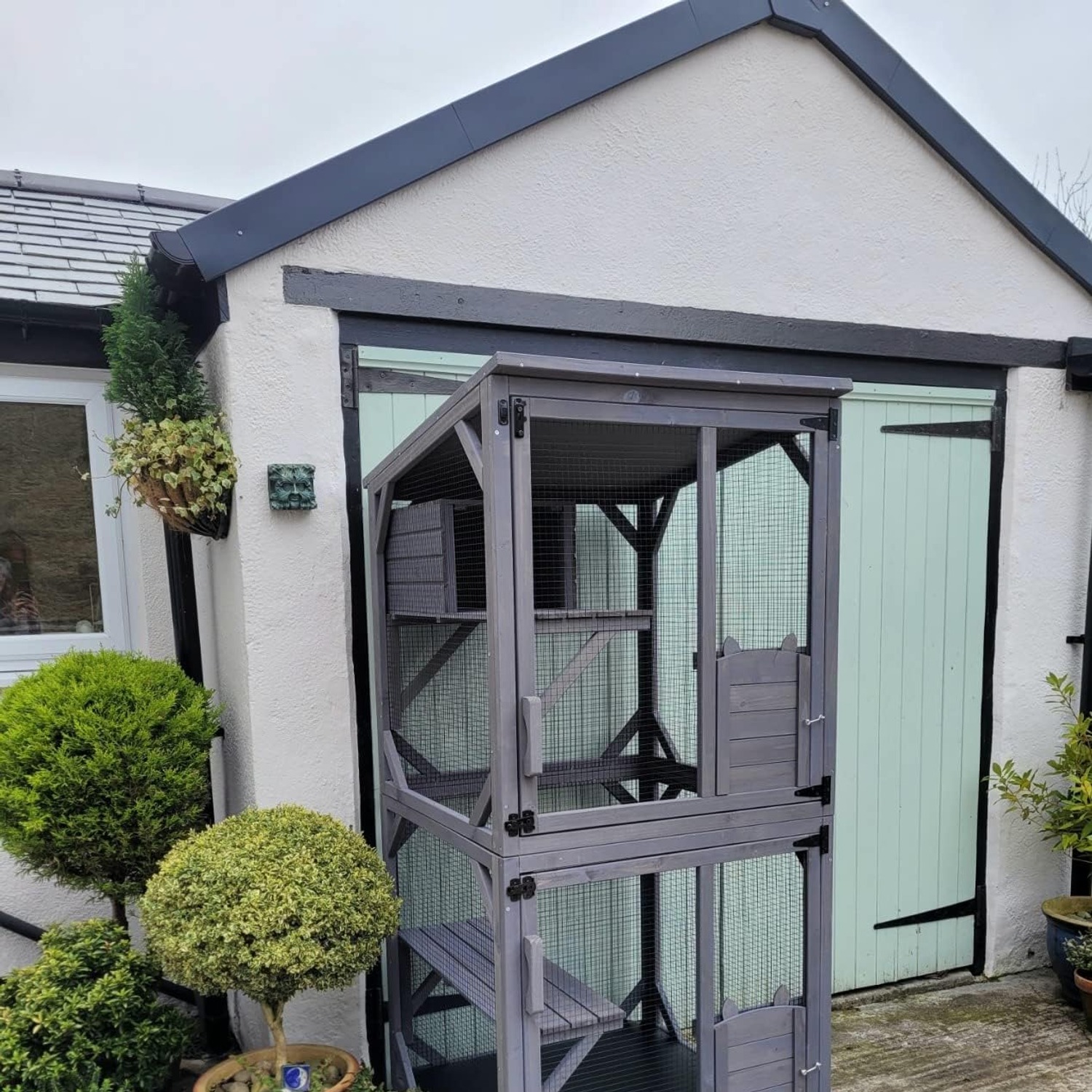
The practical note here is surface. At 26.8kg, the unit rolls nicely on decking, pavers and concrete. On soft lawn, wheels sink, and you will be walking it along in small shifts rather than gliding it. If you are set on a grass position, lay a few pavers underneath. It also keeps the timber base off damp ground, which extends its life.
Who it suits
It suits indoor cats who stare out windows. It suits newly adopted cats who are not yet trusted outside, because it lets them experience the garden from somewhere secure while they settle in. It suits older cats who still love a sunbeam but should not be climbing fences anymore. It suits owners in rentals who cannot build a permanent structure and need something that leaves when they do.
One or two cats fit comfortably. Two levels and a nesting box mean a bonded pair can share without being on top of each other. Three or more and it gets crowded during a long session, so rotate instead.
Size-wise, it is listed for small pets with cats as the target species. An average adult domestic cat has plenty of room. A particularly large breed will find the platforms snug, so compare your cat to the 80 by 80cm footprint before you order.
What it is not is a permanent home. No small enclosure is. This is for daytime sessions, ideally where you can see it from a window, with your cat coming back indoors for the night. Think of it as the outdoor part of their day, not the whole of their world.
Working out where to put it
Start with shade. A cat in a sunny enclosure with no shaded corner is a cat in trouble, especially in summer. Position it so part of the structure sits in shade for most of the day, or under a pergola, eave or tree. The nesting box helps, but it is not a substitute for a cool spot.
Second, think about sightlines. Cats like watching things. A view of a bird feeder, a garden bed or a busy footpath gives them something to do. A blank fence does not.
Third, consider your own convenience. If the enclosure is at the bottom of the garden you will use it less than if it is three steps from the back door. Water needs topping up, cats need checking on, and trays need emptying. Close is better.
Finally, check the ground is level. A wheeled unit on a slope wants to roll, and while the brakes handle that, a level base is simply more stable.
Getting your cat to use it
Some cats march straight in. Plenty do not. The mistake is putting the cat in and shutting the door, which turns a nice outdoor room into a trap in their mind.
Open the doors and leave them open. Put a blanket that already smells of home inside, along with a favourite toy. Feed a meal in there. Sit in it with them for ten minutes while you drink a coffee. Let the cat decide to go in.
Once they are relaxed going in and out, start closing the door for short periods while you stay nearby. Five minutes, then twenty, then an hour. Most cats are napping on the top platform within a week. Always leave water available, and never leave them in there in hot weather or after dark.
Looking after it
Timber outdoors needs a little attention, not a lot. Wipe it down with a damp cloth and mild soapy water when it looks grubby, and dry it off rather than letting water sit in corners. Slide the PVC cleaning board out and rinse it whenever it needs it, which for most owners is weekly.
Every few months, go round the bolts and hinges with a spanner and tighten anything that has loosened. Movement and weather work fixings free over time. Check the wheel brakes hold properly at the same time.
If you want to extend the finish, a pet-safe outdoor timber treatment once a year helps. Confirm whatever product you use is listed as safe around animals, and let it cure fully before the cat goes back in. Keep bedding dry, and open both doors to air the whole thing out after a wet stretch.
The warranty listed for this unit is 6 month, so keep your order details somewhere findable.
The short version
A walk-in catio solves a specific problem, which is that cats want outside and outside is not always safe. This one gives you 180cm of height on a small footprint, two levels, a nesting box, two doors for easy access, and a slide-out cleaning board that makes maintenance quick. The wheels mean you are not committed to one spot in the garden forever.
Put it somewhere shaded with a decent view, let your cat approach it on their own terms, and keep it as part of the day rather than all of it. Done that way, it buys your cat real outdoor time and buys you the quiet of not listening for the back door.